
Labeobarbus
A genus of mid-sized ray-finned fish widely distributed in eastern and southern Africa.
Labeobarbus is a diverse group of cyprinid fishes native to African rivers and lakes. Their name reflects their resemblance to large carps in the genus Labeo. Most species are found in southern and eastern Africa, with a notable population in Ethiopia's Lake Tana.
- All species are hexaploid with six chromosome sets.
- Commonly referred to as yellowfish in southern Africa.
- Found widely in eastern and southern African waters.
- One Rwandan species has gone extinct recently.
- Taxonomy revised from Barbus based on phylogeny.
What it is
This genus comprises mid-sized ray-finned fish belonging to the carp family. Members are often called yellowfish, particularly those inhabiting southern regions. The scientific title highlights their physical similarity to large carps in the related genus Labeo. All known species within this group are hexaploid, possessing six sets of chromosomes. Taxonomists previously grouped these fish under the broader Barb genus before reclassifying them based on genetic evidence.
Where it lives
Species are spread across eastern and southern Africa. A distinct population exists in Lake Tana, Ethiopia. Historical classification placed them within Barbus, but phylogenetic studies revealed they are closer relatives to Near Eastern Carasobarbus. Some experts suggest merging Carasobarbus into Labeobarbus to prevent creating numerous tiny genera from closely related lineages.
Breeding and life cycle
It notes that all species are hexaploid but offers no further insight into how this affects their breeding cycles or developmental biology.
Status and threats
One species, Labeobarbus microbarbis from Rwanda, is recorded as having gone extinct recently.
Questions people ask about Labeobarbus
What does the name Labeobarbus mean?
The name indicates that these large barbs resemble carps in the genus Labeo regarding their size and overall shape. This similarity led taxonomists to create a separate genus while acknowledging their close relationship to both barbs and carps.
Where are these fish found?
They are distributed throughout eastern and southern Africa. A significant population also resides in Lake Tana in Ethiopia. Their range covers various freshwater habitats across these continental regions.
Are all Labeobarbus species still alive?
No. One species, Labeobarbus microbarbis from Rwanda, is known to have gone extinct in recent times. Other species may face threats, but only this extinction event is explicitly documented in the provided text.
How did scientists classify these fish?
They were long included in the genus Barbus. Improved phylogenetic knowledge showed Barbus was paraphyletic. Researchers split it, placing Labeobarbus closer to Carasobarbus and removing many species from the original broad barb classification.
Good reading and sources
The facts on this page come from the Wikipedia article "Labeobarbus", written by its contributors and used under the CC BY-SA 4.0 licence, and from its Wikidata record (CC0). EveryFish rewrote the text in its own words, with AI assistance, and compares every page with the article to make sure no passage is copied. It may be reused under the same CC BY-SA 4.0 licence with a link back.
It may contain mistakes, and figures change over time. Nothing here is investment or buying advice. If something is wrong, tell us. Last refreshed 2026-11-15.
Like Labeobarbus
All carps and minnows 🇮🇳 India and 4 moreRohu
A large silver carp from South Asian rivers, farmed for food and prized as a game fish.Carp · Rivers and lakes
 🇨🇳 China and 4 moreChinese hooksnout carp
A small freshwater minnow native to East and Southeast Asia.Carp · Rivers and lakes
 🇷🇺 RussiaCaspian roach
A brackish water fish from the Caspian Sea region, widely consumed as a dried snack.Carp · Estuaries and mangroves
 🇷🇺 Russia and 4 moreSabre carp
A silvery surface feeder from Eastern Europe and Asia.Carp · Rivers and lakes
More from Cyprinidae
All of them 🇹🇭 Thailand and 2 moreSiamese mud carp
Freshwater cyprinid native to Mekong and Chao Phraya riversCarp · Rivers and lakes
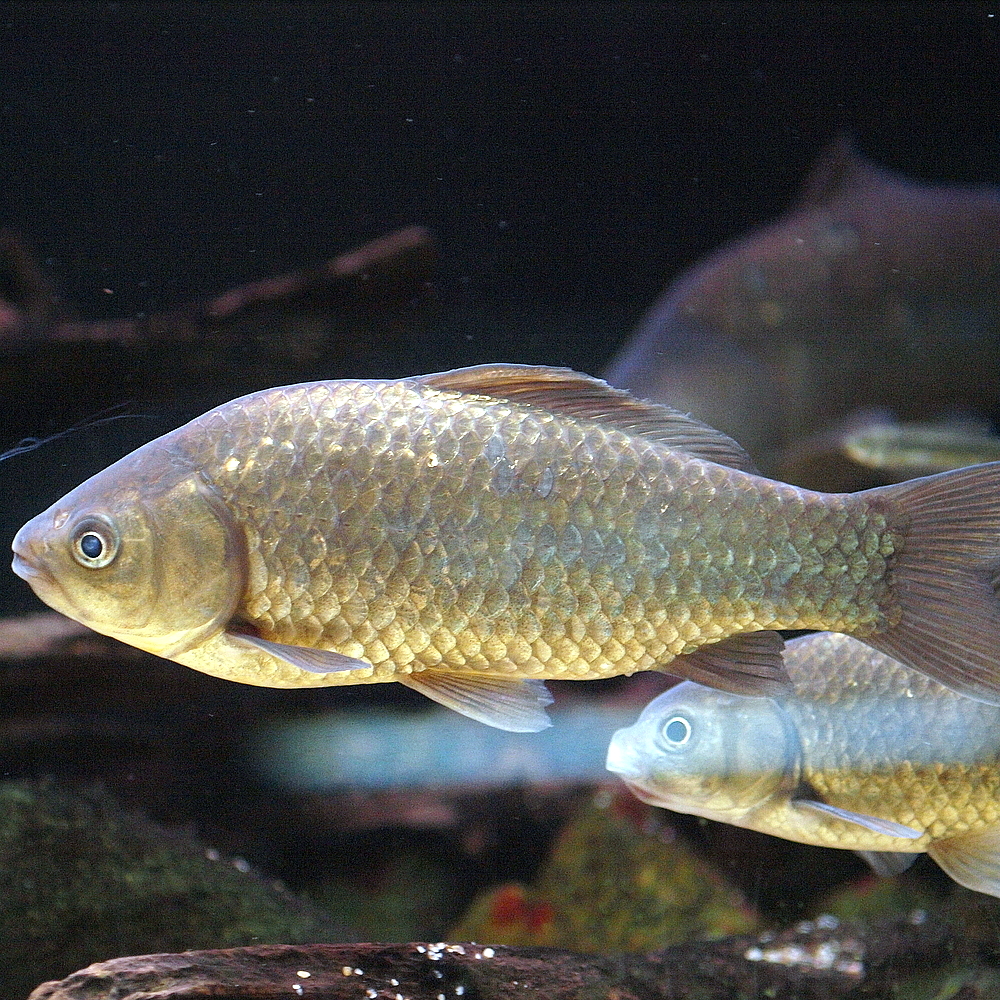 🇯🇵 JapanNigorobuna
Wild carp from Lake Biwa used for fermented sushi.Carp · Rivers and lakes
 🇰🇪 Kenya and 4 moreRipon barbel
A large freshwater cyprinid from East African lakes and rivers.Carp · Rivers and lakes · 1900