
Rohu
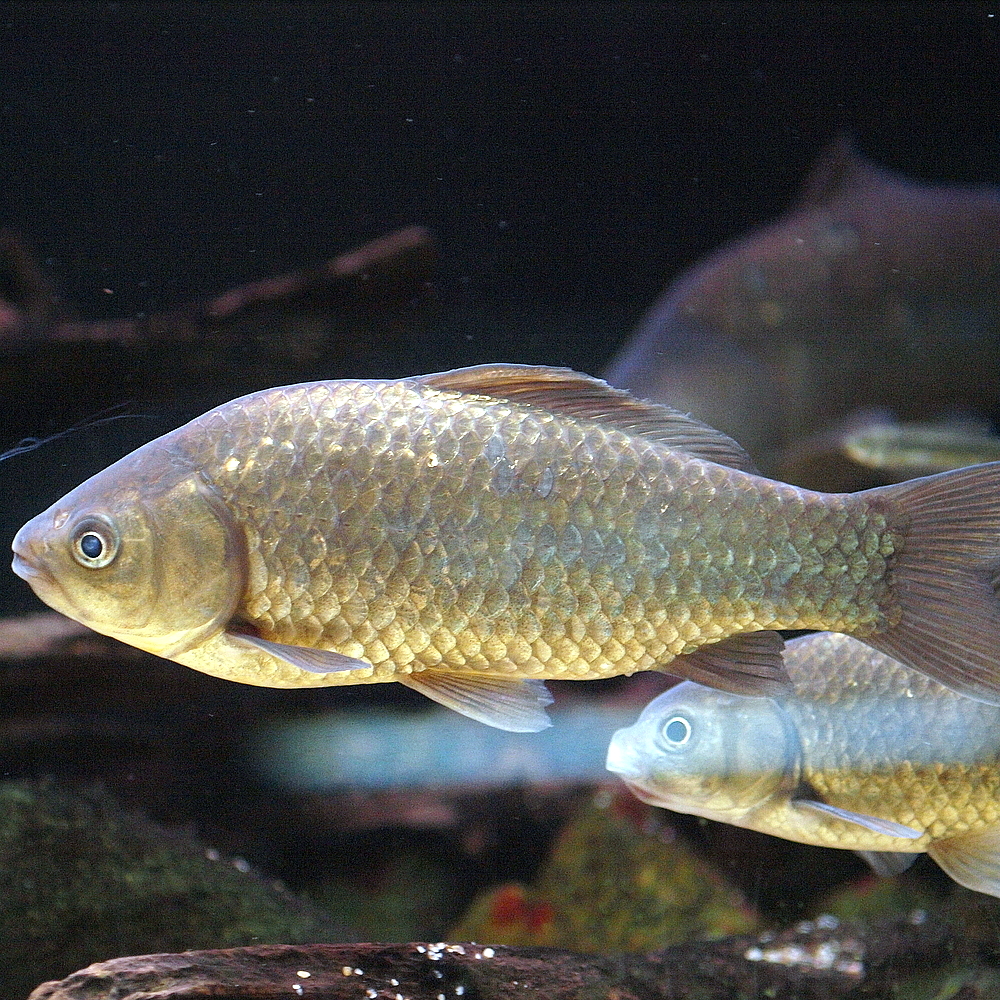
A large silver carp from South Asian rivers, farmed for food and prized as a game fish.
The rohu is a major freshwater carp species native to the river systems of South Asia. It plays a central role in regional aquaculture and traditional cuisine, valued for its size and taste.
- Reaches a maximum length of two metres and weight of forty-five kilograms.
- Spawns during the southwest monsoon in flooded river sections.
- Uses specialized gill rakers to sieve phytoplankton from water.
- Featured in a twelfth-century Sanskrit recipe for fried fish.
- Induced spawning is necessary for successful aquaculture production.
What it is
The rohu is a substantial freshwater fish belonging to the carp family. It displays a typical cyprinid body shape with a notably arched head and silver scales. Adults can grow up to two metres long and weigh forty-five kilograms, though they commonly measure around half a metre. This species thrives in the river networks across South Asia, where it serves as a key resource for local communities and fisheries.
Where it lives
Native rivers in northern, central, and eastern India form its core habitat. The species also inhabits waterways in Pakistan, Bangladesh, Nepal, Myanmar, and Vietnam. Humans have introduced it to rivers in Peninsular India and Sri Lanka. It prefers flowing freshwater environments, particularly moving into flooded areas above the tidal zone during seasonal rains.
How it lives
Young rohu feed primarily on zooplankton before shifting to phytoplankton and submerged plants as adults. They use thin, hair-like gill rakers to sieve food from the water column while acting as herbivorous column feeders. These fish reach sexual maturity between two and five years old. They are susceptible to intestinal parasites like Paraechinorhynchus kalriai.
Breeding and life cycle
Spawning occurs during the monsoon season, coinciding with the southwest monsoon rains. Fish gather in the middle of flooded rivers above tidal reaches to reproduce. In aquaculture settings, natural breeding does not happen in lakes, so induced spawning techniques are required to produce eggs for tank and lake rearing.
Fish and people
This fish is widely consumed across Bangladesh, Bhutan, Nepal, Pakistan, and several Indian states including West Bengal, Bihar, and Assam. Historical texts from the twelfth century describe recipes involving skinning, marinating in asafoetida and salt, and frying with turmeric. Mithila Rohu Machh from Bihar is considered particularly tasty and is seeking geographical indication status. It is also kept as a game fish.
Status and threats
The rohu is extensively farmed throughout South Asia, making it a stable component of regional aquaculture. While wild populations face standard environmental pressures, its domestication ensures continued availability. Conservation efforts focus on maintaining river habitats and managing fishing practices to sustain both wild stocks and farming operations.


Questions people ask about Rohu
What does a rohu look like?
It has a silver colour and a typical cyprinid body shape with a conspicuously arched head. Adults vary greatly in size but average around half a metre in length.
Where is the rohu found?
It lives in rivers across northern, central, and eastern India, as well as in Pakistan, Bangladesh, Nepal, Myanmar, and Vietnam. It has also been introduced to parts of Sri Lanka and Peninsular India.
How do rohu eat their food?
They are omnivores that use modified, thin hair-like gill rakers to sieve water. Young fish eat zooplankton, while adults consume phytoplankton and submerged vegetation.
Why is induced spawning used for rohu?
When cultured in lake ecosystems, rohu do not breed naturally. Therefore, farmers must induce spawning to collect eggs for rearing in tanks and lakes.
Good reading and sources
The facts on this page come from the Wikipedia article "Rohu", written by its contributors and used under the CC BY-SA 4.0 licence, and from its Wikidata record (CC0). EveryFish rewrote the text in its own words, with AI assistance, and compares every page with the article to make sure no passage is copied. It may be reused under the same CC BY-SA 4.0 licence with a link back.
It may contain mistakes, and figures change over time. Nothing here is investment or buying advice. If something is wrong, tell us. Last refreshed 2026-11-15.
Like Rohu
All carps and minnows 🇰🇪 Kenya and 4 moreRipon barbel
A large freshwater cyprinid from East African lakes and rivers.Carp · Rivers and lakes · 1900
 🇯🇵 JapanNigorobuna
Wild carp from Lake Biwa used for fermented sushi.Carp · Rivers and lakes
 🇹🇭 Thailand and 2 moreSiamese mud carp
Freshwater cyprinid native to Mekong and Chao Phraya riversCarp · Rivers and lakes
 🇷🇺 RussiaCaspian roach
A brackish water fish from the Caspian Sea region, widely consumed as a dried snack.Carp · Estuaries and mangroves
