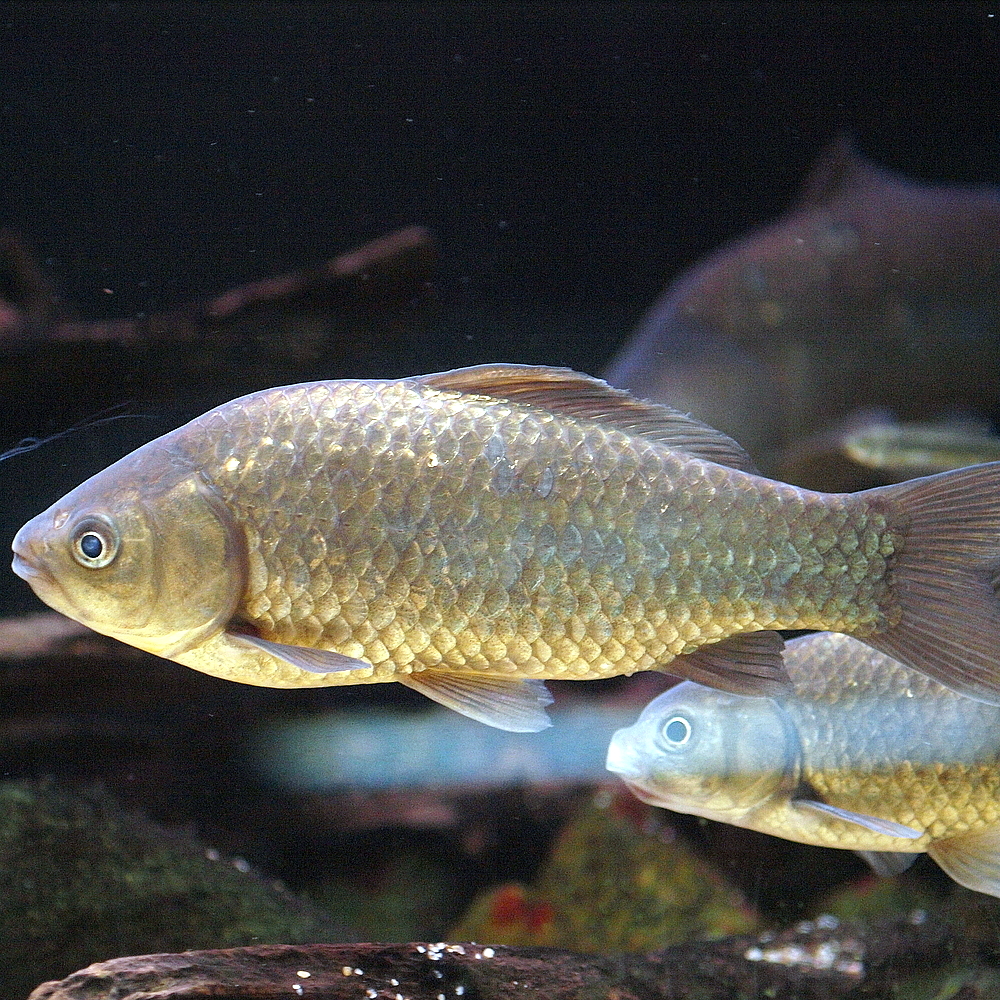
Ripon barbel
A large freshwater cyprinid from East African lakes and rivers.
The Ripon barbel is a ray-finned fish in the carp family, native to the East African Rift system. It reaches up to 90 cm and thrives in varied waters, serving as both a food source and a sport catch.
- Reaches a maximum length of 90 cm.
- Found in Lake Victoria and surrounding rivers.
- Eats plants, molluscs, and other fish.
- Listed as Least Concern by the IUCN.
- Commercially fished in the Kagera River.
What it is
The Ripon barbel is a substantial freshwater species belonging to the carp family. Adults can reach a maximum recorded length of ninety centimetres. The fish possesses typical barb features but taxonomic studies suggest it does not belong in the core Barbus genus. Instead, authorities often place it within the Labeobarbus group. Its physical appearance aligns with other large African barbs found in the region.
Where it lives
This species inhabits the East African Rift system. Key locations include Lake Victoria and its drainage basin. It also lives in Lakes Edward, George, Kyoga, and Kivu. The Ruzizi River down to its delta supports populations. The upper and middle sections of the Kagera River are also part of its range. Records for the Tana River are considered errors. The fish is absent from adjacent Lake Tanganyika.
How it lives
The Ripon barbel occupies diverse aquatic environments. It survives in inshore lake waters and fast-flowing rivers. As an omnivore, it consumes aquatic vegetation, molluscs, and small fishes. Its broad diet allows it to thrive in various conditions. Despite its large size, the species remains plentiful due to this ecological tolerance. It faces few natural predators that limit its population significantly.
Breeding and life cycle
Information regarding specific spawning behaviour is not provided in the available sources. However, the species is described as slow-growing. Individuals take a long time to reach maturity. This life history trait suggests a potentially vulnerable reproductive cycle if harvesting pressure increases.
Fish and people
Local communities fish the Ripon barbel for food and sport. Populations in the Kagera River hold commercial significance. Anglers target the species for recreational purposes. Sustainable management is necessary to prevent overfishing. Unsustainable practices along the Kagera must be avoided to protect stocks.
Status and threats
The International Union for Conservation of Nature lists the Ripon barbel as Least Concern. Widespread distribution and adaptable habits contribute to this stable status. Local stocks may suffer temporarily from erosion caused by deforestation. Increased turbidity can disrupt aquatic plant life. Careful management is required to ensure long-term population health.
Questions people ask about Ripon barbel
How big does the Ripon barbel get?
The maximum recorded total length for an adult Ripon barbel is 90 centimetres. This makes it a notably large species among African barbs found in the East African Rift system.
Where can I find the Ripon barbel?
It lives in the East African Rift, including Lake Victoria, Lakes Edward, George, Kyoga, and Kivu. It also inhabits the Ruzizi River delta and the upper Kagera River across several countries.
What does the Ripon barbel eat?
This fish is an omnivore. Its diet consists of water plants, molluscs, and other small fishes. This varied diet helps it survive in different freshwater habitats.
Is the Ripon barbel endangered?
No, it is currently listed as Least Concern by the IUCN. Its wide distribution and ability to adapt to various habitats keep its population stable despite some local threats.
Good reading and sources
The facts on this page come from the Wikipedia article "Ripon barbel", written by its contributors and used under the CC BY-SA 4.0 licence, and from its Wikidata record (CC0). EveryFish rewrote the text in its own words, with AI assistance, and compares every page with the article to make sure no passage is copied. It may be reused under the same CC BY-SA 4.0 licence with a link back.
It may contain mistakes, and figures change over time. Nothing here is investment or buying advice. If something is wrong, tell us. Last refreshed 2026-11-15.
Like Ripon barbel
All carps and minnows 🇮🇳 India and 4 moreRohu
A large silver carp from South Asian rivers, farmed for food and prized as a game fish.Carp · Rivers and lakes
 🇹🇭 Thailand and 2 moreSiamese mud carp
Freshwater cyprinid native to Mekong and Chao Phraya riversCarp · Rivers and lakes
 🇷🇺 RussiaCaspian roach
A brackish water fish from the Caspian Sea region, widely consumed as a dried snack.Carp · Estuaries and mangroves
 🇷🇺 Russia and 4 moreSabre carp
A silvery surface feeder from Eastern Europe and Asia.Carp · Rivers and lakes