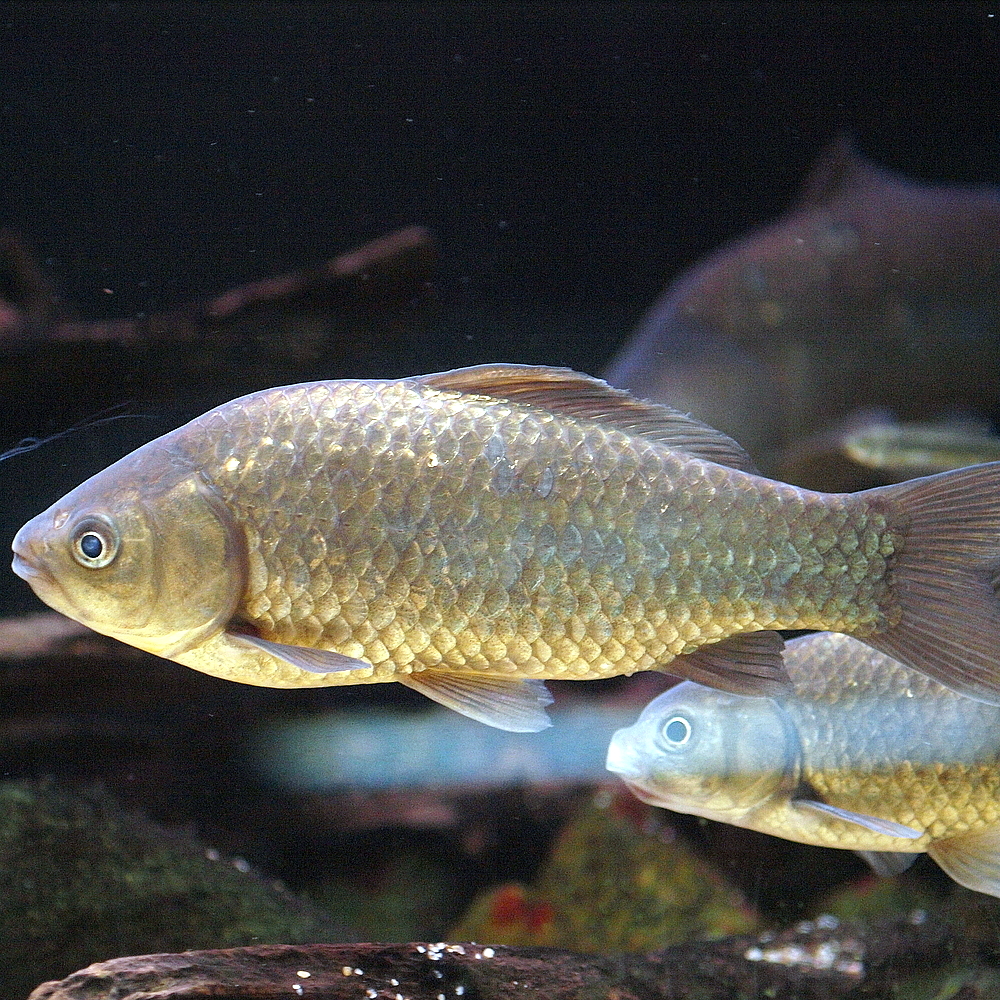
Nigorobuna
Wild carp from Lake Biwa used for fermented sushi.
The nigorobuna is a wild carp subspecies native to Lake Biwa in Japan. It reaches 35 cm and serves as the traditional ingredient for funazushi, a fermented rice dish. Habitat loss and invasive predators have caused severe population declines, leading to endangered status and strict fishing rules.
- Endemic to Lake Biwa and its connected waterways in Japan.
- Traditional ingredient for pungent fermented funazushi sushi.
- Listed as endangered due to habitat loss and invasive predators.
- Catches dropped from 500 tons in 1965 to 18 tons in 1997.
- Fishing ban applies to any fish measuring 22 cm or less.
What it is
The nigorobuna is a wild carp found only in Japan. It has a short body depth but wide breadth, resembling the nagabuna of Lake Suwa. Adults grow up to 35 cm long. The head is large with a ridged contour and an upward-slanted mouth. Its dorsal fin base is long, featuring one spine and roughly 17 soft rays. The anal fin has one spine and five soft rays. Total length is about 2.7 times the body depth. This fish exhibits polyploidy, meaning it carries extra sets of chromosomes.
Where it lives
This species lives exclusively in Lake Biwa and its connected waterways in Shiga Prefecture, west-central Honshu. Its habitat includes tributaries, distributaries, and irrigation canals northeast of Kyoto. Adults move between shallow summer waters and deeper winter zones. Larvae stay near reedy shores and inlets rich in aquatic plants. Spawning grounds include reed belts, attached lagoons called naiko, and nearby rice paddies. Human changes to the landscape have reduced these critical habitats significantly.
How it lives
Young fish feed on specific water fleas like Chydorus rather than algae. As they grow past 1 cm, they begin eating attached algae from plants. By 2 cm, algae make up half their diet. Larger adults consume bottom-dwelling zooplankton. They differ from related local carp that prefer rotifers. Adults face predation from invasive black bass. Eggs and larvae are eaten by bluegill. These introduced species threaten the native population alongside habitat changes.
Breeding and life cycle
Spawning occurs from April to June when rain raises water levels. Females lay eggs on aquatic plants in reed beds and lagoons. Hatchlings remain near the shore among reeds. As they grow, they move offshore into open water. The fish reach full adult size within two to three years. This cycle depends on access to flooded rice paddies and natural lagoon systems, which have been disrupted by modern farming infrastructure.
Fish and people
Locals prize this fish for making funazushi, a type of fermented sushi. Whole fish are packed with salt and cooked rice in tubs. The resulting dish has a strong odor and tender bones. Authentic versions require nigorobuna, earning it the name sushi-buna. Substitutes like gengoro-buna are considered inferior. Annual catches fell from 500 tons in 1965 to just 18 tons by 1997. Farming now occurs in Saitama Prefecture to support demand and conservation.
Status and threats
The Japanese Ministry of the Environment lists this subspecies as endangered. Population drops stem from habitat loss and invasive predators. Shore dyke projects altered reed belts, and lagoon areas shrank to 15% of their 1940 size. Sluice gates and PVC pipe systems in rice paddies block fish movement. Shiga Prefecture banned catching fish under 22 cm in 2007. Fishery-raised spawn are released into rice paddies to help recover stocks.

Questions people ask about Nigorobuna
What is nigorobuna used for?
It is the traditional fish used to make funazushi, a fermented sushi dish from Shiga Prefecture. The whole fish is salted and packed with rice. Locals consider it superior to other carp for this purpose because the bones become tender.
Why is the nigorobuna population declining?
Habitat loss is the main cause. Reed belts and lagoons have shrunk due to dyke projects. Rice paddy consolidation blocked water connections. Invasive black bass and bluegill also prey on adults, eggs, and larvae in Lake Biwa.
Where does the nigorobuna live?
It is endemic to Lake Biwa in Shiga Prefecture, Japan. It inhabits the lake, its tributaries, irrigation canals, and connected rice paddies. Adults move to deeper water in winter and shallows in summer.
Good reading and sources
The facts on this page come from the Wikipedia article "Nigorobuna", written by its contributors and used under the CC BY-SA 4.0 licence, and from its Wikidata record (CC0). EveryFish rewrote the text in its own words, with AI assistance, and compares every page with the article to make sure no passage is copied. It may be reused under the same CC BY-SA 4.0 licence with a link back.
It may contain mistakes, and figures change over time. Nothing here is investment or buying advice. If something is wrong, tell us. Last refreshed 2026-11-15.
Like Nigorobuna
All carps and minnows 🇮🇳 India and 4 moreRohu
A large silver carp from South Asian rivers, farmed for food and prized as a game fish.Carp · Rivers and lakes
 🇹🇭 Thailand and 2 moreSiamese mud carp
Freshwater cyprinid native to Mekong and Chao Phraya riversCarp · Rivers and lakes
 🇷🇺 RussiaCaspian roach
A brackish water fish from the Caspian Sea region, widely consumed as a dried snack.Carp · Estuaries and mangroves
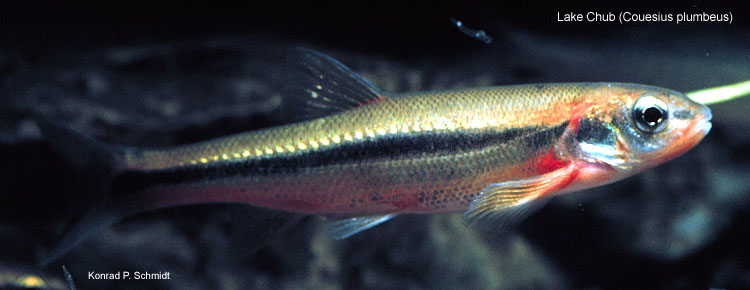 🇨🇦 Canada and 1 moreLake chub
A small cold-water minnow native to Canada and the northern US.Carp · Rivers and lakes

