
Java barb
A silvery freshwater fish farmed across Southeast Asia.
The Java barb is a ray-finned fish native to Southeast Asian rivers and floodplains. It is widely farmed for food due to its hardy nature and rapid growth cycle. This species supports local fisheries and helps manage aquatic vegetation in reservoirs.
- Grows up to 90 cm and weighs 13 kg
- Key aquaculture species in Thailand and Bangladesh
- Eats aquatic weeds and helps clear reservoirs
- Native to Mekong and Chao Phraya basins
What it is
This ray-finned fish features a body that is strongly compressed with an arched back. It has a small head, a short pointed snout, and a terminal mouth. The snout is shorter than the eye diameter. Fresh specimens appear silvery white, sometimes with a gold tint. Fins range from grey-yellow to pale orange with reddish tips. Males can reach lengths of over 40 cm in the wild.
Where it lives
Its natural habitat spans from Vietnam through the Mekong Basin to Thailand. Populations exist in the Chao Phraya basin, as well as on the islands of Sumatra and Java. It is also found in the Rajang River basin in Borneo. Introduced groups live in Peninsular Malaysia. The fish prefers still waters like floodplains and reservoirs over fast-flowing streams.
How it lives
The species occupies the middle to bottom water column. It feeds on plant material such as leaves, weeds, and aquatic plants like Hydrilla. Invertebrates form a minor part of its diet. It is not a long-distance migrant but moves locally within the Mekong system. Rising water levels and early rains trigger movement into flooded forests and canals.
Breeding and life cycle
Spawning activity correlates with the rainy season. The fish moves from main river channels into smaller streams and flooded areas as water levels rise. It returns to deeper channels when waters recede. This local migration pattern ensures access to suitable spawning grounds and food resources during peak water periods.
Fish and people
It is a major aquaculture species in Thailand and Bangladesh due to its low maintenance needs. The pituitary gland is used to induce breeding in other farmed fish. Escaped individuals support wild fisheries in some regions. It serves as a food source in Thai, Lao, and Cambodian cuisines, often pickled or boiled. It occasionally appears in the aquarium trade.
Status and threats
Wild populations face pressure from habitat changes, but the species remains abundant due to extensive farming. Escaped farmed fish have established self-sustaining groups in several areas. Its ability to thrive in various freshwater environments helps maintain its presence despite local ecological shifts.


Questions people ask about Java barb
What does the Java barb eat?
It primarily consumes plant matter including leaves, weeds, and aquatic plants like Hydrilla. It also eats some invertebrates. This diet makes it useful for controlling excessive vegetation in man-made reservoirs.
Where is the Java barb found?
It is native to Southeast Asia, including the Mekong and Chao Phraya river basins. It lives in Vietnam, Thailand, Indonesia, and Borneo. Introduced populations now exist in Peninsular Malaysia.
Why is it popular in farming?
The silver barb is a short-cycle species that requires low technology and effort to farm. It grows quickly and adapts well to various conditions, making it a cost-effective choice for aquaculture in countries like Bangladesh.
Good reading and sources
The facts on this page come from the Wikipedia article "Java barb", written by its contributors and used under the CC BY-SA 4.0 licence, and from its Wikidata record (CC0). EveryFish rewrote the text in its own words, with AI assistance, and compares every page with the article to make sure no passage is copied. It may be reused under the same CC BY-SA 4.0 licence with a link back.
It may contain mistakes, and figures change over time. Nothing here is investment or buying advice. If something is wrong, tell us. Last refreshed 2026-11-15.
Like Java barb
All carps and minnows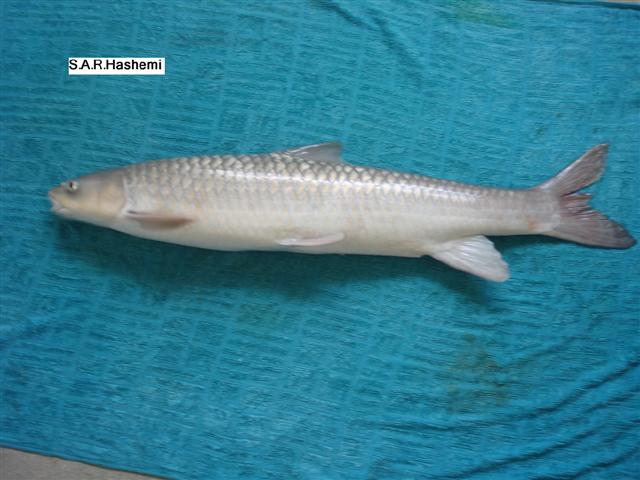 🇮🇷 Iran and 1 moreShabout
A large freshwater carp native to the Tigris-Euphrates basin in Western Asia.Carp · Rivers and lakes
 WorldTench
Slippery freshwater fish with olive-green skin and red eyes.Carp · Rivers and lakes · 1758
🇮🇷 Iran and 2 moreCaspian kutum
A prized ray-finned fish from the Caspian Sea.Carp · Estuaries and mangroves · 1901
 🇷🇺 RussiaCaspian roach
A brackish water fish from the Caspian Sea region, widely consumed as a dried snack.Carp · Estuaries and mangroves
More from Cyprinidae
All of them 🇹🇭 Thailand and 2 moreSiamese mud carp
Freshwater cyprinid native to Mekong and Chao Phraya riversCarp · Rivers and lakes
 🇮🇳 India and 4 moreRohu
A large silver carp from South Asian rivers, farmed for food and prized as a game fish.Carp · Rivers and lakes
 🇲🇾 Malaysia and 1 moreHarlequin rasbora
A small, colourful freshwater fish popular in home aquariums for its distinctive black body marking.Carp · Rivers and lakes
 WorldLabeobarbus
A genus of mid-sized ray-finned fish widely distributed in eastern and southern Africa.Carp · Rivers and lakes