
Bata
A slow-moving freshwater carp native to India and Bangladesh.
The Bata is a small freshwater fish found in rivers and ponds across India and Bangladesh. It grows up to 35 centimetres and is valued for its taste and as a game fish. While local studies suggest decline, aquaculture keeps its overall status stable.
- Grows up to 35 centimetres in length
- Native to India and Bangladesh waters
- Popular game fish with good taste
- Slow-moving and easily stressed by aggression
- Endangered in Khulna but farmed widely
What it is
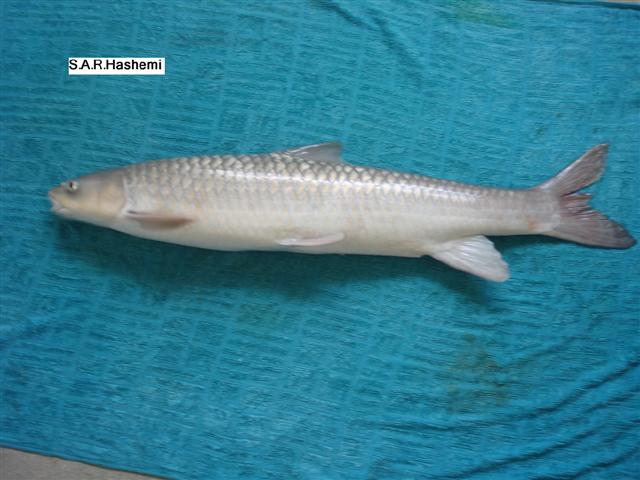
The Bata is a member of the genus Labeo, known for its elongated body shape. Its upper profile curves more than the lower side, and the snout extends slightly past the mouth, often featuring small pores. Two tiny maxillary barbels hide within the lip folds, and the lips lack cartilaginous support. The dorsal fin starts midway between the snout and the anal fin base. Colouration includes a bluish or dark upper half, a silvery underside, and a light orange opercle. Adults typically reach lengths between 25 and 35 centimetres.
Where it lives
This species is native to India and Bangladesh. It inhabits various freshwater environments, including ponds, rivers, and small rivulets. Specific regions mentioned include West Bengal, Odisha, and Tripura in India, as well as the Khulna District in Bangladesh. The fish thrives in these slow-moving or still water bodies across the subcontinent.
How it lives
The Bata is a slow-moving creature that becomes nervous around active or aggressive tank mates. Its diet changes with age. Young fish consume crustaceans and insect larvae, while adults feed on protozoa, algae, and tiny fishes. Growth rates are highest during the first two years of life and decline gradually until the seventh year. Both sexes exhibit similar growth patterns, influenced by feeding intensity and gonad maturation in adults.
Breeding and life cycle
Studies on age and growth utilise scale annuli and length-frequency distribution. Data shows specific length milestones at the end of each year up to seven years old. Seasonal growth in young fish depends mainly on feeding, whereas adult growth links to both food intake and reproductive development.
Fish and people
Anglers value the Bata as a popular game fish, and consumers appreciate its taste. It is widely farmed, which supports its population levels despite local pressures. In some areas, such as the Khulna District, it faces endangerment, but intense aquaculture practices help maintain its broader status. It remains a significant part of local fisheries in its native range.
Status and threats
The overall conservation status is considered least concern due to extensive aquaculture. However, local assessments tell a different story. A study in the Khulna District of Bangladesh classified the species as endangered there. This contrast highlights the difference between wild population pressures and managed farming outputs.

Questions people ask about Bata
How big does the Bata fish get?
The maximum length for an adult Bata is between 25 and 35 centimetres. Growth is fastest in the first two years and slows down afterwards.
What does the Bata eat?
Its diet includes protozoa, algae, and tiny fishes. In early life stages, it also consumes crustaceans and insect larvae.
Is the Bata fish endangered?
Overall it is considered of least concern due to intense aquaculture. However, local studies in places like Khulna District classify it as endangered.
Good reading and sources
The facts on this page come from the Wikipedia article "Labeo bata", written by its contributors and used under the CC BY-SA 4.0 licence, and from its Wikidata record (CC0). EveryFish rewrote the text in its own words, with AI assistance, and compares every page with the article to make sure no passage is copied. It may be reused under the same CC BY-SA 4.0 licence with a link back.
It may contain mistakes, and figures change over time. Nothing here is investment or buying advice. If something is wrong, tell us. Last refreshed 2026-11-15.
Like Bata
All carps and minnows 🇮🇳 India and 4 moreRohu
A large silver carp from South Asian rivers, farmed for food and prized as a game fish.Carp · Rivers and lakes
 🇫🇷 FranceCommon bleak
A small, silvery freshwater fish found across Europe and Western Asia.Carp · Rivers and lakes
 🇺🇸 United States and 1 moreGolden shiner
A North American minnow used widely as bait and in pond culture.Carp · Rivers and lakes
 🇨🇳 China and 1 moreBlack carp
A large freshwater fish native to East Asia, known for eating snails and causing ecological issues in the US.Carp · Rivers and lakes
More from Cyprinidae
All of them 🇲🇾 Malaysia and 1 moreHarlequin rasbora
A small, colourful freshwater fish popular in home aquariums for its distinctive black body marking.Carp · Rivers and lakes
 🇮🇷 Iran and 1 moreShabout
A large freshwater carp native to the Tigris-Euphrates basin in Western Asia.Carp · Rivers and lakes
 🇮🇳 India and 4 moreCommon snowtrout
A cold-water cyprinid from Himalayan rivers.Carp · Rivers and lakes