
Golden shiner
A North American minnow used widely as bait and in pond culture.
The golden shiner is a freshwater fish native to eastern North America. It is the only species in its genus and is extensively farmed for use as live bait.
- Sole member of the genus Notemigonus.
- Most widely pond-cultured fish in the US.
- Tolerates temperatures up to 40 °C.
- Uses egg dumping in other fish nests.
- Sensitive to methylmercury exposure.
What it is
This ray-finned fish belongs to the minnow family and stands alone in its genus. Adults typically measure between seven and twenty centimetres, though they can reach nearly thirty-seven centimetres. Their bodies are deep and flattened from side to side. The back appears dark green or olive, while the belly shines with silvery or brassy white hues. Smaller fish show silver sides, but larger ones turn golden in stained water. A faint stripe may run along the flank. The anal fin is large with many rays, and the dorsal fin usually has eight rays. Scales are large but fragile, falling off easily when handled. The mouth points upward, and the eyes are yellow-green. Spawning males develop orange tints on their fins.
Where it lives
Native populations stretch across the eastern half of North America. They extend north to the St Lawrence River, the Great Lakes, and Lake Winnipeg. Western limits include the Dakotas and Texas. Southern ranges cover southern Florida and Texas. Human activity has moved this species beyond its natural home. It now exists in western North America due to introductions for bait purposes. In Canada, it inhabits southeastern regions west to Manitoba or Saskatchewan. The species tolerates a wide range of conditions within these areas.
How it lives
These fish prefer quiet waters such as lakes, ponds, sloughs, and ditches. They also inhabit weedy sections of slow rivers. They tolerate pollution, turbidity, and low oxygen levels well. Temperatures up to forty degrees Celsius do not harm them. They feed on zooplankton, phytoplankton, microcrustaceans, insects, plants, and algae. Feeding occurs at any depth, using vision or filtering high-density prey. They form large shoals that roam widely. A few individuals often lead the group to food sources. Small fish frequently take the front position. They detect predators through alarm substances released from injured skin or predator feces.
Breeding and life cycle
Southern populations may breed at one year old, while Canadian fish often wait until three years. Females produce up to two hundred thousand sticky eggs placed among vegetation. No parents guard the young. Some females practice egg dumping by placing eggs in nests of pumpkinseed, largemouth bass, or bowfin. This parasitic strategy uses the host's parental care. Unlike bird parasites, the host's own eggs remain unaffected and may benefit from diluted predation risks.
Fish and people
This species serves as the most widely pond-cultured fish in the United States. Its primary role is as bait for game fishing. Anglers value it for attracting trout and bass. The fish is also known by French names in Quebec. Research studies frequently use them to test environmental toxicants like methylmercury. Exposure to mercury affects their nervous and reproductive systems. Studies examine tissue damage and behavioral changes in response to pollutants.
Status and threats
The International Union for Conservation of Nature lists this species as least concern. Populations remain stable across their extensive range. Pollution tolerance helps them survive in degraded habitats. Introduced populations outside their native area do not appear to face significant threats. Overfishing pressure is minimal due to their abundance and ease of cultivation. No specific conservation programmes target this species.


Questions people ask about Golden shiner
What does the golden shiner eat?
They are omnivores that consume zooplankton, phytoplankton, microcrustaceans, insects, plants, and algae. They feed at various depths using vision or filtering methods.
Why is this fish important to anglers?
It is the most commonly pond-cultured fish in the United States. Anglers use it primarily as live bait to catch game fish like trout and bass.
How do golden shiners reproduce?
Females lay up to 200,000 sticky eggs among vegetation. Some dump eggs into nests of other fish like bass or bowfin to utilize their parental care.
Where can I find golden shiners?
They live in eastern North America, from Florida to Canada. They prefer quiet lakes, ponds, and slow rivers. Introductions have placed them in western North America too.
Are they sensitive to pollution?
They tolerate pollution and low oxygen well. However, research shows methylmercury harms their nervous and reproductive systems, altering their behavior and causing tissue damage.
Good reading and sources
- Golden shiner on WikipediaEncyclopedia
- More photos on Wikimedia CommonsPhotos
- Wikidata recordOpen data
The facts on this page come from the Wikipedia article "Golden shiner", written by its contributors and used under the CC BY-SA 4.0 licence, and from its Wikidata record (CC0). EveryFish rewrote the text in its own words, with AI assistance, and compares every page with the article to make sure no passage is copied. It may be reused under the same CC BY-SA 4.0 licence with a link back.
It may contain mistakes, and figures change over time. Nothing here is investment or buying advice. If something is wrong, tell us. Last refreshed 2026-11-15.
Like Golden shiner
All carps and minnows 🇨🇳 China and 1 moreBlack carp
A large freshwater fish native to East Asia, known for eating snails and causing ecological issues in the US.Carp · Rivers and lakes
 🇮🇳 India and 4 moreRohu
A large silver carp from South Asian rivers, farmed for food and prized as a game fish.Carp · Rivers and lakes
 🇯🇵 JapanNigorobuna
Wild carp from Lake Biwa used for fermented sushi.Carp · Rivers and lakes
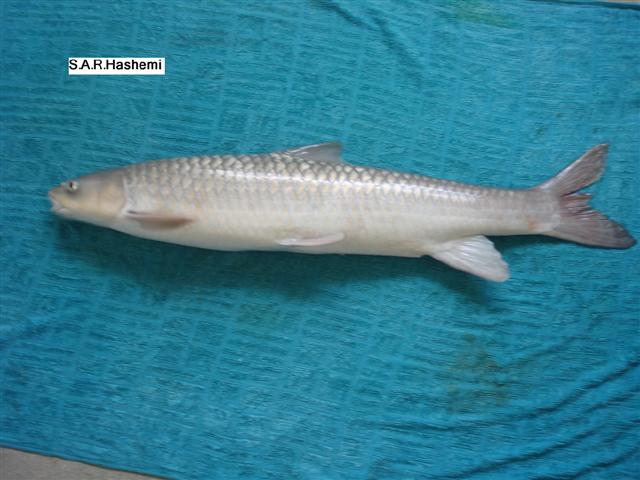 🇮🇷 Iran and 1 moreShabout
A large freshwater carp native to the Tigris-Euphrates basin in Western Asia.Carp · Rivers and lakes
More from Leuciscidae
All of them 🇺🇸 United States and 1 moreCreek chubs
Small North American minnows with a distinctive dorsal spotCarp · Rivers and lakes
 🇷🇺 RussiaCaspian roach
A brackish water fish from the Caspian Sea region, widely consumed as a dried snack.Carp · Estuaries and mangroves
 🇷🇺 Russia and 4 moreSabre carp
A silvery surface feeder from Eastern Europe and Asia.Carp · Rivers and lakes
 EuropeCommon rudd
A red-finned freshwater fish native to Europe and Asia.Carp · Rivers and lakes