
Common rudd
A red-finned freshwater fish native to Europe and Asia.
The common rudd is a ray-finned fish found in fresh waters across Europe and central Asia. It features bright red fins and an upturned mouth for surface feeding. While valued in ponds, it is considered invasive in regions like New Zealand and parts of the United States due to its impact on local ecosystems.
- Bright red fins distinguish it from similar species.
- Can consume 40% of its body weight in plants daily.
- Illegal to possess in Tennessee and Alabama, US.
- Considered invasive in New Zealand and parts of the US.
- Lives up to 17 years and matures at 2–3 years.
What it is
The common rudd is a bentho-pelagic freshwater fish with a distinct appearance. Its body is yellowish green, contrasting with the bluish flanks of the similar roach. The most striking feature is its bright red fins, particularly the dorsal and pectoral ones which have a reddish tint. An upturned mouth allows it to feed easily at the water surface. This mouth shape is visible even in young fish. The dorsal fin sits further back on the body compared to related species. Identification often relies on eye colour, as the rudd has yellow eyes while the roach has a red spot above the pupil.
Where it lives
This species is widely distributed across Europe and central Asia. It inhabits the basins of the North, Baltic, Black, Caspian, and Aral seas. Rudd prefer clear, mesotrophic waters that are rich in plants. They are commonly found in shallow weedy areas of lakes and river backwaters. The fish tolerates a wide range of temperatures and water conditions, including eutrophic or polluted environments. It generally avoids acidic water. Artificial introductions have expanded its range to Ireland, Norway, Spain, Morocco, Tunisia, Madagascar, New Zealand, Canada, and the United States.
How it lives
Rudd are active feeders that hunt for living prey in the upper water levels. Young individuals consume zooplankton, aquatic insects, and occasionally small fish. As they mature, their diet shifts primarily to aquatic vegetation. When temperatures exceed 18 °C, they feed heavily on plants. A mature rudd can consume up to 40% of its body weight in vegetation daily. Much of this is discharged as waste, which releases nutrients into the water column. They can tolerate various water conditions but prefer non-acidic environments. In laboratory settings, they have been known to hybridize with the golden shiner.
Breeding and life cycle
Mature females lay their eggs on submerged vegetation during the spawning season. A single female can produce up to 200,000 eggs. Sexual maturity is typically reached at two to three years of age. The young rudd start by eating zooplankton and insects before transitioning to a plant-based diet as they grow. The maximum recorded lifespan for this species is 17 years. Spawning takes place in the shallow, weedy habitats that the adults prefer for feeding and shelter.
Fish and people
The common rudd is popular among pond-keepers, especially the golden variety which has a gold-coloured body. They are sometimes sold as ornamental fish for ponds. However, their introduction to new environments has caused ecological concerns. In New Zealand, illegal introductions in the 1960s have led to active spreading, posing a threat to indigenous ecosystems. In the United States, possession of live rudd is unlawful in Tennessee. Alabama also bans the possession, sale, or import of rudd and roach. The name rudd refers to the seventeenth-century observation of its red fin colouring.
Status and threats
The rudd is considered an invasive species in several regions outside its native range. In New Zealand, it has the potential to irreversibly damage local ecosystems. In the United States, regulations restrict its transport and possession in states like Tennessee and Alabama to prevent spread. Reports of rudd in the US date back to at least 1925. Despite these concerns, no specific global conservation status is provided in the available data. The primary threats associated with this fish are related to its impact on non-native habitats rather than risks to its own survival.

Questions people ask about Common rudd
How can you tell a rudd from a roach?
Look at the eyes and fins. Rudd have yellow eyes and an upturned mouth, while roach have a red spot above the pupil. The rudd's dorsal fin is set further back, and it has fewer scales between the pelvic and anal fins.
Is the common rudd edible?
The provided text does not mention the rudd being used for food. It highlights its role as an ornamental pond fish and its status as an invasive species in certain regions, but does not describe culinary uses.
Why is the rudd considered invasive in some places?
In places like New Zealand and the US, rudd were introduced artificially. They can damage indigenous ecosystems by consuming large amounts of vegetation and altering water nutrient levels through waste discharge.
Good reading and sources
The facts on this page come from the Wikipedia article "Common rudd", written by its contributors and used under the CC BY-SA 4.0 licence, and from its Wikidata record (CC0). EveryFish rewrote the text in its own words, with AI assistance, and compares every page with the article to make sure no passage is copied. It may be reused under the same CC BY-SA 4.0 licence with a link back.
It may contain mistakes, and figures change over time. Nothing here is investment or buying advice. If something is wrong, tell us. Last refreshed 2026-11-15.
Like Common rudd
All carps and minnows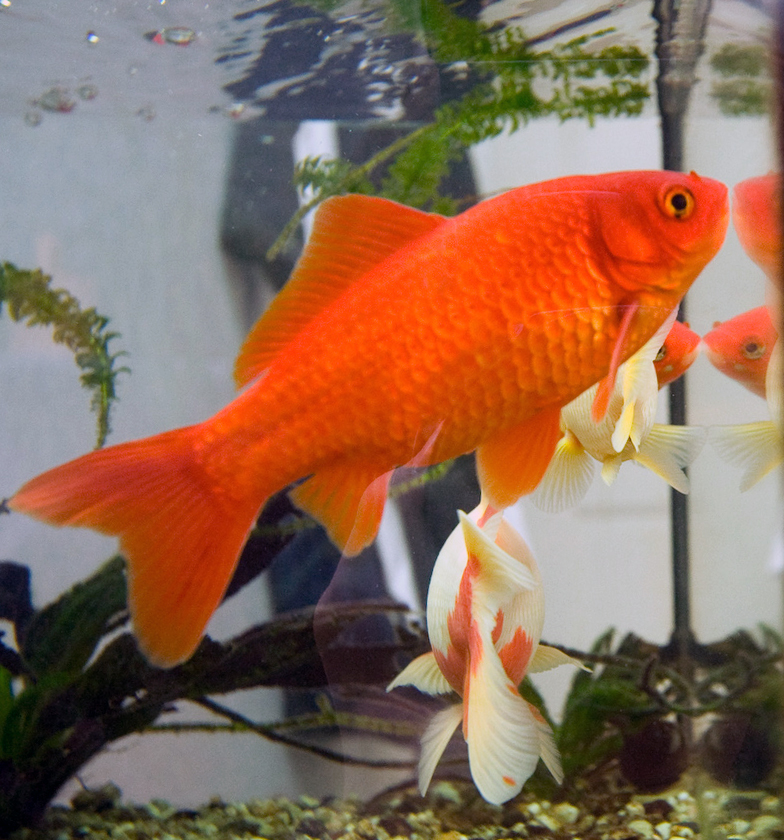 🇨🇳 ChinaGoldfish
A domesticated freshwater carp from China, kept worldwide as a pet and aquarium fish.Carp · Rivers and lakes
 🇮🇳 India and 4 moreZebrafish
Small striped fish from South Asia kept in aquariums and labsCarp · Rivers and lakes
 🇲🇾 Malaysia and 1 moreHarlequin rasbora
A small, colourful freshwater fish popular in home aquariums for its distinctive black body marking.Carp · Rivers and lakes
 🇹🇭 Thailand and 2 moreSiamese mud carp
Freshwater cyprinid native to Mekong and Chao Phraya riversCarp · Rivers and lakes
More from Leuciscidae
All of them 🇷🇺 RussiaCaspian roach
A brackish water fish from the Caspian Sea region, widely consumed as a dried snack.Carp · Estuaries and mangroves
 🇷🇺 Russia and 4 moreSabre carp
A silvery surface feeder from Eastern Europe and Asia.Carp · Rivers and lakes
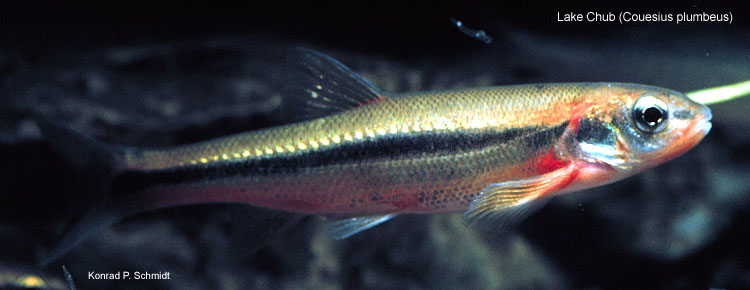 🇨🇦 Canada and 1 moreLake chub
A small cold-water minnow native to Canada and the northern US.Carp · Rivers and lakes
 🇺🇸 United States and 1 moreCreek chubs
Small North American minnows with a distinctive dorsal spotCarp · Rivers and lakes