
Common bleak
A small, silvery freshwater fish found across Europe and Western Asia.
The common bleak is a slender cyprinid native to European and Asian waterways. It forms large schools in rivers and lakes, feeding on insects and detritus before spawning in shallow waters during spring.
- Maximum length reaches 25 cm with a silvery finish.
- Extracted guanine from scales created artificial pearls in Paris.
- Females lay up to 7,000 eggs on vegetation in spring.
- Forms large schools in open waters of streams and lakes.
- Highly sensitive to pollution, causing declines in northwest Europe.
What it is
This species belongs to the minnow family and displays a flat, elongated body shape. Its head features a pointed snout with an upward-facing mouth, a trait visible even in juveniles. The fish possesses a complete lateral line and a long anal fin containing between eighteen and twenty-three rays. Adults exhibit a bright silver sheen with transparent, pointed fins. They typically reach a maximum size of twenty-five centimetres. Young individuals may resemble other cyprinids like bream or roach, but their distinct mouth orientation aids identification.
Where it lives
Populations inhabit regions north of the Caucasus mountains, the Pyrenees, and the Alps. The range extends eastward toward the Volga basin, covering parts of northern Iran and northwestern Turkey. The species does not occur naturally on the Iberian Peninsula, the Apennine Peninsula, or within the Adriatic watershed of the Balkans. It is also missing from most of the British Isles, except for southeastern England. Local introductions have established populations in Spain, Portugal, and Italy.
How it lives
These fish form large aggregations in streams and lakes, preferring open water areas. They thrive where food inflows occur near pumping stations or behind weirs. Their diet consists of small molluscs, falling insects, insect larvae, worms, tiny shellfish, and decaying plant matter. Predatory fish rely on them as a key food source. The species shows higher sensitivity to pollution compared to related cyprinids, which correlates with population declines in northwestern Europe.
Breeding and life cycle
Sexual maturity arrives around three years of age. Spawning occurs from April through June when water temperatures reach fourteen to fifteen degrees Celsius. Females release five thousand to seven thousand eggs in batches onto submerged vegetation or shallow substrates. Males develop orange-tinted fins and nuptial tubercles on their backs and sides. Eggs incubate for two to three weeks. Fry grow slowly and feed primarily on plankton. Hybridization with chub, roach, rudd, or bream is possible.
Fish and people
Bleak serve as bait for sport fishing targeting larger species. Historically, they held value for the artificial pearl industry. In Paris during 1656, Mr. Jaquin extracted crystalline guanine, known as essence Orientale or pearl essence, from their scales. This substance was used to create artificial pearls. While they are part of the ecosystem, direct human consumption is not highlighted as a primary use in modern contexts beyond their role in the food web.
Status and threats
The species faces threats from environmental degradation due to its high sensitivity to pollution. Populations have declined in northwestern Europe as a result. Conservation efforts focus on maintaining water quality in streams and lakes. No specific protected status is listed in the provided data, but their ecological role as prey makes them important indicators of aquatic health.


Questions people ask about Common bleak
How can I tell a young bleak apart from other fish?
Look for a pointed, upward-turned mouth, which is distinctive even in juveniles. Unlike roach or ruffe, which have wider bodies and short anal fins, bleak maintain this specific mouth shape early in life.
What did people use bleak scales for historically?
In 1656, a man named Jaquin in Paris extracted crystalline guanine from their scales. This material, called essence Orientale or pearl essence, was used to manufacture artificial pearls.
When do common bleak reproduce?
They spawn between April and June when water temperatures hit 14 to 15 degrees Celsius. Females deposit thousands of eggs on submerged plants or shallow areas during this period.
Why are bleak numbers dropping in some areas?
They are more sensitive to pollution than many other cyprinid fish. This vulnerability has led to population declines in northwestern Europe where water quality issues persist.
Good reading and sources
The facts on this page come from the Wikipedia article "Common bleak", written by its contributors and used under the CC BY-SA 4.0 licence, and from its Wikidata record (CC0). EveryFish rewrote the text in its own words, with AI assistance, and compares every page with the article to make sure no passage is copied. It may be reused under the same CC BY-SA 4.0 licence with a link back.
It may contain mistakes, and figures change over time. Nothing here is investment or buying advice. If something is wrong, tell us. Last refreshed 2026-11-15.
Like Common bleak
All carps and minnows 🇮🇳 India and 4 moreRohu
A large silver carp from South Asian rivers, farmed for food and prized as a game fish.Carp · Rivers and lakes
 🇰🇪 Kenya and 4 moreRipon barbel
A large freshwater cyprinid from East African lakes and rivers.Carp · Rivers and lakes · 1900
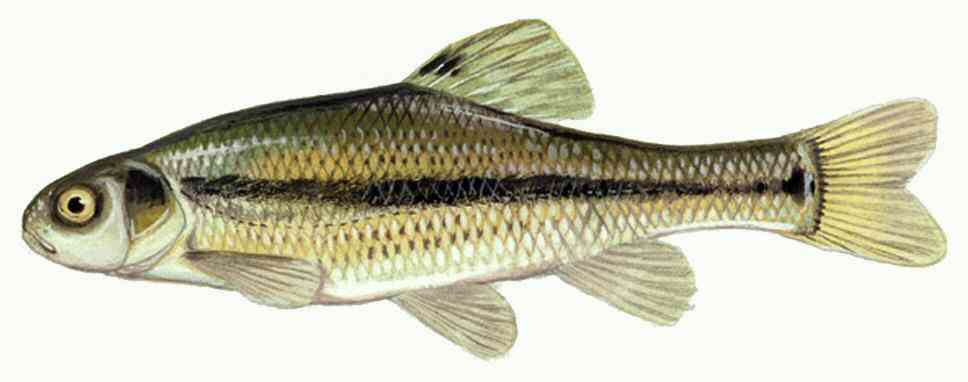 WorldMinnow
Small freshwater fish from the Cyprinidae family used as bait and food.Carp · Rivers and lakes
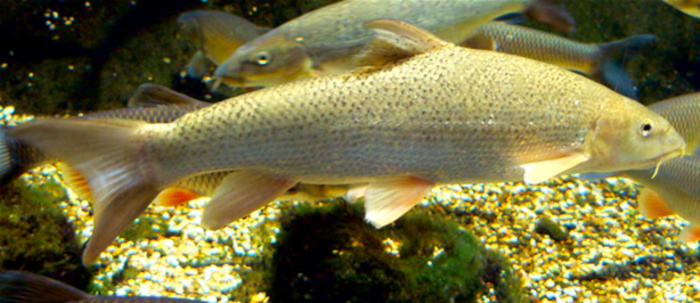 🇬🇧 United Kingdom and 4 moreBarbel
Carp-like freshwater fish with distinctive mouth barbelsCarp · Rivers and lakes
More from Leuciscidae
All of them 🇺🇸 United States and 1 moreCreek chubs
Small North American minnows with a distinctive dorsal spotCarp · Rivers and lakes
 🇷🇺 RussiaCaspian roach
A brackish water fish from the Caspian Sea region, widely consumed as a dried snack.Carp · Estuaries and mangroves
 🇷🇺 Russia and 4 moreSabre carp
A silvery surface feeder from Eastern Europe and Asia.Carp · Rivers and lakes
 EuropeCommon rudd
A red-finned freshwater fish native to Europe and Asia.Carp · Rivers and lakes