
Grass carp
Large herbivorous freshwater fish used for weed control and food.
The grass carp is a large, plant-eating fish native to eastern Asia. It thrives in rivers and lakes, growing rapidly on aquatic vegetation. Farmers value it for controlling weeds and as a food source, with global production exceeding five million tonnes annually.
- Only extant species in the genus Ctenopharyngodon
- Global farmed production exceeds five million tonnes yearly
- Eats up to three times its body weight in plants daily
- Requires fast-moving water for eggs to survive
- Introduced to 45 US states for weed control
What it is
This fish has a torpedo-shaped body that is chubby and elongated. Its colour ranges from dark olive to brownish-yellow on the sides, with a white belly. The scales are large and slightly outlined. It lacks barbels and has firm, non-fleshy lips. The dorsal fin holds eight to ten soft rays, while the anal fin sits closer to the tail than in many related species. Adults typically measure between 60 and 100 centimetres, though they can reach two metres in length and weigh up to 45 kilograms.
Where it lives
Native to the Pacific Far East, its natural home stretches from northern Vietnam to the Amur River on the border of China and Russia. It inhabits large, turbid rivers and associated floodplain lakes or wetlands. Humans have introduced it to many nations, including the United States, New Zealand, and various European countries. In the wild, it prefers slow-flowing or standing water bodies rich in vegetation. It tolerates a wide range of temperatures but requires specific conditions for reproduction.
How it lives
Adults feed primarily on aquatic plants, including submerged terrestrial vegetation. They may also consume detritus, insects, and other invertebrates. These fish eat up to three times their own body weight each day. They thrive in small lakes and backwaters where vegetation is abundant. Young fish grow very rapidly, often reaching over 45 centimetres by autumn if stocked in spring. Lifespan is typically five to nine years, though some individuals survive past fifteen years in favourable conditions.
Breeding and life cycle
Spawning occurs in fast-moving rivers when water temperatures reach 20 to 30 degrees Celsius. The eggs are slightly heavier than water and must remain suspended in turbulence to survive. If they sink to the bottom, they likely die. This requirement for long, flowing rivers limits natural reproduction in many introduced areas. Maturation takes about five years. Recent research has developed methods to shorten breeding cycles using surrogate host fish.
Fish and people
Farmers in China have cultivated this species for centuries as one of the Four Great Domestic Fish. It is valued for its tender meat and low bone content. Globally, it is the most farmed fish species by tonnage. Authorities also introduce sterile triploid individuals to control aquatic weeds in places like New Zealand and the Netherlands. Anglers find them challenging due to their vegetarian diet and wariness, but they are strong fighters. Some traditions involve consuming raw bile for health, though this poses poisoning risks.
Status and threats
The species has established self-reproducing populations in only a few major rivers outside its native range. In the United States, it is present in 45 states and reproduces in the Great Lakes Basin. While useful for weed control, unauthorized releases have raised ecological concerns. Management often relies on stocking sterile fish to prevent uncontrolled spread. Conservation efforts focus on regulating introductions and monitoring existing populations to balance agricultural benefits with environmental protection.


Questions people ask about Grass carp
What does the grass carp eat?
It feeds mainly on aquatic plants and submerged vegetation. It can consume up to three times its body weight daily. Occasionally, it eats detritus, insects, and invertebrates.
Why is it introduced to other countries?
Authorities use it to control excessive aquatic weed growth. Sterile triploid fish are often stocked to prevent them from establishing wild breeding populations in new environments.
How large do they grow?
Typical adults measure 60 to 100 centimetres. They can reach a maximum length of two metres and weigh up to 45 kilograms. Young fish grow very rapidly in their first year.
Good reading and sources
The facts on this page come from the Wikipedia article "Grass carp", written by its contributors and used under the CC BY-SA 4.0 licence, and from its Wikidata record (CC0). EveryFish rewrote the text in its own words, with AI assistance, and compares every page with the article to make sure no passage is copied. It may be reused under the same CC BY-SA 4.0 licence with a link back.
It may contain mistakes, and figures change over time. Nothing here is investment or buying advice. If something is wrong, tell us. Last refreshed 2026-11-15.
Like Grass carp
All carps and minnows 🇮🇳 India and 4 moreRohu
A large silver carp from South Asian rivers, farmed for food and prized as a game fish.Carp · Rivers and lakes
 🇨🇳 China and 4 moreBighead carp
A large Asian freshwater fish farmed globally and invasive in North America.Carp · Rivers and lakes
 🇮🇳 India and 1 moreTor khudree
A large freshwater carp native to Indian rivers, known for its silvery body and red fins.Carp · Rivers and lakes · 1838
 🇨🇳 China and 1 moreSilver carp
A filter-feeding freshwater fish native to Asia, now invasive in North America.Carp · Rivers and lakes · 1844
More from Cyprinidae
All of them 🇲🇾 Malaysia and 1 moreHarlequin rasbora
A small, colourful freshwater fish popular in home aquariums for its distinctive black body marking.Carp · Rivers and lakes
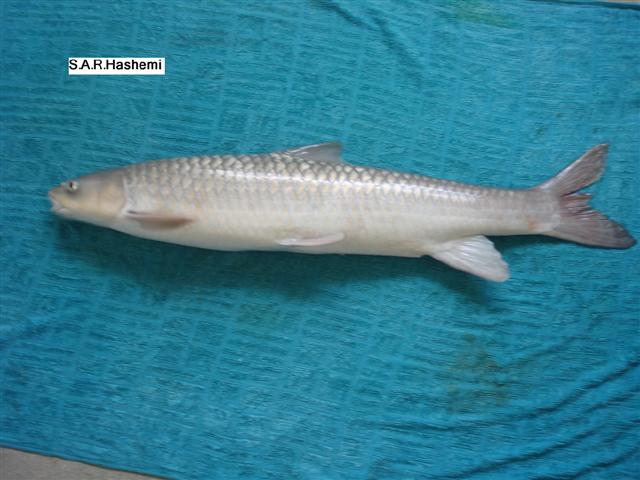 🇮🇷 Iran and 1 moreShabout
A large freshwater carp native to the Tigris-Euphrates basin in Western Asia.Carp · Rivers and lakes
 🇮🇳 India and 4 moreCommon snowtrout
A cold-water cyprinid from Himalayan rivers.Carp · Rivers and lakes