🇧🇩 Fish of Bangladesh
50 fish from Bangladesh, best known first.
Bangladesh relies heavily on fish for nutrition, with aquaculture driving significant economic growth. The sector faces challenges including labour abuses and environmental pressure from shrimp farming.
- Aquaculture supplied 59% of total fish production in 2023-24
- Fish provides 60% of animal protein in the Bangladeshi diet
- Exclusive economic zone covers 110,000 square kilometres
- Sundarbans mangroves provide spawning grounds for shrimp
Fish of Bangladesh
Fish supplies roughly sixty percent of animal protein in the national diet. Aquaculture alone contributed over two percent to the gross domestic product recently. Total production reached five million tonnes, with nearly sixty percent coming from farming. This shift occurred as urbanisation reduced land-based food sources. The government views underwater resources as essential for meeting nutritional demands. The industry supports livelihoods but also involves complex social issues.
Seas and rivers
The country holds an exclusive economic zone covering seventy-three percent of its land area in the Bay of Bengal. Inland waters support capture fisheries alongside farming. Mangrove estuaries in the Sundarbans serve as critical spawning grounds for marine life. These ecosystems are increasingly threatened by the conversion of forest stands into brine ponds for shrimp cultivation.
Fishing and farming
Shrimp farming has evolved from low-yield wild capture to more intensive methods. Modern hatcheries and quality control standards have been introduced with international aid. However, the sector struggles with low prices and variable quality. Child labour and forced debt bondage remain serious concerns in drying and processing sectors. Authorities acknowledge these issues and work with international bodies to address them.
Fish in culture
Shrimp and dried fish are central to local cuisine. They represent traditional food practices deeply embedded in daily life. Despite their cultural importance, the production chains involve significant ethical controversies regarding worker rights.
Today
The industry continues to expand through aquaculture investment. International organisations assist with safety standards and training. Efforts persist to balance economic gains with labour rights and environmental protection. The marine academy provides education for both fishing and maritime sectors.
The facts in this overview come from the Wikipedia article "Fishing industry in Bangladesh", written by its contributors and used under the CC BY-SA 4.0 licence. EveryFish rewrote the text in its own words, with AI assistance, and compares every page with the article to make sure no passage is copied. It may be reused under the same CC BY-SA 4.0 licence with a link back.
Fish places in Bangladesh
 🇮🇳 India and 4 moreIndian flying barb
A silver cyprinid with long barbels and jumping ability.Carp · Rivers and lakes · 1822
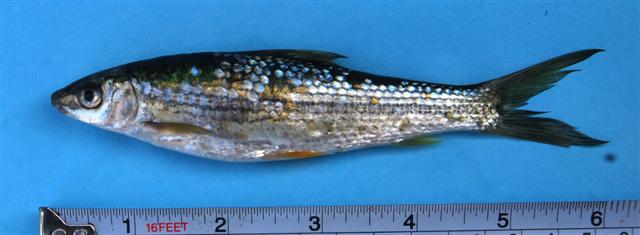 🇧🇩 Bangladesh and 3 moreReba carp
An edible freshwater fish native to South Asia.Carp · Rivers and lakes
 🇮🇳 India and 4 moreRohu
A large silver carp from South Asian rivers, farmed for food and prized as a game fish.Carp · Rivers and lakes
 🇮🇳 India and 4 moreZebrafish
Small striped fish from South Asia kept in aquariums and labsCarp · Rivers and lakes
 🇮🇳 India and 1 moreCotio
Small river fish of the Ganges and Brahmaputra basinsCarp · Rivers and lakes
🇵🇰 Pakistan and 3 moreGolden barb
Small Asian cyprinid found in rivers and aquariumsCarp · Rivers and lakes
 🇵🇰 Pakistan and 4 moreSwamp barb
Small tropical freshwater fish from South AsiaCarp · Rivers and lakes
 🇮🇳 India and 3 moreTrout barb
A slender carp living in fresh waters near the Bay of BengalCarp · Rivers and lakes
 🇵🇰 Pakistan and 4 moreMola carplet
A small freshwater fish from the Indian subcontinent valued as food.Carp · Rivers and lakes
🇮🇳 India and 4 morePool barb
Small tropical cyprinid from Asian inland watersCarp · Rivers and lakes · 1822
 🇦🇫 Afghanistan and 4 moreOlive barb
A cyprinid fish native to South and Southeast Asia.Carp · Rivers and lakes
 🇳🇵 Nepal and 4 moreTicto barb
Small silver freshwater fish with two black spotsCarp · Rivers and lakes
 🇮🇳 India and 4 moreTor mahseer
Large cyprinid fish of Himalayan rivers with record-sized scales.Carp · Rivers and lakes
 🇳🇵 Nepal and 4 moreCopper mahseer
A freshwater cyprinid fish native to South and Southeast Asia.Carp · Rivers and lakes
 🇵🇰 Pakistan and 3 moreKuria labeo
A large freshwater carp native to South Asia.Carp · Rivers and lakes
 🇮🇳 India and 1 moreBata
A slow-moving freshwater carp native to India and Bangladesh.Carp · Rivers and lakes
 🇮🇳 India and 4 moreMrigal carp
A farmed freshwater carp native to South Asia.Carp · Rivers and lakes
 🇮🇳 India and 4 moreCatla
Large freshwater carp farmed across South Asia for food.Carp · Rivers and lakes
Photo credits on this page
The small pictures above come from Wikimedia Commons under free licences. Some are cropped to fit.
- Rohu: Wiki Farazi, CC0, source
- Zebrafish: Roundish, CC0, source
- Cotio: Sir Francis Day, Public domain, source
- Swamp barb: AravindManoj, CC BY-SA 4.0, source
- Trout barb: Sir Francis Day, Public domain, source
- Mola carplet: Sir Francis Day, Public domain, source
- Olive barb: Viswaprabha, CC BY-SA 3.0, source
- Indian flying barb: Balaram Mahalder, CC BY 3.0, source
- Reba carp: A. M. Sajina & Deepa Sudheesan, CC BY 3.0, source
- Ticto barb: Mattia Nocciola, CC BY-SA 4.0, source
- Tor mahseer: Sir Francis Day, Public domain, source
- Copper mahseer: Ben Laloo, CC BY 3.0, source
- Kuria labeo: Hamid Badar Osmany, CC BY 3.0, source
- Bata: Priyankar Chakraborty, CC BY-SA 4.0, source
- Mrigal carp: Anna Frodesiak, CC0, source
- Catla: Khalid Mahmood, CC BY-SA 4.0, source