
Ticto barb
Small silver freshwater fish with two black spots
The ticto barb is a small subtropical freshwater fish native to South and Southeast Asia. It lives in shallow muddy waters and is popular in home aquariums for its active schooling behaviour and distinctive markings.
- Grows to a maximum length of 10 cm
- Has two black spots on silver gold body
- Lays around 150 eggs per spawning event
- Prefers water temperature of 14–22 °C
- Native to upper Mekong and Irrawaddy basins
What it is
The ticto barb is a small freshwater species belonging to the carp family. It has a silver and gold body marked by two distinct black spots. One spot sits just before the pectoral fin while the other lies near the base of the tail. Adults reach a maximum length of ten centimetres. This fish is native to subtropical regions and thrives in specific water conditions including slightly acidic pH levels.
Where it lives
This species inhabits the upper basins of several major river systems including the Mekong Salwen and Irrawaddy. Its range extends across Nepal India Pakistan Myanmar Bangladesh Thailand and Sri Lanka. It prefers still shallow marginal waters found in lakes and rivers. These habitats typically feature muddy bottoms where the fish can browse close to the substrate.
How it lives
Ticto barbs are active schooling fish that do best when kept in groups. In sufficient numbers they generally leave other tank mates alone. They feed on small crustaceans insects and plankton found near the bottom. In captivity they require a well planted environment that mimics their natural shallow muddy habitat. They prefer water temperatures between fourteen and twenty two degrees Celsius.
Breeding and life cycle
These fish lay their eggs among coarse gravel beds. A single spawning event produces approximately one hundred and fifty eggs released in batches of twenty. The parents often consume any eggs they discover after spawning concludes. To ensure survival aquarists usually separate the adults from the clutch immediately. The eggs hatch in about one day and the fry become free swimming a day later.
Fish and people
The ticto barb is a common choice for home aquariums due to its peaceful nature in schools. It is frequently confused with the Odessa barb in the trade though the latter lacks the reddish orange male colouration. Enthusiasts value its active behaviour and distinctive two spot pattern. Providing a planted tank with soft water helps replicate its natural environment.

Questions people ask about Ticto barb
How big does a ticto barb get?
The ticto barb is a small fish that grows to a maximum length of ten centimetres or four inches. This compact size makes it suitable for smaller community aquariums provided there is enough swimming space.
Do ticto barbs eat their own eggs?
Yes they often consume their eggs after spawning. Aquarists usually need to separate the adult fish from the gravel bed immediately after laying to prevent them from eating the clutch.
What water conditions do they need?
They prefer subtropical conditions with a pH between 6.0 and 7.0. Water hardness should be up to 10 dGH and the temperature must stay within the range of fourteen to twenty two degrees Celsius.
Good reading and sources
The facts on this page come from the Wikipedia article "Ticto barb", written by its contributors and used under the CC BY-SA 4.0 licence, and from its Wikidata record (CC0). EveryFish rewrote the text in its own words, with AI assistance, and compares every page with the article to make sure no passage is copied. It may be reused under the same CC BY-SA 4.0 licence with a link back.
It may contain mistakes, and figures change over time. Nothing here is investment or buying advice. If something is wrong, tell us. Last refreshed 2026-11-15.
Like Ticto barb
All carps and minnows 🇲🇾 Malaysia and 1 moreHarlequin rasbora
A small, colourful freshwater fish popular in home aquariums for its distinctive black body marking.Carp · Rivers and lakes
🇵🇰 Pakistan and 3 moreGolden barb
Small Asian cyprinid found in rivers and aquariumsCarp · Rivers and lakes
 EuropeCommon rudd
A red-finned freshwater fish native to Europe and Asia.Carp · Rivers and lakes
 🇮🇳 India and 4 moreZebrafish
Small striped fish from South Asia kept in aquariums and labsCarp · Rivers and lakes
More from Cyprinidae
All of them 🇮🇳 India and 4 moreRohu
A large silver carp from South Asian rivers, farmed for food and prized as a game fish.Carp · Rivers and lakes
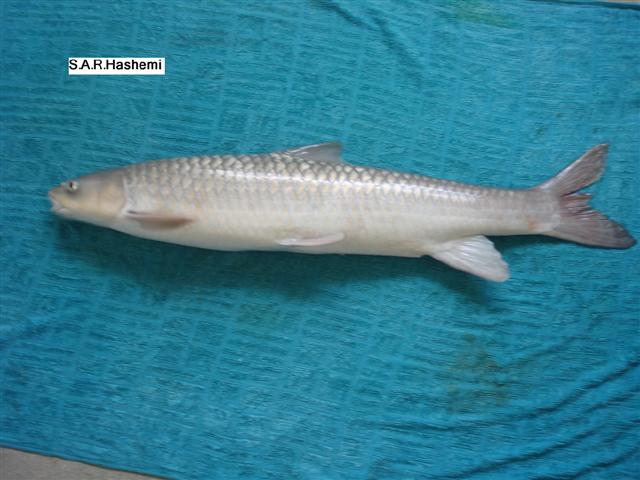 🇮🇷 Iran and 1 moreShabout
A large freshwater carp native to the Tigris-Euphrates basin in Western Asia.Carp · Rivers and lakes
 🇮🇳 India and 4 moreCommon snowtrout
A cold-water cyprinid from Himalayan rivers.Carp · Rivers and lakes
 🇹🇭 Thailand and 2 moreSiamese mud carp
Freshwater cyprinid native to Mekong and Chao Phraya riversCarp · Rivers and lakes