
Kuria labeo
A large freshwater carp native to South Asia.
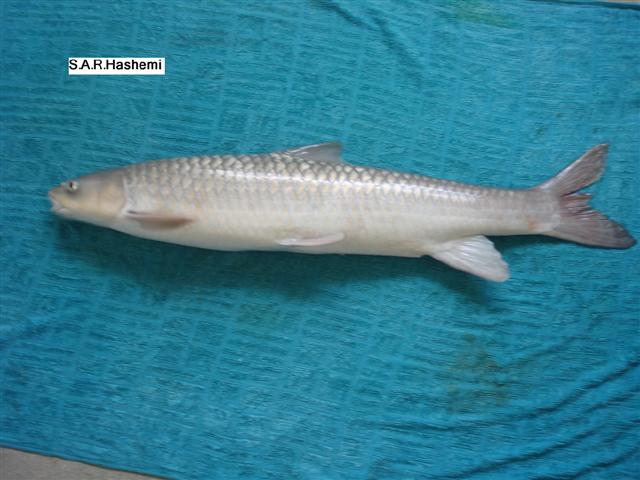
The Kuria labeo is a freshwater carp found in rivers across South Asia. It grows up to 1.5 metres and spawns during the monsoon season. Farmers rear it in aquaculture systems, often alongside other carp species. The fish remains common and is not currently threatened on a large scale.
- Grows up to 1.5 metres in length
- Spawns during the monsoon in July and August
- Native to Pakistan, India, Bangladesh and Burma
- Commonly reared in aquaculture systems
- Known as kurhi in Assamese and ghonia in Bengali
What it is
The Kuria labeo is a member of the carp family known scientifically as Labeo gonius. This freshwater species can grow quite large, reaching lengths of up to 1.5 metres. Adults may weigh around 1.4 kilograms. It has a typical carp body shape suited for river life. People in Assam call it kurhi or kuriha, while Bengali speakers refer to it as ghonia or gôinna. It lives primarily in fresh water environments.
Where it lives
This fish is native to several countries in South Asia. Its range includes Pakistan, India, Bangladesh, and Burma. Records also show its presence in Afghanistan and Nepal. It inhabits rivers throughout these regions. Occasionally, it ventures into paddy fields when water levels allow. The species is widespread and common in many of these areas, adapting well to local river systems.
How it lives
The Kuria labeo spends most of its time in freshwater rivers. It sometimes enters agricultural paddy fields. In aquaculture settings, farmers rear this fish alongside other carp varieties. However, it tends to compete with certain other species for resources. Despite this competition, it remains a popular choice for farming due to its size and hardiness in river conditions.
Breeding and life cycle
Spawning occurs during the monsoon season. The peak breeding months are July and August. Heavy rains and rising water levels likely trigger this reproductive cycle. The fish releases eggs into the flowing river water during this period. This timing ensures that young fish have ample food and space to grow as the floods recede.
Fish and people
Farmers actively rear this species in aquaculture programmes. It is valued as a food fish in its native range. While it competes with some other carps, it is still widely cultivated. Local communities in Assam and Bengal know it by specific regional names. Its large size makes it a significant catch for both commercial and subsistence fishing operations.
Status and threats
The species is currently widespread and common in many areas. It is not considered threatened on a large scale at present. However, potential threats exist. Overexploitation by fisheries could reduce numbers in specific locations. Habitat degradation from pollution or river changes also poses a risk. Continued monitoring is needed to ensure populations remain stable.

Questions people ask about Kuria labeo
How big does the Kuria labeo get?
This fish can reach a maximum length of 1.5 metres. An adult typically weighs around 1.4 kilograms. It is one of the larger carp species found in South Asian rivers.
When does the Kuria labeo spawn?
Spawning takes place during the monsoon season. The peak months for breeding are July and August. Rising water levels and rain trigger this reproductive activity in rivers.
Is the Kuria labeo farmed?
Yes, this species is reared in aquaculture. Farmers often keep it with other carp species. It is a common food fish in its native range across South Asia.
Good reading and sources
The facts on this page come from the Wikipedia article "Kuria labeo", written by its contributors and used under the CC BY-SA 4.0 licence, and from its Wikidata record (CC0). EveryFish rewrote the text in its own words, with AI assistance, and compares every page with the article to make sure no passage is copied. It may be reused under the same CC BY-SA 4.0 licence with a link back.
It may contain mistakes, and figures change over time. Nothing here is investment or buying advice. If something is wrong, tell us. Last refreshed 2026-11-15.
Like Kuria labeo
All carps and minnows 🇺🇸 United States and 1 moreGolden shiner
A North American minnow used widely as bait and in pond culture.Carp · Rivers and lakes
 🇨🇳 China and 1 moreBlack carp
A large freshwater fish native to East Asia, known for eating snails and causing ecological issues in the US.Carp · Rivers and lakes
 🇮🇳 India and 4 moreRohu
A large silver carp from South Asian rivers, farmed for food and prized as a game fish.Carp · Rivers and lakes
 🇮🇳 India and 1 moreBata
A slow-moving freshwater carp native to India and Bangladesh.Carp · Rivers and lakes
More from Cyprinidae
All of them 🇲🇾 Malaysia and 1 moreHarlequin rasbora
A small, colourful freshwater fish popular in home aquariums for its distinctive black body marking.Carp · Rivers and lakes
 🇮🇷 Iran and 1 moreShabout
A large freshwater carp native to the Tigris-Euphrates basin in Western Asia.Carp · Rivers and lakes
 🇮🇳 India and 4 moreCommon snowtrout
A cold-water cyprinid from Himalayan rivers.Carp · Rivers and lakes