
Swamp barb
Small tropical freshwater fish from South Asia
The swamp barb is a small cyprinid found in shallow inland waters across South and Southeast Asia. It grows to 15 cm and feeds on worms and plant matter. This species supports local fisheries and the aquarium trade as both a pet and live feed.
- Grows up to 15 cm in length
- Found in seven Asian countries
- Males show red bands for two days
- Used as live feed for Arowana
- Prefers water pH of 6.0 to 6.5
What it is
The swamp barb is a tropical freshwater fish belonging to the carp family. It has a compact body that reaches a maximum length of 15 centimetres and weighs up to 60 grams. This species inhabits shallow inland waters across Asia. Males develop bright red bands during breeding displays, while females show temporary red stripes. The fish prefers warm, slightly acidic water conditions typical of its native range.
Where it lives
This species originates in the inland waters of Asia. Its distribution covers Pakistan, India, Nepal, Bangladesh, Sri Lanka, Bhutan, and Myanmar. It thrives in a variety of shallow habitats including streams, rivers, canals, and inundated fields. The fish also occupies mangroves, marshes, swamps, and ponds. It requires a tropical climate with water temperatures between 20 and 25 degrees Celsius. The preferred pH level ranges from 6.0 to 6.5 with moderate hardness.
How it lives
Swamp barbs feed on a mixed diet of animal and plant material. They consume worms, benthic crustaceans, and insects alongside plant matter. These fish are adapted to life in shallow, slow-moving or still waters. They do not form large migratory schools but remain within their local habitat zones. Their feeding behaviour allows them to exploit resources in marshes and flooded agricultural fields effectively.
Breeding and life cycle
The swamp barb reproduces by scattering eggs over substrates in open water. Adults provide no protection for the eggs or young after spawning. During the breeding period, males exhibit prominent red bands that last for about two days. Females display red stripes for a shorter duration of approximately five hours. This colouration serves as a signal during courtship before the eggs are released.
Fish and people
This fish holds commercial value in several sectors. It is popular in the aquarium trade due to its small size and breeding colours. Fisheries also harvest it for local consumption. Additionally, swamp barbs serve as live feed for larger predatory aquarium species such as Arowana. Their availability makes them a practical food source for maintaining captive predator populations.
Questions people ask about Swamp barb
How big does a swamp barb get?
The swamp barb grows to a maximum length of 15 centimetres, which is about 6 inches. An adult typically weighs up to 60 grams. This small size makes it suitable for community aquariums and as feed for larger fish.
What do swamp barbs eat in the wild?
In their natural habitat, these fish consume a varied diet. They feed on worms, benthic crustaceans, and insects. They also ingest plant matter found in their shallow water environments such as marshes and flooded fields.
Where are swamp barbs found?
They originate in inland waters across Asia. Specific countries include Pakistan, India, Nepal, Bangladesh, Sri Lanka, Bhutan, and Myanmar. They live in shallow streams, rivers, canals, mangroves, and swamps.
Do swamp barbs care for their eggs?
No, they do not guard their offspring. The swamp barb is an open water substrate egg-scatterer. After the eggs are released into the water, the adults leave them without any parental protection or care.
Good reading and sources
The facts on this page come from the Wikipedia article "Swamp barb", written by its contributors and used under the CC BY-SA 4.0 licence, and from its Wikidata record (CC0). EveryFish rewrote the text in its own words, with AI assistance, and compares every page with the article to make sure no passage is copied. It may be reused under the same CC BY-SA 4.0 licence with a link back.
It may contain mistakes, and figures change over time. Nothing here is investment or buying advice. If something is wrong, tell us. Last refreshed 2026-11-15.
Like Swamp barb
All carps and minnows 🇹🇭 Thailand and 4 moreJava barb
A silvery freshwater fish farmed across Southeast Asia.Carp · Rivers and lakes
 WorldTench
Slippery freshwater fish with olive-green skin and red eyes.Carp · Rivers and lakes · 1758
 🇹🇭 Thailand and 2 moreSiamese mud carp
Freshwater cyprinid native to Mekong and Chao Phraya riversCarp · Rivers and lakes
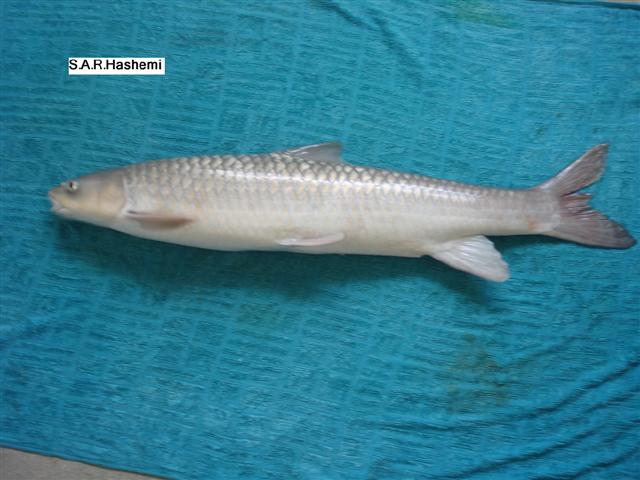 🇮🇷 Iran and 1 moreShabout
A large freshwater carp native to the Tigris-Euphrates basin in Western Asia.Carp · Rivers and lakes
More from Cyprinidae
All of them 🇮🇳 India and 4 moreCommon snowtrout
A cold-water cyprinid from Himalayan rivers.Carp · Rivers and lakes
🇵🇰 Pakistan and 3 moreGolden barb
Small Asian cyprinid found in rivers and aquariumsCarp · Rivers and lakes
 🇲🇾 Malaysia and 1 moreHarlequin rasbora
A small, colourful freshwater fish popular in home aquariums for its distinctive black body marking.Carp · Rivers and lakes
 🇮🇳 India and 4 moreRohu
A large silver carp from South Asian rivers, farmed for food and prized as a game fish.Carp · Rivers and lakes