🇯🇵 Fish of Japan
51 fish from Japan, best known first.
Japan maintains a significant fishing industry supported by advanced aquaculture and numerous ports. The sector faces challenges from aging workers and conservation debates, particularly regarding whaling. Government efforts focus on resource management and technological innovation to sustain marine livelihoods.
- Japan has over 2,000 fishing ports including Nagasaki and Otaru.
- Tsukiji market was a major global hub for seafood trade.
- Salmon is bred via artificial insemination then released into water.
- Japan resumed commercial whaling in its own waters in 2019.
- Nippon Suisan and Maruha Nichiro employ over 10,000 people each.
Fish of Japan
The Japanese fishing industry operates through a network of over two thousand ports along the Pacific coast and in regions like Hokkaido. Major hubs include Nagasaki, Otaru, and Kesennuma. The Tsukiji market in Tokyo historically served as a central wholesale point for fresh and processed seafood. The government oversees the sector via the Fisheries Agency, which manages policy planning, resource development, and port infrastructure. This administrative structure aims to balance commercial activity with ecological sustainability while supporting the workforce through training programmes and equipment subsidies.
Seas and rivers
Fishing activities occur across Japan's extensive coastline and territorial waters. The country possesses more than two thousand designated fishing ports. Key locations span from Nagasaki in southwest Kyushu to ports in Hokkaido such as Kushiro and Abashiri. On the Pacific side of Honshu, important centres include Hachinohe, Choshi, and Shimizu. These waters support both domestic capture fisheries and international operations conducted by large corporations like Nippon Suisan Kaisha and Maruha Nichiro.
Fishing and farming
Japan employs sophisticated aquaculture techniques, including artificial insemination and hatching, to breed fish and shellfish before releasing them into rivers or seas. Salmon is commonly raised using this method. The nation remains one of the few countries engaged in commercial whaling, having resumed operations within its exclusive economic zone after leaving the International Whaling Commission. Artificial reefs are deployed to enhance sustainable coastal fishing. The government promotes energy-saving systems to reduce fuel consumption and encourages students to enter the field through hands-on training in net fishing and sea farming.
Fish in culture
Literature reflects the harsh realities of the industry. Takiji Kobayashi’s 1929 novel A Crab Canning Boat depicts a crew resisting a cruel captain under difficult conditions. The story gained popularity in 2008 by connecting with themes of the working poor. Traditional methods persist alongside modern practices. Techniques such as tenkara fly fishing for roach and ayu fishing remain part of the cultural landscape. Dolphin drive hunting also represents a specific local practice within the broader context of marine exploitation.
Today
Current priorities involve restoring fishery resources and improving living environments for aquatic life. The government supports scientific research to manage stocks effectively and cooperates internationally on resource governance. Efforts include reorganizing labour structures and developing new technologies for operational efficiency. Despite these measures, the industry contends with an ageing workforce and shifting economic dynamics. Conservation disputes continue, especially concerning whaling quotas and sperm whale protection. The sector relies on continuous adaptation to maintain its role in the national economy.
The facts in this overview come from the Wikipedia article "Agriculture, forestry, and fishing in Japan", written by its contributors and used under the CC BY-SA 4.0 licence. EveryFish rewrote the text in its own words, with AI assistance, and compares every page with the article to make sure no passage is copied. It may be reused under the same CC BY-SA 4.0 licence with a link back.
Fish places in Japan
 🇷🇺 Russia and 3 moreChum salmon
A Pacific salmon species known for its large size and wide distribution across the North Pacific.Salmonid · Rivers and lakes · 1836
 🇵🇭 Philippines and 4 moreMilkfish
The sole living species of the family Chanidae, found across the Indo-Pacific.Other · Coasts and shelves
 🇮🇳 India and 4 moreReef stonefish
A highly venomous marine fish known for its rock-like camouflage and potent toxins.Other · Coasts and shelves · 1801
 🇮🇩 Indonesia and 4 moreEstuarine stonefish
A venomous marine ray-finned fish found in the Indo-Pacific region.Shark · Coasts and shelves · 1766
 🇦🇺 Australia and 4 moreLeopard coral grouper
A spotted reef predator prized for food across the Pacific.Perch-like · Coasts and shelves · 1802
 🇺🇸 United States and 3 moreDolly Varden trout
A cold-water char native to the North Pacific rim.Salmonid · Rivers and lakes · 1792
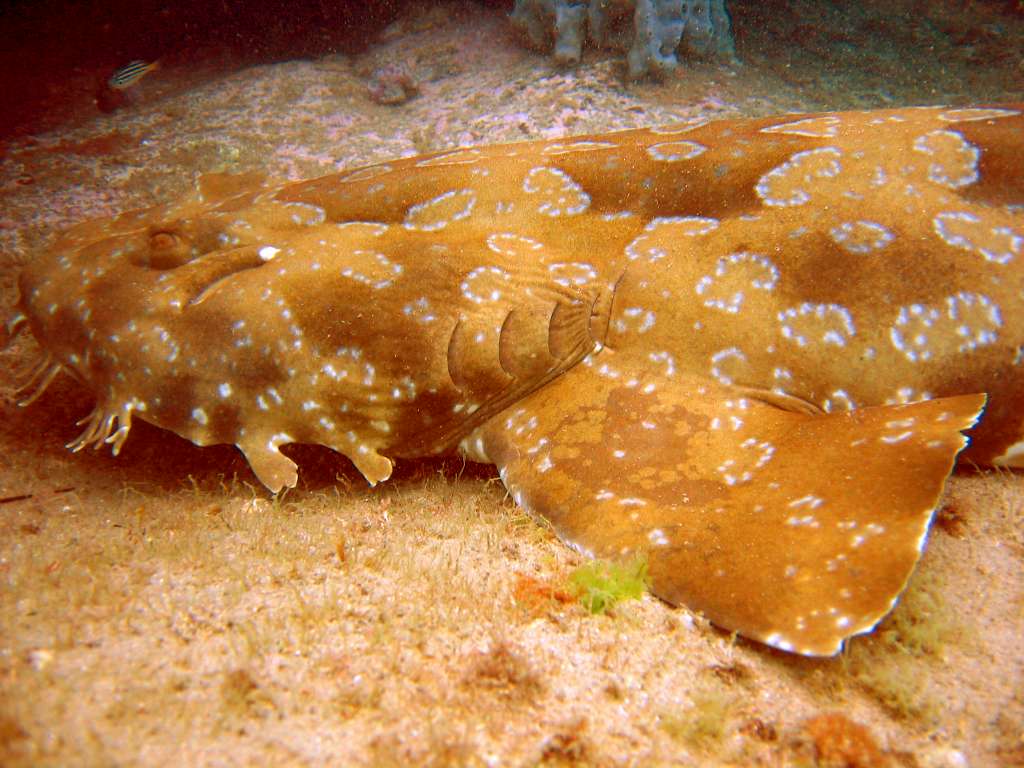 🇦🇺 Australia and 2 moreWobbegong
Camouflaged bottom-dwelling sharks found in the western Pacific and eastern Indian Ocean.Shark · Coasts and shelves
 🇮🇩 Indonesia and 4 moreWhitespotted bamboo shark
A small, bottom-dwelling carpet shark with purple and pink spots, common in Asian coral reefs.Shark · Coasts and shelves
 🇯🇵 Japan and 1 moreJapanese jack mackerel
A silver coastal fish prized in East Asian cuisine.Tuna · Coasts and shelves
 🇯🇵 Japan and 2 moreJapanese amberjack
A prized jack fish native to the northwest Pacific Ocean.Other · Coasts and shelves
 🇯🇵 Japan and 1 moreRed seabream
A prized marine fish of the Western Pacific with deep cultural roots in Japan.Perch-like · Coasts and shelves · 1843
 🇯🇵 Japan and 2 moreJapanese anchovy
Small schooling fish of the northwest PacificHerring · Coasts and shelves
🇦🇺 Australia and 4 moreBlackspotted croaker
Large Indo-Pacific marine fish prized for its high market value.Other · Coasts and shelves · 1802
 🇦🇺 Australia and 4 moreNarrow-barred Spanish mackerel
Large Indo-Pacific mackerel with narrow vertical barsTuna · Coasts and shelves
 🇰🇷 South Korea and 2 moreJapanese Spanish mackerel
A large mackerel species found in East Asian waters.Tuna · Coasts and shelves
 🇯🇵 JapanBig-scaled redfin
A medium-sized Asian fish popular for sport fishing.Carp · Coasts and shelves · 1877
 🇿🇦 South Africa and 4 moreJapanese meagre
A large saltwater fish found across the Indo-Pacific region.Other · Coasts and shelves
 🇯🇵 JapanJapanese puffer
A small-genome pufferfish used in genomics and cuisine.Other · Coasts and shelves
 🇯🇵 Japan and 2 moreAyu sweetfish
Small amphidromous fish prized for its sweet flesh in East Asia.Other · Rivers and lakes · 1846
 🇷🇺 Russia and 2 moreMasu salmon
Pacific salmonid native to East Asian coasts and rivers.Salmonid · Rivers and lakes
 🇺🇸 United States and 4 moreSmelt
Small fish of the northern hemisphere known for spring runs and culinary traditions.Other · Rivers and lakes
 🇺🇸 United States and 3 moreHalibut
Large flatfish species prized for food and sport in northern oceans.Flatfish · Coasts and shelves
 🇺🇸 United States and 3 moreCoho salmon
Anadromous Pacific salmon known for silver ocean phase and red spawning colours.Salmonid · Rivers and lakes
 🇦🇺 Australia and 4 moreAustralasian snapper
Coastal porgie prized for food in Australia and New ZealandPerch-like · Coasts and shelves
 🇺🇸 United States and 1 morePacific ocean perch
A deep-water red rockfish of the North Pacific.Perch-like · Coasts and shelves · 1890
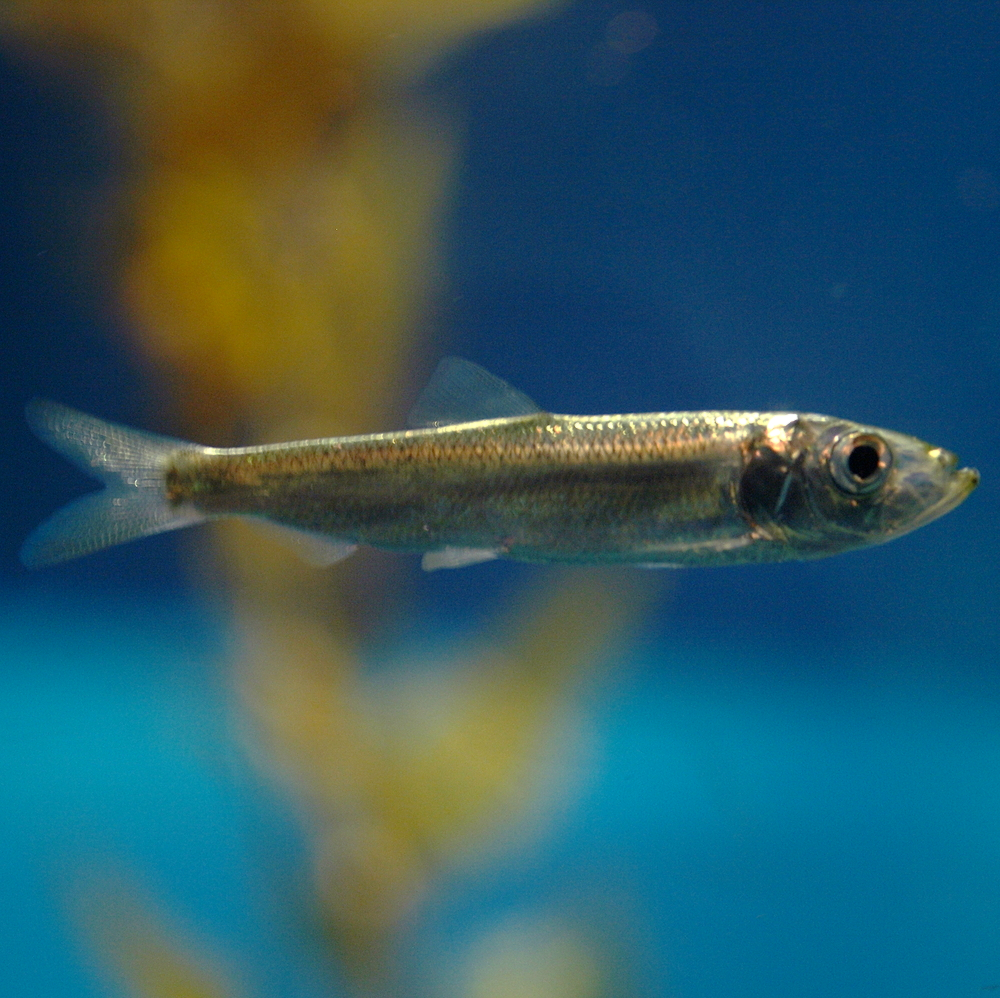 🇺🇸 United States and 4 morePacific herring
Silvery forage fish of the North PacificHerring · Coasts and shelves
 🇺🇸 United States and 4 moreAlaska pollock
A major North Pacific cod species used for surimi and fillets.Cod · Coasts and shelves · 1814
 🇨🇳 China and 1 moreSmall yellow croaker
Temperate western Pacific croaker with red lips and gold bellyOther · Coasts and shelves
 🇮🇩 Indonesia and 4 moreKuhl's maskray
A venomous, blue-spotted stingray found in Indo-Pacific waters.Ray · Coasts and shelves
Photo credits on this page
The small pictures above come from Wikimedia Commons under free licences. Some are cropped to fit.
- Smelt: Surf_Smelt,_Pond_smelt.jpg : Drawing by H. L. Todd, NOAA's Historic Fi, Public domain, source
- Estuarine stonefish: Sir Francis Day, Public domain, source
- Milkfish: Wiki Farazi, CC0, source
- Ayu sweetfish: Handan99, CC BY-SA 4.0, source
- Masu salmon: KENPEI, CC BY-SA 3.0, source
- Leopard coral grouper: portioid, CC BY-SA 4.0, source
- Reef stonefish: Karelj, CC BY-SA 3.0, source
- Dolly Varden trout: The original uploader was PDH at English Wikipedia ., Public domain, source
- Wobbegong: Unknown author, CC BY-SA 3.0, source
- Whitespotted bamboo shark: yvonne n, CC BY 2.0, source
- Japanese jack mackerel: Izuzuki, CC BY 2.5, source
- Japanese amberjack: E-190's, CC BY-SA 3.0, source
- Red seabream: Miya, CC BY-SA 3.0, source
- Japanese anchovy: Kingfisher, CC BY-SA 4.0, source
- Chum salmon: Focus Saranpat Ouilapan, CC0, source
- Narrow-barred Spanish mackerel: ppericard, CC BY 4.0, source
- Japanese Spanish mackerel: re_nebel, CC BY 4.0, source
- Big-scaled redfin: OpenCage, CC BY-SA 2.5, source
- Japanese meagre: Show_ryu, CC BY-SA 3.0, source
- Japanese puffer: Totti, CC BY-SA 4.0, source
- Halibut: Unknown author, Public domain, source
- Coho salmon: Bureau of Land Management Oregon and Washington, Public domain, source
- Australasian snapper: fir0002 flagstaffotos [at] gmail.com Canon 20D + Tamron 28-75mm f/2.8, GFDL 1.2, source
- Pacific ocean perch: Unknown author, Public domain, source
- Pacific herring: Unknown author, CC BY-SA 2.5, source
- Alaska pollock: George Berninger Jr., CC BY-SA 4.0, source
- Small yellow croaker: 思源如宁, CC BY-SA 3.0, source
- Kuhl's maskray: Dr. Dwayne Meadows, NOAA/NMFS/OPR, Public domain, source