
Japanese anchovy
Small schooling fish of the northwest Pacific
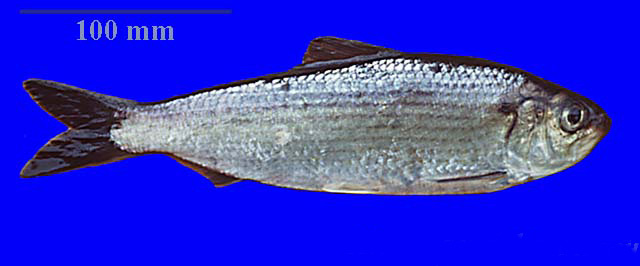
The Japanese anchovy is a small pelagic fish found in the northwest Pacific Ocean. It supports commercial fisheries in Japan, South Korea and China using traditional and modern nets. This short-lived species grows quickly and forms large schools in coastal waters.
- Lives for only two to three years
- Caught using traditional nangjangmang nets in Korea
- Found in the Sea of Japan and Yellow Sea
- Maximum weight reaches forty-five grams
What it is
This species belongs to the anchovy family and lives in large groups. Adults typically measure fourteen centimetres in length. The largest individuals reach eighteen centimetres and weigh up to forty-five grams. Its body shape is streamlined for fast swimming in open water. The fish inhabits the northwest Pacific region. It shares biological traits with the European anchovy, including a similar size range and life cycle.
Where it lives
The distribution covers several major bodies of water in East Asia. Populations thrive in the Sea of Okhotsk and the Sea of Japan. They are also common along the east coast of Japan. The range extends into the Yellow Sea and the East China Sea. These coastal and shelf environments provide the necessary conditions for their survival. The species is not found in tropical or southern hemisphere waters according to available records.
How it lives
These fish form dense schools as a defence mechanism against predators. They live for a short period, usually two to three years. This rapid turnover allows populations to recover quickly if fishing pressure is managed. Their behaviour is typical of pelagic species that stay near the surface. They move with currents and temperature changes in the northwest Pacific. Specific dietary habits are not detailed in the provided information.
Breeding and life cycle
The short lifespan suggests a fast growth rate and early maturity. Like other anchovies, they likely release eggs into the water column.
Fish and people
Commercial fleets target this species in Japan, China and South Korea. In South Jeolla Province, fishermen use a traditional fixed shore net called nangjangmang. This long bag set net captures schools as they move near the coast. The catch serves as food for local populations and export markets. It is a staple in regional cuisines across East Asia. The fishing methods vary from traditional nets to industrial trawling in other areas.
Status and threats
Overfishing can impact short-lived species, but no specific threats are listed here. Management relies on national fisheries regulations in the range countries.


Questions people ask about Japanese anchovy
How big does the Japanese anchovy grow?
Adults commonly reach fourteen centimetres in length. The maximum recorded size is eighteen centimetres. They weigh up to forty-five grams when fully grown.
Where is the Japanese anchovy found?
It lives in the northwest Pacific Ocean. Key areas include the Sea of Okhotsk, Sea of Japan, Yellow Sea, and East China Sea.
How is it caught in South Korea?
Fishermen in South Jeolla Province use a traditional fixed shore net known as nangjangmang. This method uses long bag sets to capture schools near the coast.
Good reading and sources
- Japanese anchovy on WikipediaEncyclopedia
- More photos on Wikimedia CommonsPhotos
- Wikidata recordOpen data
The facts on this page come from the Wikipedia article "Japanese anchovy", written by its contributors and used under the CC BY-SA 4.0 licence, and from its Wikidata record (CC0). EveryFish rewrote the text in its own words, with AI assistance, and compares every page with the article to make sure no passage is copied. It may be reused under the same CC BY-SA 4.0 licence with a link back.
It may contain mistakes, and figures change over time. Nothing here is investment or buying advice. If something is wrong, tell us. Last refreshed 2026-11-15.
Like Japanese anchovy
All herrings and sardines WorldIndian anchovy
Small schooling fish used for food and bait in the Indo-Pacific.Herring · Coasts and shelves
 🇵🇪 Peru and 1 morePeruvian anchoveta
Small Pacific fish vital for fishmeal and growing food useHerring · Coasts and shelves
 🇺🇸 United States and 1 moreAlewife
A small North American herring that migrates between sea and rivers.Herring · Coasts and shelves
 🇹🇷 Turkey and 4 moreAnchovy
Small, oily forage fish found in oceans and some rivers worldwide.Herring · Coasts and shelves

