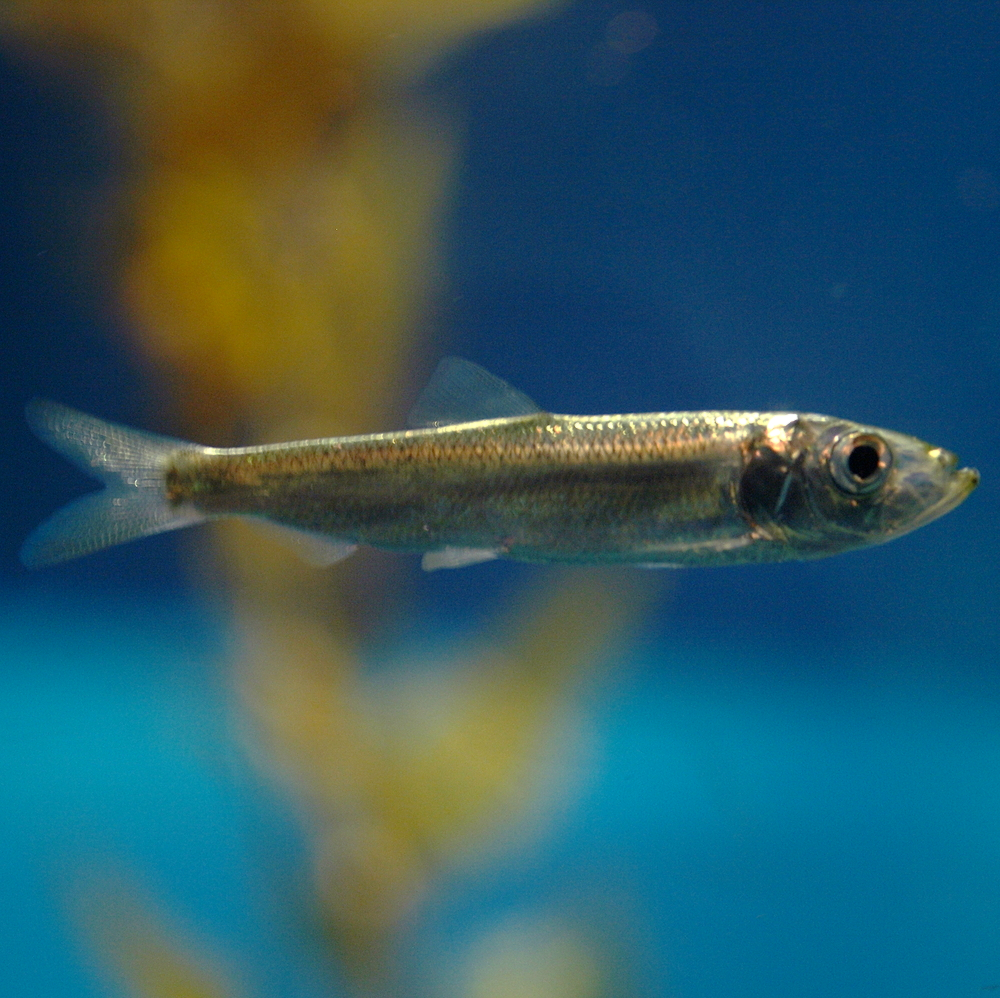
Pacific herring
Silvery forage fish of the North Pacific
The Pacific herring is a silvery forage fish found along the coasts of North America and northeast Asia. It supports major commercial roe fisheries and serves as a critical food source for marine predators. Stocks collapsed in the late twentieth century due to overfishing but are slowly recovering under management.
- Typical adult size is 33 centimetres
- Spawns on eelgrass and kelp in bays
- Fishery collapsed in 1993
- Roe exported as Japanese kazunoko
- Keystone species for marine predators
What it is
This silvery fish features a bluish-green back and white belly. Its colour comes from guanine crystals in the lateral line, providing camouflage. The body is laterally compressed with large, easy-to-remove scales. It has no teeth on the jawline, though some appear on the vomer. A single dorsal fin sits mid-body, and the tail is deeply forked. Adults typically reach 33 centimetres, with exceptional specimens growing to 45 centimetres and weighing 550 grams. The interior is bony with oily flesh.
Where it lives
The species inhabits the Pacific Ocean rim. In North America, it ranges from Baja California north through Alaska to the Bering Sea. In Asia, it extends south from the Russian Far East to Japan, Korea, and China. They prefer sheltered bays and estuaries for spawning, such as San Francisco Bay and Humboldt Bay. In northern regions, they occupy deeper channels before moving to shallow intertidal zones.
How it lives
Pacific herring are filter feeders capable of eating in dim light due to unusual retinal morphology. They move rapidly vertically using a nerve system connected to the gas bladder. As a keystone species, they support many predators. Juveniles face heavy predation, with only one in ten thousand eggs surviving to adulthood. They school in large numbers and migrate from open ocean to coastal breeding grounds annually.
Breeding and life cycle
Spawning occurs in early months, often on eelgrass or kelp. Males may release milt to trigger female egg laying. Schools spawn collectively, creating dense egg mats on submerged vegetation. A female lays up to 20,000 eggs. Incubation lasts about ten days in water near 10 degrees Celsius. Adults survive spawning and can breed in successive years.
Fish and people
Indigenous peoples have harvested this fish for millennia. Industrial fishing for oil and fertilizer began in the late nineteenth century, leading to stock collapses. Modern fisheries target roe for the Japanese market, known as kazunoko. The Supreme Court of Canada recognized aboriginal fishing rights in 1997. Commercial uses now include bait and roe, with past industries focused on reduction products.
Status and threats
The North American fishery collapsed in 1993 due to overfishing. Stocks are slowly recovering in areas like Sitka Sound and San Francisco Bay, though some remain depleted. Conservation efforts include quota management and habitat protection. Petitions to list specific populations as endangered were denied, but status reviews continue. Loss of eelgrass habitat is a suspected cause for recent declines in Puget Sound.


Questions people ask about Pacific herring
What do Pacific herring eat?
They are filter feeders that consume small organisms. Their unusual eye structure allows them to feed in very dim lighting conditions.
Why did the herring fishery collapse?
Overfishing for oil, fertilizer, and roe led to a major collapse in 1993. Industrial methods exceeded sustainable limits, depleting stocks across North America.
Where do they lay their eggs?
They spawn in sheltered bays and estuaries. Females attach sticky eggs to submerged vegetation like eelgrass, kelp, or seaweed in shallow waters.
Good reading and sources
- Pacific herring on WikipediaEncyclopedia
- More photos on Wikimedia CommonsPhotos
- Wikidata recordOpen data
The facts on this page come from the Wikipedia article "Pacific herring", written by its contributors and used under the CC BY-SA 4.0 licence, and from its Wikidata record (CC0). EveryFish rewrote the text in its own words, with AI assistance, and compares every page with the article to make sure no passage is copied. It may be reused under the same CC BY-SA 4.0 licence with a link back.
It may contain mistakes, and figures change over time. Nothing here is investment or buying advice. If something is wrong, tell us. Last refreshed 2026-11-15.
Like Pacific herring
All herrings and sardines 🇺🇸 United StatesAtlantic menhaden
A silvery herring species found along the North American Atlantic coast.Herring · Coasts and shelves
 🇲🇾 Malaysia and 4 moreToli shad
A prized shad of the Indian and Pacific coastsHerring · Rivers and lakes
 🇧🇩 Bangladesh and 4 moreIlish
Anadromous herring species prized as a delicacy in South Asia and the Middle East.Herring · Rivers and lakes
 🇹🇷 Turkey and 4 moreEuropean anchovy
Small coastal forage fish of Europe and AfricaHerring · Coasts and shelves · 1758
More from Clupeidae
All of them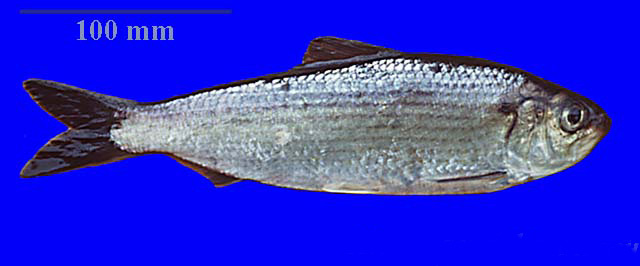 🇺🇸 United States and 1 moreAlewife
A small North American herring that migrates between sea and rivers.Herring · Coasts and shelves
 🇺🇸 United States and 3 moreMenhaden
Small silver forage fish that filter plankton and support marine food webs.Herring · Coasts and shelves
 WorldSpotted sardinella
A small herring with golden spots found in the Indo-Pacific.Herring · Coasts and shelves
 🇺🇸 United States and 2 moreAmerican gizzard shad
A silvery freshwater forage fish with a muscular gizzard.Herring · Rivers and lakes