
European anchovy
Small coastal forage fish of Europe and Africa
The European anchovy is a small, silvery forage fish found in coastal waters from Norway to South Africa. It supports major fisheries and forms a staple food in regions like the Black Sea and Mediterranean.
- Maximum length is 21 cm with a typical size of 13.5 cm
- Mouth gape extends behind the eyes
- Staple food in Black Sea cuisine known as hamsi
- Tolerates salinity levels from 5 to 41 PSU
- Invasive comb jellies reduced Mediterranean stocks in the 1980s
What it is
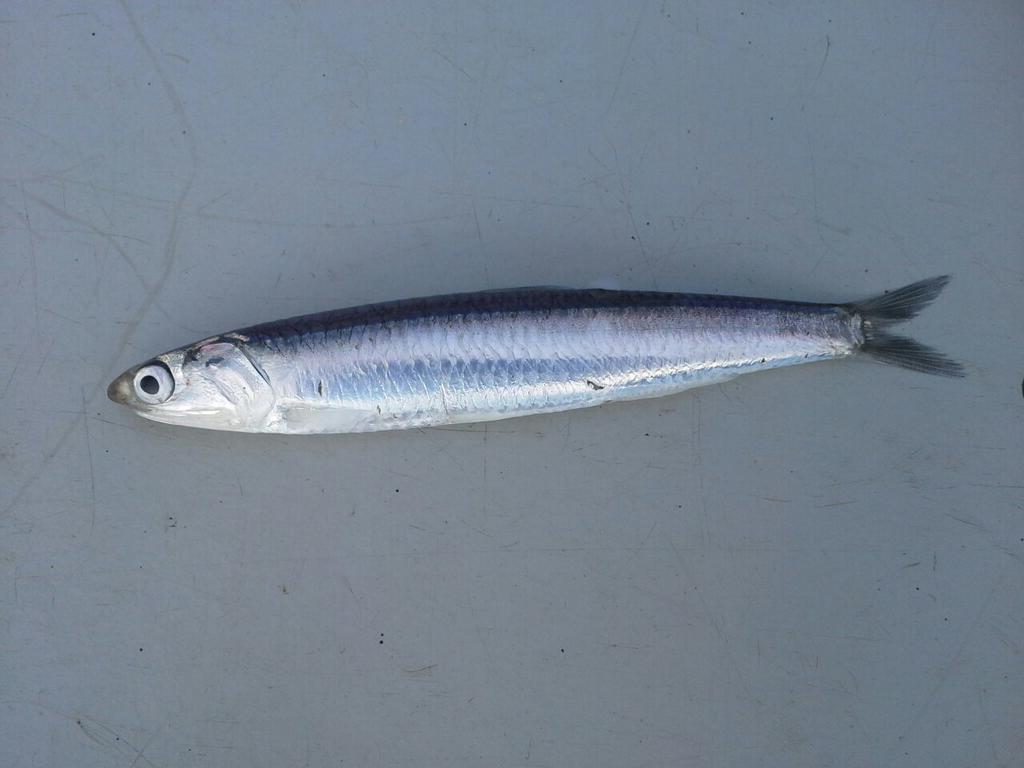
This small fish has a slender, round body with a silver belly and blue-green back. Its most distinct feature is a deeply cleft mouth that extends behind the eyes. The snout points forward beyond the lower jaw. Adults typically measure 13.5 cm, though they can reach 21 cm. A single dorsal fin and forked tail resemble those of a sprat. A lateral silver stripe runs along the side but fades as the fish ages. The maximum recorded weight is 49 g.
Where it lives
It inhabits coastal waters from southern Norway down the Atlantic coast of Europe and Africa. Populations thrive in the Mediterranean, Black Sea, and Sea of Azov. In winter, it appears off Devon and Cornwall but rarely in commercial numbers there. It tolerates varied salinity, living in estuaries, lagoons, and lakes. In the Mediterranean, it dives to 200 m in winter and may reach 400 m depth. Summer habitats are usually shallower than 50 m.
How it lives
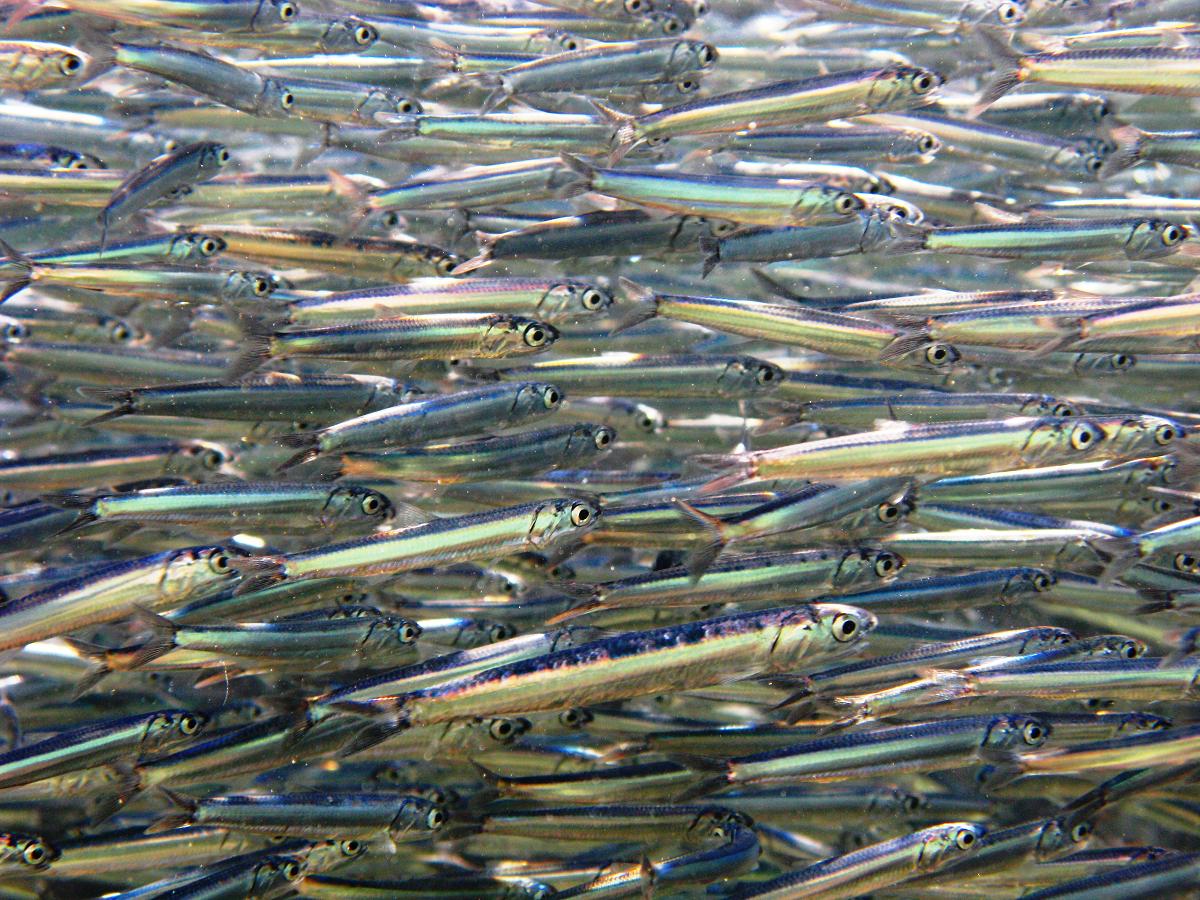
These fish form large schools and create bait balls when threatened by predators such as birds, dolphins, and larger fish. They migrate north in summer and south in winter. Their diet consists mainly of plankton, including copepods and the eggs of other marine creatures. They are euryhaline, meaning they survive in both salt and brackish water. This adaptability allows them to enter river mouths and enclosed seas like the Zuiderzee historically.
Breeding and life cycle
Spawning occurs in warm periods between April and November. Females release ellipsoidal eggs that float in the upper water column for one to three days. Larvae hatch transparent and grow quickly, reaching 9–10 cm within a year if they survive. First-time spawning happens at 12–13 cm length. Some subpopulations spawn in fresh water. Dutch naturalists noted that eggs in the Zuiderzee were sausage-shaped rather than globular.
Fish and people
Humans have eaten this fish for millennia. It is sold fresh, dried, smoked, salted, or canned. In Turkey, hamsi is a staple food, baked or fried. In Spain, pickled versions are called boquerón. The fish is also processed into fishmeal and oil, particularly in Namibia. Its strong, salty taste makes it popular for preservation and long-distance trade. Fishers use purse seines and beach nets to catch them.
Status and threats
The IUCN lists the species as abundant but fully exploited. Local populations fluctuate due to climate change, overfishing, and invasive species. The comb jelly Mnemiopsis leidyi devastated Mediterranean stocks in the 1980s by eating eggs. No single international management plan exists. Fisheries require careful monitoring as numbers shift between regions and years.


Questions people ask about European anchovy
What does the European anchovy eat?
It feeds primarily on plankton. This includes copepods, as well as the eggs and larvae of fish, molluscs, and cirripedes. They filter these small organisms from the water while swimming in schools.
Why did anchovy numbers drop in the Mediterranean?
In the 1980s, an invasive comb jelly called Mnemiopsis leidyi entered the sea. This predator ate the anchovy eggs and young, causing a severe depletion of the population. Stocks have since stabilized at lower levels.
Can this fish live in fresh water?
Yes, it is euryhaline and can tolerate a wide range of salinity. It lives in brackish estuaries and lagoons. Some subpopulations even spawn in fresh water, though they are primarily a coastal marine species.
Good reading and sources
- European anchovy on WikipediaEncyclopedia
- More photos on Wikimedia CommonsPhotos
- Wikidata recordOpen data
The facts on this page come from the Wikipedia article "European anchovy", written by its contributors and used under the CC BY-SA 4.0 licence, and from its Wikidata record (CC0). EveryFish rewrote the text in its own words, with AI assistance, and compares every page with the article to make sure no passage is copied. It may be reused under the same CC BY-SA 4.0 licence with a link back.
It may contain mistakes, and figures change over time. Nothing here is investment or buying advice. If something is wrong, tell us. Last refreshed 2026-11-15.
Like European anchovy
All herrings and sardines 🇺🇸 United StatesAtlantic menhaden
A silvery herring species found along the North American Atlantic coast.Herring · Coasts and shelves
 🇹🇷 Turkey and 4 moreAnchovy
Small, oily forage fish found in oceans and some rivers worldwide.Herring · Coasts and shelves
 WorldSardine
Small, oily forage fish in the herring suborder Clupeoidei.Herring · Coasts and shelves
 🇺🇸 United States and 1 moreAlewife
A small North American herring that migrates between sea and rivers.Herring · Coasts and shelves
More from Engraulidae
All of them 🇯🇵 Japan and 2 moreJapanese anchovy
Small schooling fish of the northwest PacificHerring · Coasts and shelves
 🇵🇪 Peru and 1 morePeruvian anchoveta
Small Pacific fish vital for fishmeal and growing food useHerring · Coasts and shelves
 🇮🇳 India and 3 moreMoustached thryssa
Small silver anchovy of the Indo-Pacific with a dark gill blotch.Herring · Coasts and shelves
 🇮🇳 India and 3 moreGoldspotted grenadier anchovy
A small coastal anchovy of the western Indo-Pacific.Herring · Coasts and shelves