
Ilish
Anadromous herring species prized as a delicacy in South Asia and the Middle East.
The ilish is a migratory fish in the herring family found across the Indian Ocean and Southeast Asia. It holds significant cultural and economic value, particularly in Bangladesh where it is the national fish and a major export commodity.
- National fish of Bangladesh and state fish of West Bengal.
- 97% of global supply originates from Bangladesh.
- Migrates upstream to spawn during monsoon seasons.
- Protected by seasonal fishing bans in multiple countries.
- Used as diplomatic gift between Bangladesh and India.
What it is
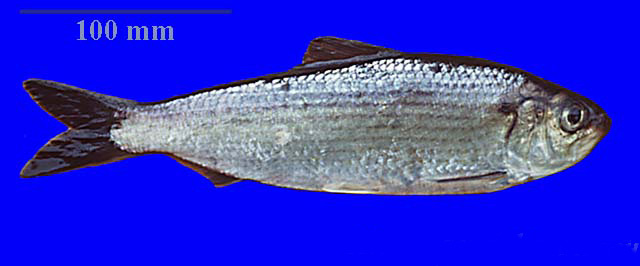
The ilish is a silver fish with gold and purple hues, belonging to the herring family. Females grow larger than males, reaching lengths of up to 55 centimetres. The body features hyaline fins without dorsal spines and a distinct notch in the upper jaw. Juveniles display small spots along their flanks. This species thrives in tropical waters ranging from the Indian subcontinent to the Persian Gulf.
Where it lives
This anadromous fish inhabits coastal seas, estuaries, and rivers across eleven countries including Bangladesh, India, Myanmar, Pakistan, Iran, Iraq, Kuwait, Bahrain, Indonesia, Malaysia, and Thailand. It moves between marine environments and freshwater systems like the Ganges, Indus, and Mekong deltas. Populations are most dense in the Bay of Bengal region.
How it lives
Adults filter feed on plankton, diatoms, and green algae while juveniles consume crustaceans. They school in coastal waters before migrating upstream into rivers to spawn. This migration can extend up to 100 kilometres inland. Predators include larger fish and birds. The fish returns to the sea after breeding, though some stocks remain in riverine habitats year-round.
Breeding and life cycle
Spawning occurs during the southwest monsoons from June to September and January to April. Adults migrate upstream to lay eggs in freshwater. After reproduction, they return to the ocean. Young fish known as jatka may stay in rivers. Breeding success depends on river flow and water quality, with environmental changes affecting population dynamics.
Fish and people
Ilish is a staple food in South Asia, especially among Bengalis, Odias, and Telugus. It is rich in omega-3 fatty acids and prepared in over fifty ways, often with mustard oil. In Bangladesh, it is the national fish and a key economic driver. The fish also features in cultural rituals, weddings, and religious festivals across the region.
Status and threats
Overfishing and pollution threaten ilish populations globally. Fine nets catch juvenile fish, reducing stock levels. Bangladesh has implemented fishing bans during breeding seasons to protect the species. Despite these measures, illegal trade in young fish persists. Climate change further impacts breeding grounds. Conservation efforts focus on sustainable harvesting practices.


Questions people ask about Ilish
What is the scientific name of the ilish?
The scientific name is Tenualosa ilisha. It belongs to the Clupeidae family, which includes herrings and sardines. This classification places it among pelagic fish that form large schools in open waters.
Why is the ilish so expensive in some regions?
High demand, limited seasonal availability, and perceived superior quality drive prices up. In Andhra Pradesh, mature fish from the Godavari River command premium prices due to their richer flavour and firmer texture compared to other catches.
How does the ilish migrate?
It is anadromous, meaning it lives in the sea but swims upstream into freshwater rivers to spawn. This journey can cover up to 100 kilometres during the monsoon seasons when water levels rise and flows are strong.
Is the ilish farmed commercially?
No significant success has been achieved in completing its life cycle in captivity since the 1900s. Most ilish consumed worldwide comes from wild catches, primarily in Bangladesh, making farming attempts largely unsuccessful to date.
Good reading and sources
- Business News Live, Share Market News - Read Latest Finance News, IPO, Mutual Funds NewsThe Economic Times, Article
- Hilsa: The end of fish diplomacy between India and Bangladesh?BBC, Article
The facts on this page come from the Wikipedia article "Ilish", written by its contributors and used under the CC BY-SA 4.0 licence, and from its Wikidata record (CC0). EveryFish rewrote the text in its own words, with AI assistance, and compares every page with the article to make sure no passage is copied. It may be reused under the same CC BY-SA 4.0 licence with a link back.
It may contain mistakes, and figures change over time. Nothing here is investment or buying advice. If something is wrong, tell us. Last refreshed 2026-11-15.
Like Ilish
All herrings and sardines 🇲🇾 Malaysia and 4 moreToli shad
A prized shad of the Indian and Pacific coastsHerring · Rivers and lakes
 🇹🇷 Turkey and 4 moreAnchovy
Small, oily forage fish found in oceans and some rivers worldwide.Herring · Coasts and shelves
 🇺🇸 United States and 1 moreAlewife
A small North American herring that migrates between sea and rivers.Herring · Coasts and shelves
 🇺🇸 United StatesAtlantic menhaden
A silvery herring species found along the North American Atlantic coast.Herring · Coasts and shelves
More from Clupeidae
All of them 🇺🇸 United States and 2 moreAmerican gizzard shad
A silvery freshwater forage fish with a muscular gizzard.Herring · Rivers and lakes
 WorldSpotted sardinella
A small herring with golden spots found in the Indo-Pacific.Herring · Coasts and shelves
 🇺🇸 United States and 3 moreMenhaden
Small silver forage fish that filter plankton and support marine food webs.Herring · Coasts and shelves
 🇲🇦 Morocco and 2 moreEuropean pilchard
Small schooling fish of the Atlantic and Mediterranean.Herring · Coasts and shelves