
European pilchard
Small schooling fish of the Atlantic and Mediterranean.
The European pilchard is a small, silvery fish found in the northeast Atlantic, Mediterranean, and Black Sea. It supports major fisheries in Morocco, Portugal, and Spain, serving as a key food source and ecosystem component.
- Reaches a maximum length of 27.5 cm
- Major fishery species in Morocco and Spain
- Feeds mainly on copepods and phytoplankton
- Females lay up to 60,000 eggs per season
- Known as xouba when small in Galicia
What it is
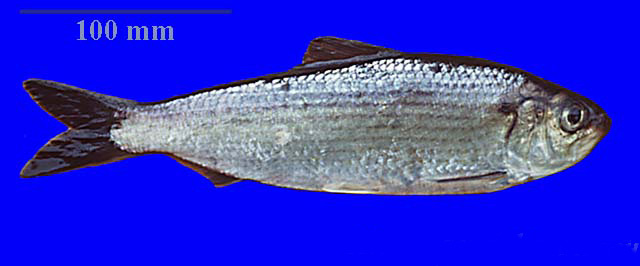
This ray-finned fish belongs to the monotypic genus Sardina. It has an elongated, herring-like body with green or olive upper parts, golden flanks, and a silvery belly. The pelvic fins sit well behind the dorsal fin, and the last two rays on the anal fin are larger than the others. Scales appear in an irregular order, with smaller ones hidden beneath larger ones. Adults reach up to 27.5 cm, though most measure between 15 and 25 cm. It lacks the dark blotches seen on some American counterparts.
Where it lives
The species inhabits the northeastern Atlantic Ocean, the Mediterranean Sea, and the Black Sea. Its distribution stretches from Iceland and southern Scandinavia down to Senegal in West Africa. It is common in the western Mediterranean and Adriatic but less frequent in eastern basins. These coastal fish sometimes venture 100 km offshore. During daylight, they stay at depths of 25 to 55 m, moving shallower at night. They prefer cooler, stable salinity levels when moving offshore in autumn.
How it lives
European pilchards form large schools and feed primarily on zooplankton, especially copepods, and phytoplankton. Adults hunt near the surface at night when prey migrates upward, while juveniles also feed during the day. They serve as a crucial link in the marine food web, transferring energy from plankton to larger predators like hake and conger eels. This role is vital in shallow seas like the Adriatic. The fish are short-lived, mature quickly, and disperse widely, leading to high gene flow across their range.
Breeding and life cycle
Females are batch spawners, releasing 50,000 to 60,000 eggs over a prolonged period. Spawning occurs in open waters during winter and early spring. As capital breeders, they store energy in spring and summer to fuel reproduction. Juveniles and some adults move toward the coast in early spring, while other adults migrate inshore later. Most young fish become sexually mature at about one year old, reaching a length of 13 to 14 cm. Full growth occurs around eight years of age.
Fish and people
Fisheries target this species heavily, particularly in Morocco, Portugal, and Spain. Catches often use purse seines and lampara nets. The FAO reports that Moroccan stocks are overfished. Adults are sold as pilchards, while smaller juveniles are marketed as sardines. In Galicia, small specimens are known as xouba. The fish is consumed fresh, canned, salted, or smoked. Some catch is processed into fish meal, bait, or fertilizer. Despite widespread consumption, parasite risks from Anisakis remain low.
Status and threats
Biomass trends show declines in Mediterranean regions, possibly due to environmental changes and fishing pressure. Stocks in Northern Spain exhibit lower body condition and fewer older fish. In contrast, Northern Adriatic populations maintain higher mass due to consistent food availability. Genetic studies suggest phenotypic plasticity helps stocks adapt to local conditions rather than distinct genetic separation. Monitoring is urged for vulnerable populations facing rapid environmental shifts and heavy exploitation.


Questions people ask about European pilchard
What is the difference between a sardine and a pilchard?
The terms are not scientifically precise. In the UK, young pilchards under 15 cm are called sardines, while larger adults are pilchards. The FAO lists 21 species that can be labeled as sardines, including this one.
Where does the European pilchard live?
It is found in the northeast Atlantic, Mediterranean, and Black Sea. Its range extends from Iceland and Norway south to Senegal. It lives in coastal waters, typically at depths between 10 and 100 meters.
Is it safe to eat European pilchards raw?
Studies suggest a low risk of Anisakis parasite infection, even when eaten raw. However, proper precautions like freezing are recommended. Only eight cases of human illness have been reported since 1991 despite wide consumption.
Why are pilchard stocks declining in the Mediterranean?
Declines may result from overfishing and environmental factors like oligotrophy. Older fish are disappearing, reducing the population's ability to adapt. Northern Spain stocks show particular vulnerability to these pressures.
Good reading and sources
- European pilchard on WikipediaEncyclopedia
- More photos on Wikimedia CommonsPhotos
- Wikidata recordOpen data
The facts on this page come from the Wikipedia article "European pilchard", written by its contributors and used under the CC BY-SA 4.0 licence, and from its Wikidata record (CC0). EveryFish rewrote the text in its own words, with AI assistance, and compares every page with the article to make sure no passage is copied. It may be reused under the same CC BY-SA 4.0 licence with a link back.
It may contain mistakes, and figures change over time. Nothing here is investment or buying advice. If something is wrong, tell us. Last refreshed 2026-11-15.
Like European pilchard
All herrings and sardines 🇵🇪 Peru and 1 morePeruvian anchoveta
Small Pacific fish vital for fishmeal and growing food useHerring · Coasts and shelves
 🇺🇸 United StatesAtlantic menhaden
A silvery herring species found along the North American Atlantic coast.Herring · Coasts and shelves
 WorldSardine
Small, oily forage fish in the herring suborder Clupeoidei.Herring · Coasts and shelves
 🇹🇷 Turkey and 4 moreEuropean anchovy
Small coastal forage fish of Europe and AfricaHerring · Coasts and shelves · 1758
More from Clupeidae
All of them 🇺🇸 United States and 2 moreAmerican gizzard shad
A silvery freshwater forage fish with a muscular gizzard.Herring · Rivers and lakes
 🇺🇸 United States and 1 moreAlewife
A small North American herring that migrates between sea and rivers.Herring · Coasts and shelves
 🇺🇸 United States and 3 moreMenhaden
Small silver forage fish that filter plankton and support marine food webs.Herring · Coasts and shelves
 WorldSpotted sardinella
A small herring with golden spots found in the Indo-Pacific.Herring · Coasts and shelves