Science and research
Model organisms and fish famous in science. 105 fish on EveryFish so far.
Fish are important in science. Some species are model organisms, small, fast-breeding fish that are studied in depth in laboratories to understand biology in general, from how embryos grow to how genes cause disease. Others are famous for what they reveal about evolution, such as the coelacanth, the blind cave fish and the cichlids of the African lakes. Fish also help scientists monitor the health of rivers and seas.
Zebrafish and medaka
The zebrafish, a small striped danio of South Asian streams, became a major model organism from the 1970s and 1980s. Its embryos are see-through and grow outside the mother, so scientists can watch organs and nerves form under the microscope. It is used to study development, heart and nerve disease, cancer and the effects of drugs and pollutants. The Japanese medaka is another model, and in 1994 medaka became the first vertebrates to mate and produce young in orbit, on a Space Shuttle flight.
Fish that explain evolution
The three-spined stickleback has repeatedly lost its bony armour after moving from the sea into lakes, letting scientists trace the genes involved. Sighted and blind forms of the Mexican tetra show how eyes are lost in caves. The turquoise killifish, which lives only a few months, is used to study ageing. The coelacanth and lungfish shed light on how fish first moved onto land, and the spotted gar's genome helps link fish genes to human ones.
Famous science and research fish
 ZebrafishA leading model organism
 Japanese rice fishThe medaka, first vertebrate to breed in orbit
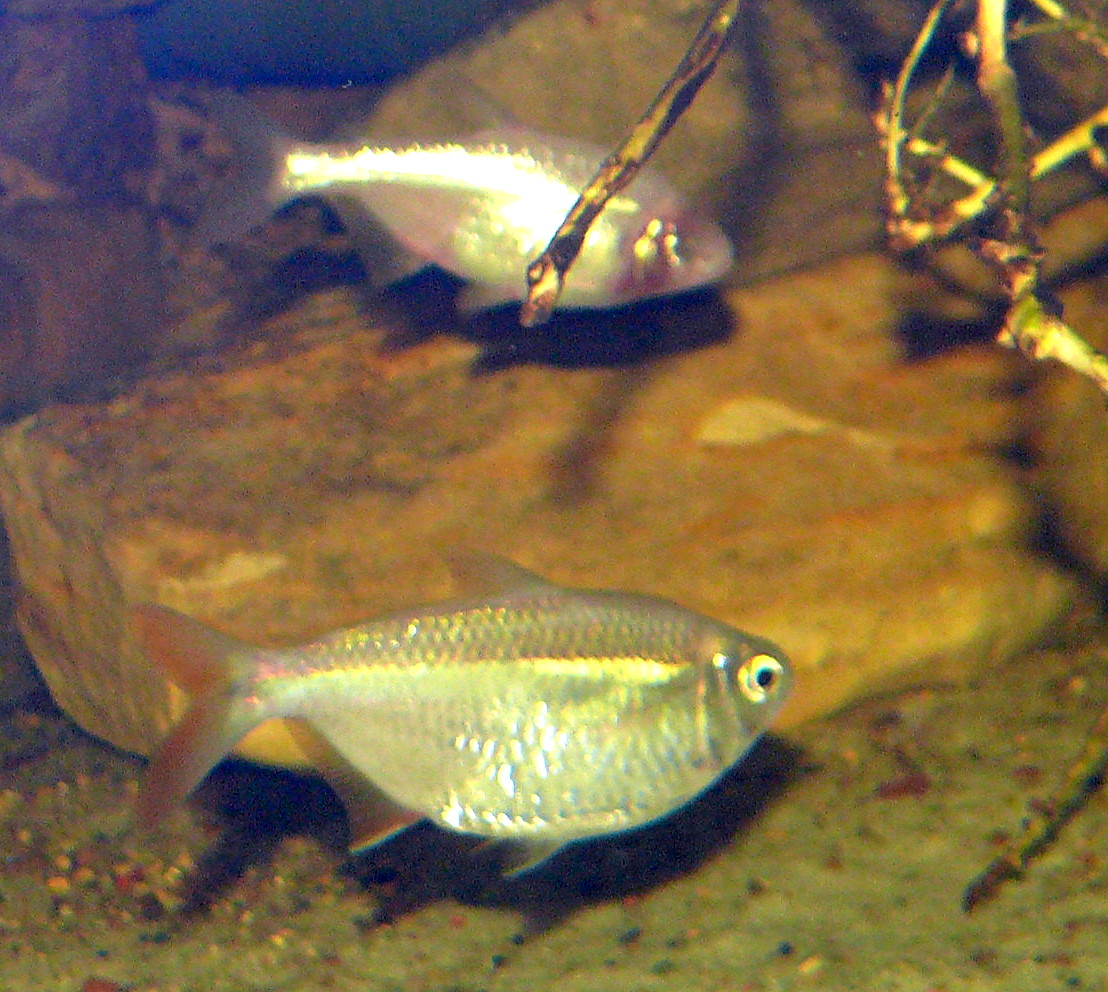 Mexican tetraSighted and blind forms
 Three-spined sticklebackA model of evolution in actionTurquoise killifishThe turquoise killifish, used to study ageing
 Spotted garIts genome bridges fish and human genes
 West Indian Ocean coelacanthA window on the move to land
Still to be written: Guppy.
Further reading
 🇦🇺 Australia and 1 moreAustralian ghostshark
A cartilaginous fish native to southern Australia and New Zealand waters.Other · Coasts and shelves
 WorldBluehead wrasse
A small Atlantic reef fish known for changing sex and colour.Other · Coral reefs
WorldThree-spined stickleback
Small northern fish known for rapid evolution and complex breeding.Other · Rivers and lakes
 WorldNinespine stickleback
Small freshwater fish with variable spines found across the Northern Hemisphere.Other · Rivers and lakes
 South AsiaGreen spotted puffer
Small brackish water pufferfish with a tiny genomeOther · Rivers and lakes
 WorldWrasse
A large family of colourful marine fish known for sex change and cleaning symbiosis.Reef fish · Coasts and shelves
 WorldPorcupinefish
Spiny marine fish that inflate into a defensive sphere to deter predators.Other · Coasts and shelves
 🇦🇺 AustraliaCommon seadragon
Camouflaged marine fish with leaf-like appendages found in southern Australia.Other · Coasts and shelves
 🇺🇸 United StatesSpotted ratfish
Cartilaginous fish with a rat-like tail and venomous spineOther · Coasts and shelves
Photo credits on this page
The small pictures above come from Wikimedia Commons under free licences. Some are cropped to fit.
- Australian ghostshark: fir0002 flagstaffotos [at] gmail.com Canon 20D + Tamron 28-75mm f/2.8, GFDL 1.2, source
- Bluehead wrasse: (c) JamesLaFontaine, some rights reserved (CC BY), CC BY 4.0, source
- Mexican tetra: User:Haplochromis, CC BY-SA 3.0, source
- Zebrafish: Roundish, CC0, source
- West Indian Ocean coelacanth: sybarite48, CC BY 2.0, source
- Three-spined stickleback: Gilles San Martin, CC BY-SA 2.0, source
- Ninespine stickleback: Piet Spaans, Public domain, source
- Spotted gar: Brian.gratwicke on English Wikipedia, CC BY 2.5, source
- Japanese rice fish: NOZO, CC BY 3.0, source
- Green spotted puffer: Starseed, CC BY-SA 3.0 de, source
- Wrasse: Leonard Low, CC BY 2.0, source
- Porcupinefish: jon hanson, CC BY-SA 2.0, source
- Common seadragon: Richard Ling <wikipedia@rling.com> --> Rling, CC BY-SA 3.0, source
- Chimaeras: Linda Snook / MBNMS, Public domain, source