
Adriatic sturgeon
A critically endangered sturgeon native to the Adriatic basin.
The Adriatic sturgeon is a large, long-lived fish native to the Adriatic Sea and its river systems. Once common in Italy and the Balkans, it is now critically endangered due to dams and overfishing. Conservation efforts include captive breeding and habitat restoration to support wild populations.
- Reaches lengths over 2 m and weights exceeding 40 kg
- Listed as critically endangered by the IUCN
- Facultatively migratory, mostly living in lower rivers
- Females mature late, at 12 to 14 years of age
- Captive breeding releases started in 2004
What it is
The Adriatic sturgeon is a large fish with an elongated body and a heterocercal tail. Its skeleton is partly cartilaginous, and its skin is naked except for five rows of bony scutes. The dorsal row has ten to fourteen scutes, while lateral rows have thirty to forty-two each. The snout is short and conical, with four barbels positioned near the tip. Adults display olive-brown colouring on the back, paler flanks, and a white underside. Juveniles have a triangular snout and distinct dark brown patterns with pale patches. This species can grow beyond two metres in length and weigh over forty kilograms.
Where it lives
This fish inhabits the Adriatic Sea and the rivers that flow into it. Its historical range extended from Venice and Trieste down to Greece and Corfu. It was once found in the Po River as far upstream as Turin, as well as in the Adige, Brenta, and Piave rivers. Populations also existed in the rivers of Slovenia, Croatia, Bosnia-Herzegovina, and Montenegro, including Lake Skadar. Today, it lives in freshwater, brackish estuaries, and coastal marine environments. In the sea, it stays near muddy or sandy bottoms at depths of ten to forty metres.
How it lives
The Adriatic sturgeon is facultatively migratory, spending most of its life in lower river sections rather than the open sea. It tolerates low salinity but struggles in full-strength salt water. Feeding is opportunistic, involving sucking up substrate to extract prey. In rivers, it consumes insect larvae, worms, and small fish. In marine areas, it eats crustaceans, molluscs, and demersal fish. Digestive tracts often contain sand, silt, and sometimes plastic. Juveniles adapt to varying salinity levels, moving to areas with specific electrical conductivity.
Breeding and life cycle
Males reach sexual maturity between seven and eleven years, while females mature later, at twelve to fourteen years. Females ovulate every two to four years. During spring, mature fish migrate upstream to spawn. They lay eggs from April to June in deep, oxygenated water with a strong current. The eggs adhere to gravelly substrates at depths of two to ten metres. Water turbulence prevents egg aggregation and predation. Eggs hatch after about a week. Fry are initially pelagic but become demersal after ten days.
Fish and people
Illegal fishing remains a threat despite legal protection. Captive breeding programmes began releasing microchipped juveniles in 2004 to restore wild stocks. Earlier releases of post-larvae had low survival rates due to predation by wels catfish. Public aquariums in Milan and Lombardy display specimens. Recent camera monitoring at fish ladders has filmed mature individuals passing through dams. Molecular analysis of unmarked juveniles suggests some natural spawning persists in Italian rivers, indicating a remnant wild broodstock.
Status and threats
The International Union for Conservation of Nature lists this species as critically endangered. Dam construction fragments habitats and blocks migration routes, altering water flow and temperature. Pollution from industrial and agricultural runoff degrades river quality. Overfishing of immature fish caused historical population collapses. Predation by great cormorants and competition from invasive wels catfish further stress remaining populations. Genetic studies show distinct differences between Po and Buna basin populations, highlighting the need to preserve local genetic diversity.


Questions people ask about Adriatic sturgeon
Where does the Adriatic sturgeon live?
It is native to the Adriatic Sea and rivers flowing into it, including the Po, Adige, and Buna. It inhabits freshwater, brackish estuaries, and coastal marine areas with muddy or sandy bottoms.
Why is the Adriatic sturgeon endangered?
Main threats include damming which blocks migration, pollution, illegal fishing of immature fish, and predation by cormorants. Habitat fragmentation has severely reduced spawning success.
What does the Adriatic sturgeon eat?
It is an opportunistic feeder that sucks up substrate. Its diet includes insect larvae, worms, small fish, crustaceans, molluscs, and organic matter found in riverbeds and sea floors.
Good reading and sources
- Adriatic sturgeon on WikipediaEncyclopedia
- More photos on Wikimedia CommonsPhotos
- Wikidata recordOpen data
The facts on this page come from the Wikipedia article "Adriatic sturgeon", written by its contributors and used under the CC BY-SA 4.0 licence, and from its Wikidata record (CC0). EveryFish rewrote the text in its own words, with AI assistance, and compares every page with the article to make sure no passage is copied. It may be reused under the same CC BY-SA 4.0 licence with a link back.
It may contain mistakes, and figures change over time. Nothing here is investment or buying advice. If something is wrong, tell us. Last refreshed 2026-11-15.
Like Adriatic sturgeon
All ancient fish 🇨🇳 ChinaChinese sturgeon
Critically endangered giant migratory fish of the YangtzeAncient · Rivers and lakes
 🇺🇸 United States and 1 moreAtlantic sturgeon
A large anadromous fish native to the western Atlantic Ocean and its river systems.Ancient · Rivers and lakes
 🇺🇸 United States and 1 moreShortnose sturgeon
A small, endangered North American sturgeon with a short snout.Ancient · Rivers and lakes · 1818
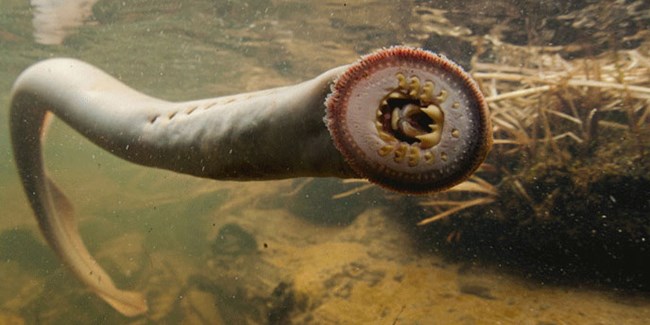 🇺🇸 United States and 1 morePacific lamprey
An anadromous parasitic jawless fish found along the Pacific Rim.Ancient · Rivers and lakes · 1872
More from Acipenseridae
All of them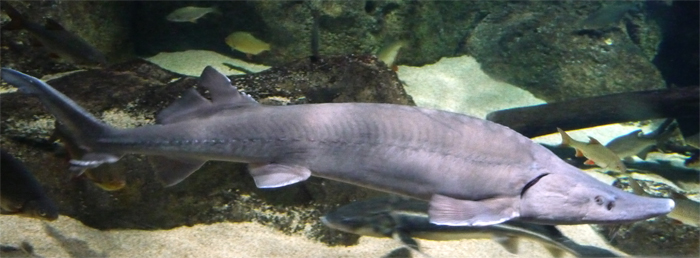 🇷🇺 Russia and 4 moreSiberian sturgeon
Large freshwater sturgeon native to Siberian riversAncient · Rivers and lakes
 🇺🇸 United States and 1 moreGreen sturgeon
A large anadromous fish native to the northern Pacific Ocean.Shark · Coasts and shelves
 🇺🇸 United States and 1 moreLake sturgeon
A large, long-lived freshwater fish native to North America.Ancient · Rivers and lakes
 🇨🇳 ChinaDabry's sturgeon
Freshwater sturgeon native to the Yangtze River basin in China.Ancient · Rivers and lakes