
Chinese sturgeon
Critically endangered giant migratory fish of the Yangtze
The Chinese sturgeon is a massive anadromous fish native to East Asia. It faces critical endangerment from habitat loss and dams. Conservation efforts include captive breeding and restocking in the Yangtze River.
- Grows up to 5 metres long and weighs 500 kg
- Migrates over 3,200 km up the Yangtze River
- Critically endangered with less than 1% hatchling survival
- Protected as a national treasure in China since 1970s
What it is
This large fish belongs to the ancient group Chondrostei. It has a cartilaginous skeleton despite being a bony fish. Adults grow between two and five metres long. They weigh up to half a tonne. The head tapers to a point with the mouth positioned underneath. It is one of the biggest sturgeon species globally.
Where it lives
Native to China, this species once lived in Japan and Korea too. It is now extirpated from those areas and most Chinese regions. Adults dwell along eastern coasts and migrate up rivers. Key waterways include the Yangtze, Qiantang, Minjiang, and Pearl Rivers. Habitat loss has severely reduced its historical distribution.
How it lives
Young fish feed on insects, larvae, and plant matter. Adults are predators that swallow available aquatic animals. They spend part of their life in seawater before returning to fresh water. This migration covers thousands of kilometres. They are sensitive to river noise and boat propellers.
Breeding and life cycle
Females carry over a million eggs per cycle. Spawning occurs externally after long upstream migrations. Fish may breed three or four times in their lives. Water temperature changes can delay spawning or harm gonads. Survival rates for hatchlings are estimated at less than one percent.
Fish and people
Historically, its meat and cartilage were delicacies in Qing dynasty cuisine. Today it is a protected national treasure in China. Authorities run programmes to breed and release juveniles. Millions of captive-bred fish have been released into the wild. It holds significant academic interest for taxonomy studies.
Status and threats
Listed as critically endangered due to overfishing and pollution. Dam construction blocked traditional spawning routes in the 1980s. Spawning numbers dropped from thousands to hundreds annually. No new spawning was detected in 2013 to 2014. Recent juvenile sightings suggest relocated spawning grounds.


Questions people ask about Chinese sturgeon
How big does the Chinese sturgeon get?
Adults range between two and five metres in length. They weigh between 200 and 500 kilograms. This makes them among the largest sturgeon species in the world.
Why is the Chinese sturgeon endangered?
Habitat loss, pollution, and overfishing are major threats. The Gezhouba Dam blocked migration routes to spawning sites. River traffic noise and propellers also cause injury or death.
Where does the Chinese sturgeon live?
It is native to China, specifically the Yangtze River system. It also inhabits coastal regions of the Qiantang, Minjiang, and Pearl Rivers. It migrates between sea and fresh water.
Good reading and sources
- Chinese sturgeon on WikipediaEncyclopedia
- More photos on Wikimedia CommonsPhotos
- Wikidata recordOpen data
The facts on this page come from the Wikipedia article "Chinese sturgeon", written by its contributors and used under the CC BY-SA 4.0 licence, and from its Wikidata record (CC0). EveryFish rewrote the text in its own words, with AI assistance, and compares every page with the article to make sure no passage is copied. It may be reused under the same CC BY-SA 4.0 licence with a link back.
It may contain mistakes, and figures change over time. Nothing here is investment or buying advice. If something is wrong, tell us. Last refreshed 2026-11-15.
Like Chinese sturgeon
All ancient fish WorldLamprey
Jawless fish with a sucking mouth found in temperate waters worldwide.Ancient · Rivers and lakes
 🇺🇸 United States and 4 moreSea lamprey
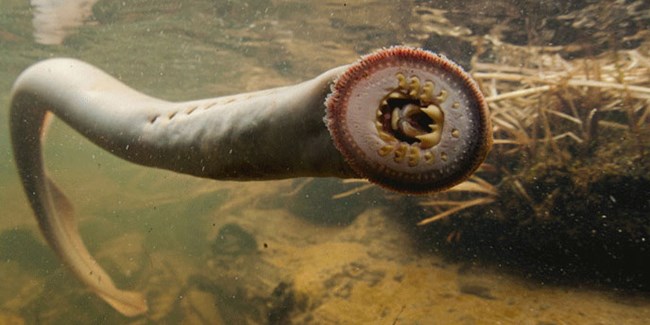
A jawless, parasitic fish native to the Northern Hemisphere that attacks other fish.Ancient · Rivers and lakes · 1758
 🇺🇸 United States and 1 morePacific lamprey
An anadromous parasitic jawless fish found along the Pacific Rim.Ancient · Rivers and lakes · 1872
 🇺🇸 United States and 1 moreAtlantic sturgeon
A large anadromous fish native to the western Atlantic Ocean and its river systems.Ancient · Rivers and lakes
More from Acipenseridae
All of them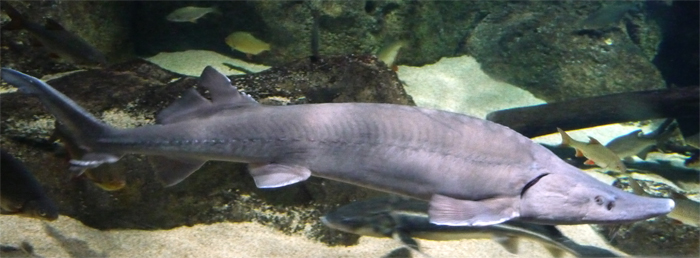 🇷🇺 Russia and 4 moreSiberian sturgeon
Large freshwater sturgeon native to Siberian riversAncient · Rivers and lakes
 🇺🇸 United States and 1 moreLake sturgeon
A large, long-lived freshwater fish native to North America.Ancient · Rivers and lakes
 🇺🇸 United States and 1 moreGreen sturgeon
A large anadromous fish native to the northern Pacific Ocean.Shark · Coasts and shelves
 🇷🇺 RussiaSterlet
A small Eurasian sturgeon found in rivers flowing to the Black, Azov, and Caspian seas.Ancient · Rivers and lakes · 1758