
Pink whipray
Large Indo-Pacific stingray with a long tail and pinkish hue.
The pink whipray is a large bottom-dwelling stingray found across the tropical Indo-Pacific. It inhabits sandy flats near coral reefs and feeds on crustaceans. Heavy fishing in Southeast Asia has led to a Vulnerable conservation status, despite protected populations in northern Australia.
- Disc width reaches at least 1.8 metres.
- Tail is extremely long and lacks fin folds.
- Feeds mainly on prawns and crustaceans.
- Listed as Vulnerable by IUCN since 2016.
- Important for ecotourism in the Maldives.
What it is
This large stingray features a diamond-shaped pectoral fin disc that is wider than it is long. Its snout forms a broad angle, and the body is covered in small, rounded dermal denticles. The colour ranges from uniform brownish-pink to greyish-pink on top, turning dark grey or black on the tail behind the sting. The underside is pale. A defining feature is its extremely long, thin tail, which lacks fin folds and usually carries a single serrated spine. Adults can grow to at least 1.8 metres across the disc, with a total length exceeding five metres.
Where it lives
The species occupies tropical waters throughout the Indo-Pacific region. Its distribution extends from the Indian Ocean periphery, including South Africa and northern Australia, eastward across the Pacific to Samoa and the Marquesas Islands. It appears in the Red Sea as well. These rays prefer shallow coastal environments, typically staying between the intertidal zone and depths of 70 metres. They favour sandy flats, lagoons, and soft-bottomed areas near cays and atolls. Individuals show strong fidelity to specific local areas, with little movement between islands.
How it lives
Pink whiprays are gregarious and often form large aggregations for resting or feeding. Observers have seen them pile atop one another or associate with other large ray species. They feed primarily on decapod crustaceans like prawns, but also consume cephalopods and bony fishes. Feeding behaviour varies by location; some populations form night-time feeding groups, while others forage solitarily over large home ranges. As bottom dwellers, they hunt in sandy habitats associated with coral reefs. Known parasites include various monogeneans, tapeworms, and isopods.
Breeding and life cycle
Reproduction is aplacental viviparous, meaning the embryos develop inside the mother without a placenta. The mother nourishes the young with histotroph, a nutrient-rich uterine milk produced by specialized structures. Newborns measure between 55 and 60 centimetres across the disc. Males reach sexual maturity when their disc width is between 1.1 and 1.2 metres. The maturation size for females remains unknown. Shark Bay in Australia is suspected to serve as a nursery area for the species.
Fish and people
Fisheries in Indonesia and Malaysia catch this ray incidentally using tangle nets, trawls, and gillnets. The meat, skin, and cartilage are marketed for consumption. Due to intense and unregulated fishing in Southeast Asia, populations face depletion. In northern Australia, bycatch has decreased following the mandatory use of exclusion devices. The species supports ecotourism in the Maldives and French Polynesia, where bait attracts large numbers of rays. However, high densities at feeding sites have caused injuries to the animals from boat traffic and bites.
Status and threats
The International Union for Conservation of Nature assessed the pink whipray as Vulnerable in 2016. This change from Least Concern reflects likely population declines driven by heavy fishing pressure, particularly in Southeast Asia. The species has a wide distribution that includes some protected areas, such as those off northern Australia, which offer refuge. Nevertheless, the slow reproductive rate makes this large ray more susceptible to overfishing than smaller relatives. Illegal fishing operations and targeted wedgefish fisheries also threaten local stocks.


Questions people ask about Pink whipray
How big does the pink whipray get?
The pectoral fin disc grows to at least 1.8 metres wide. With its extremely long tail, the total length of the animal can exceed five metres. The maximum recorded weight is 19 kilograms.
Is the pink whipray dangerous to humans?
It is not highly dangerous, but it possesses a venomous sting on its tail. Handling is difficult when the ray is thrashing in nets, so fishers often discard it quickly to avoid injury from the serrated spine.
What does the pink whipray eat?
This species preys mainly on decapod crustaceans, with penaeid prawns being a dominant food source in some areas. It also consumes cephalopods and bony fishes found on the sandy sea floor.
Where can you see pink whiprays in the wild?
They inhabit tropical Indo-Pacific waters, including the Maldives, French Polynesia, and northern Australia. They are often seen in shallow sandy flats and lagoons near coral reefs, sometimes forming large groups.
Good reading and sources
The facts on this page come from the Wikipedia article "Pink whipray", written by its contributors and used under the CC BY-SA 4.0 licence, and from its Wikidata record (CC0). EveryFish rewrote the text in its own words, with AI assistance, and compares every page with the article to make sure no passage is copied. It may be reused under the same CC BY-SA 4.0 licence with a link back.
It may contain mistakes, and figures change over time. Nothing here is investment or buying advice. If something is wrong, tell us. Last refreshed 2026-11-15.
Like Pink whipray
All rays and skates WorldMangrove whipray
A spotted stingray of Indo-Pacific mangroves and reefs.Ray · Estuaries and mangroves · 1883
 WorldLionfish
Venomous marine fish of the genus Pterois known for striking stripes and invasive spread.Ray · Coral reefs · 1900
 🇬🇧 United Kingdom and 4 moreMarbled electric ray
A benthic electric ray from the eastern Atlantic known for its powerful shocks and mottled brown skin.Ray · Coasts and shelves · 1810
 WorldBluespotted ribbontail ray
A small, colourful reef stingray with electric blue spots.Ray · Coasts and shelves · 1775
More from Dasyatidae
All of them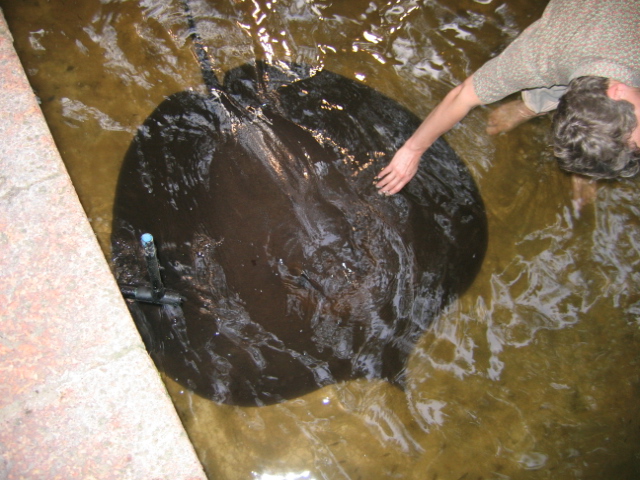 🇹🇭 Thailand and 3 moreGiant freshwater stingray
The widest freshwater fish in the world, found in Southeast Asian rivers.Ray · Rivers and lakes · 1852
 WorldPelagic stingray
The only stingray that lives in the open ocean.Ray · Open ocean · 1832
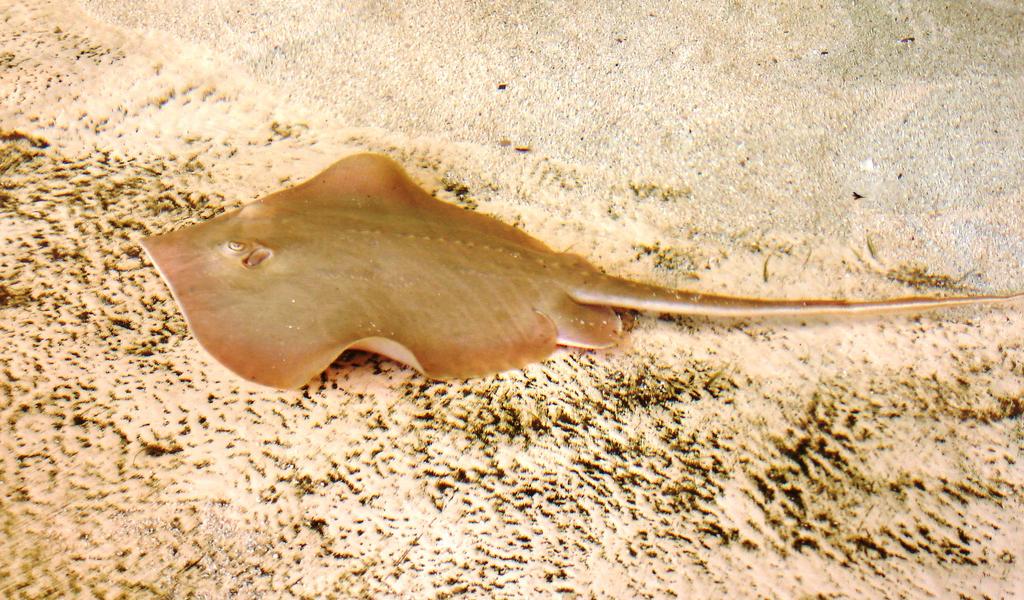 🇺🇸 United States and 1 moreAtlantic stingray
Small stingray found in Atlantic coastal waters and fresh rivers.Ray · Rivers and lakes · 1824
 🇿🇦 South Africa and 4 moreReticulate whipray
A large spotted stingray from the western Indian Ocean and eastern Mediterranean.Ray · Coasts and shelves · 1789