
Pelagic stingray
The only stingray that lives in the open ocean.
This unique ray inhabits warm surface waters worldwide, swimming with a flapping motion rather than undulating its edges. It is highly prolific and currently listed as Least Concern despite being caught as bycatch.
- Only stingray species that lives in the open ocean
- Swims by flapping fins rather than undulating edges
- Gestation period is just two to four months
- Can produce two litters of up to 13 pups yearly
- Venomous tail spine can cause fatal wounds
What it is
The pelagic stingray is the sole member of its genus and the only stingray that lives primarily in the open ocean. It has a thick, wedge-shaped disc that is wider than it is long, with a short snout and minute eyes. Its colour ranges from dark purple to blue-green on top, with a lighter underside. A whip-like tail extends up to twice the length of the body and carries a long, serrated spine. When handled, the animal secretes a thick black mucus.
Where it lives
This species is found in tropical and warm-temperate waters across the globe, between latitudes 52°N and 50°S. It inhabits the Atlantic, Pacific, and parts of the Indian Ocean, preferring temperatures above 19 °C. The ray migrates seasonally, moving towards higher latitudes and continental shelves in summer and returning to equatorial waters in winter. It typically stays in surface waters down to 100 metres but has been recorded deeper near underwater ridges.
How it lives
Unlike bottom-dwelling relatives, this ray swims by flapping its pectoral fins like wings. It is an active hunter that uses vision more than electroreception to find prey. Its diet includes squid, krill, small fish, and jellyfish. It often follows migrating schools of fish or spawning squid aggregations. Predators include oceanic whitetip sharks, great white sharks, and toothed whales. The ray may segregate by sex, with males occupying deeper water than females.
Breeding and life cycle
Females give birth to live young after a very short gestation of two to four months. Embryos are nourished first by yolk and later by uterine milk. Females can store sperm for over a year and may produce two litters annually, each containing four to thirteen pups. Births usually occur in warm equatorial waters during winter, except in the Mediterranean where they happen in summer. Newborns measure 15 to 25 cm across and grow rapidly when food is plentiful.
Fish and people
Fishermen rarely target this species, but it is frequently caught as bycatch in pelagic fisheries. It has little economic value and is often discarded, usually dying in the process. The venomous tail spine can inflict severe or fatal wounds, so handlers must exercise extreme caution. Despite high mortality from fishing gear, population numbers appear to be stable or increasing, possibly due to the removal of shark predators.
Status and threats
The International Union for Conservation of Nature assesses the pelagic stingray as Least Concern. This status reflects its wide global distribution, high reproductive rate, and apparent population stability. Although it suffers significant mortality as bycatch, the reduction of its natural predators like sharks may have benefited its numbers. No specific conservation measures are currently in place for this species.


Questions people ask about Pelagic stingray
Where does the pelagic stingray live?
It inhabits warm tropical and temperate surface waters worldwide. It is the only stingray species that lives primarily in the open ocean rather than on the sea floor, typically staying above 100 metres depth.
Is the pelagic stingray dangerous to humans?
Yes, it possesses a long, serrated tail spine with potent venom. While not aggressive, accidental contact can cause severe or even fatal wounds, requiring extreme caution when handling.
What does the pelagic stingray eat?
It is an active predator that feeds on free-swimming prey. Its diet includes squid, octopus, krill, larval crabs, small bony fishes like herring, and jellyfish.
Good reading and sources
- Pelagic stingray on WikipediaEncyclopedia
- More photos on Wikimedia CommonsPhotos
- Wikidata recordOpen data
The facts on this page come from the Wikipedia article "Pelagic stingray", written by its contributors and used under the CC BY-SA 4.0 licence, and from its Wikidata record (CC0). EveryFish rewrote the text in its own words, with AI assistance, and compares every page with the article to make sure no passage is copied. It may be reused under the same CC BY-SA 4.0 licence with a link back.
It may contain mistakes, and figures change over time. Nothing here is investment or buying advice. If something is wrong, tell us. Last refreshed 2026-11-15.
Like Pelagic stingray
All rays and skates 🇨🇦 CanadaPacific electric ray
A large electric ray from the northeastern Pacific coast.Ray · Coasts and shelves · 1855
 WorldLionfish
Venomous marine fish of the genus Pterois known for striking stripes and invasive spread.Ray · Coral reefs · 1900
 WorldChilean devil ray
A deep-diving oceanic ray with a boxy head.Ray · Open ocean
 WorldDevil fish
A large Mediterranean ray with a spiny tail and horn-like flaps.Ray · Coasts and shelves
More from Dasyatidae
All of them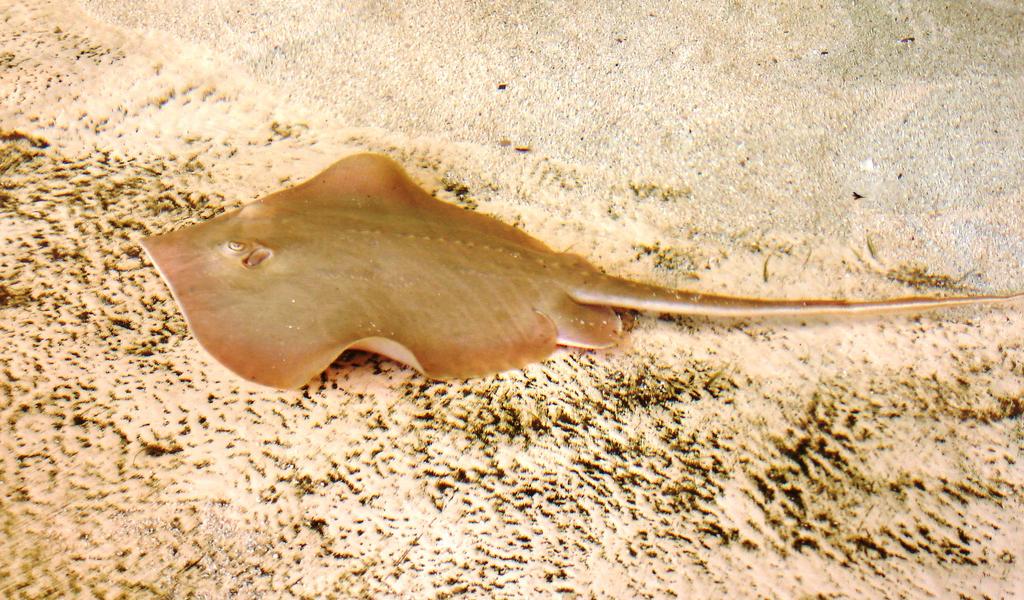 🇺🇸 United States and 1 moreAtlantic stingray
Small stingray found in Atlantic coastal waters and fresh rivers.Ray · Rivers and lakes · 1824
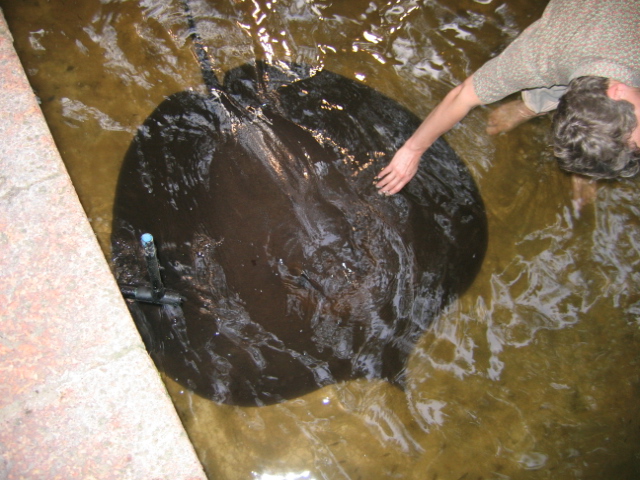 🇹🇭 Thailand and 3 moreGiant freshwater stingray
The widest freshwater fish in the world, found in Southeast Asian rivers.Ray · Rivers and lakes · 1852
 🇿🇦 South Africa and 4 moreReticulate whipray
A large spotted stingray from the western Indian Ocean and eastern Mediterranean.Ray · Coasts and shelves · 1789
 WorldMangrove whipray
A spotted stingray of Indo-Pacific mangroves and reefs.Ray · Estuaries and mangroves · 1883