
Pacific electric ray
A large electric ray from the northeastern Pacific coast.
The Pacific electric ray is a solitary, nocturnal predator found in coastal waters from British Columbia to Baja California. It uses powerful electric shocks to stun prey and defend itself, reaching lengths of up to 1.4 metres. Listed as Least Concern by the IUCN, it serves as a key model organism in biomedical research.
- Generates up to 45 volts for hunting and defence
- Largest electric ray in the northeastern Pacific
- Nocturnal hunter that ambushes prey from sediment
- Females bear litters of 17 to 20 pups
- Used as a model organism in biomedical research
What it is
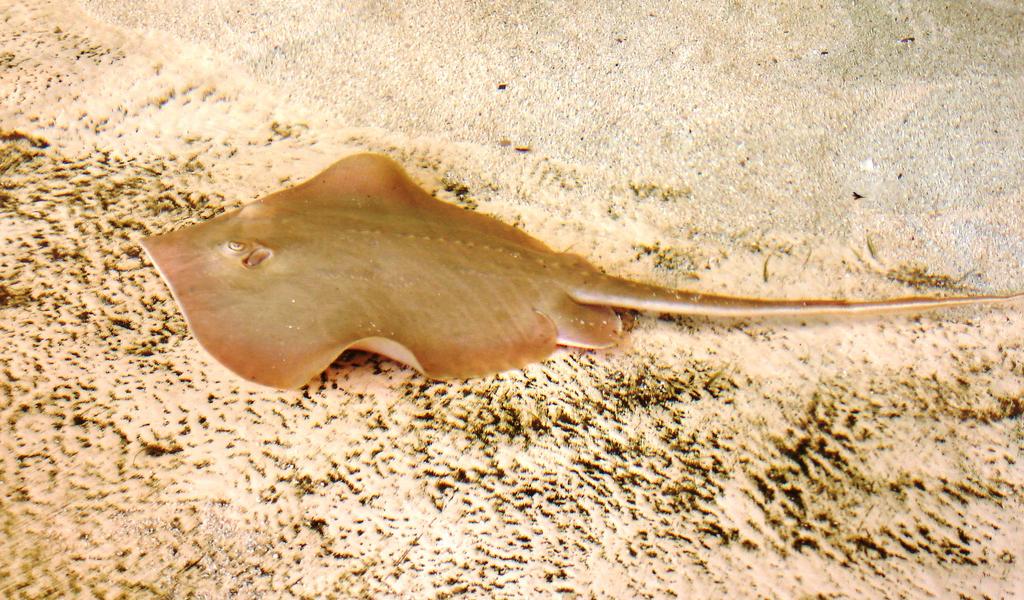
This species belongs to the family Torpedinidae and features a soft, depressiform body without the typical dermal denticles found on many cartilaginous fish. Its oval pectoral fin disc is wider than it is long, with a nearly straight front margin. The dorsal surface is dark gray, slate, or brown, sometimes marked with small dark spots that increase with age, while the ventral side remains pale. Two dorsal fins of unequal size sit far back on the thick tail, which ends in a large, triangular caudal fin. Smooth-rimmed spiracles behind the small eyes allow the ray to breathe while buried in sediment.
Where it lives
The Pacific electric ray inhabits the northeastern Pacific Ocean, ranging from Dixon Entrance in northern British Columbia south to Sebastian Vizcaino Bay in Baja California. It is most common along the California coastline, particularly south of Point Conception. These rays prefer temperatures between 10 and 13 degrees Celsius and frequent sandy flats, rocky reefs, and kelp forests. While typically found at depths of 3 to 30 metres off California, they dwell deeper, around 100 to 200 metres, off Baja California. Occasional sightings suggest small populations may exist in the northwestern Pacific near Japan.
How it lives
Solitary and nocturnal, this ray spends daylight hours buried in sediment and hunts actively at night. It generates electric shocks using paired organs derived from muscle tissue, which make up about 15 per cent of its body weight. These organs can produce up to 45 volts to subdue prey or deliver warning pulses when threatened. The diet consists mainly of bony fishes such as herring, mackerel, and rockfish, though it also consumes cephalopods. Due to its size and electrical defenses, few predators target it, although killer whales have been recorded feeding on them. Parasites include the Cooper’s nutmeg snail and various tapeworms.
Breeding and life cycle
Reproduction is aplacental viviparous, meaning embryos develop inside the mother without a placental connection. Initially nourished by yolk, the growing young later receive histotroph, often called uterine milk, produced by the mother. Females give birth to litters of 17 to 20 pups, likely once every two years. Newborns measure approximately 18 to 23 centimetres in length. Females grow larger than males, with recorded widths up to 164 centimetres compared to 92 centimetres for males. Males possess claspers, modified pelvic fins used during mating.
Fish and people
This species is not targeted by commercial fisheries due to its lack of culinary value, contributing to its stable population status. However, divers should exercise caution as provoked rays can deliver incapacitating electric shocks. The Pacific electric ray holds significant value in science, serving as a model organism for biomedical research into electric organ function and neurobiology. Its ability to generate high-power electrical pulses has helped researchers understand ion movement across cell membranes. It holds no major role in cultural traditions or faith practices.
Status and threats
The International Union for Conservation of Nature lists the Pacific electric ray as Least Concern. Populations remain fairly stable because the species is not fished in significant numbers. Detailed abundance data is scarce across its entire range due to low commercial interest. Habitat suitability decreases in the northernmost parts of its range due to cooler water temperatures. Threats such as pollution or climate change are not currently cited as major risks, and no specific protection programmes are noted for this species.


Questions people ask about Pacific electric ray
How strong is the electric shock of a Pacific electric ray?
A large adult can generate up to 45 volts with a power output of one kilowatt. It produces steady warning pulses when chased and quick, intense bursts to incapacitate prey. These shocks can potentially incapacitate a diver if the animal is provoked.
What does the Pacific electric ray eat?
It feeds mainly on bony fishes such as anchovies, herring, mackerel, and rockfish. It also consumes cephalopods and invertebrates. The ray uses its electric organs to stun prey before swallowing it head-first, sometimes consuming fish nearly half its own length.
Is the Pacific electric ray dangerous to humans?
While not aggressive by nature, it can deliver a powerful electric shock if provoked or stepped on. This shock is strong enough to incapacitate a diver. Care should be exercised when swimming in its habitat, particularly in sandy areas where it may bury itself.
Where does the Pacific electric ray live?
It is endemic to the northeastern Pacific Ocean, found from British Columbia to Baja California. It inhabits sandy flats, rocky reefs, and kelp forests, typically at depths between 3 and 200 metres. It prefers water temperatures between 10 and 13 degrees Celsius.
Good reading and sources
- Pacific electric ray on WikipediaEncyclopedia
- More photos on Wikimedia CommonsPhotos
- Wikidata recordOpen data
The facts on this page come from the Wikipedia article "Pacific electric ray", written by its contributors and used under the CC BY-SA 4.0 licence, and from its Wikidata record (CC0). EveryFish rewrote the text in its own words, with AI assistance, and compares every page with the article to make sure no passage is copied. It may be reused under the same CC BY-SA 4.0 licence with a link back.
It may contain mistakes, and figures change over time. Nothing here is investment or buying advice. If something is wrong, tell us. Last refreshed 2026-11-15.
Like Pacific electric ray
All rays and skates WorldAtlantic torpedo
A large electric ray from the Atlantic and Mediterranean capable of delivering powerful shocks.Ray · Coasts and shelves · 1835
 WorldPelagic stingray
The only stingray that lives in the open ocean.Ray · Open ocean · 1832
 🇺🇸 United States and 1 moreAtlantic stingray
Small stingray found in Atlantic coastal waters and fresh rivers.Ray · Rivers and lakes · 1824
 North AmericaYellow stingray
Small, camouflaging stingray of the western Atlantic.Ray · Coasts and shelves · 1816
