
Yellow stingray
Small, camouflaging stingray of the western Atlantic.
The yellow stingray is a small bottom-dwelling fish found in shallow tropical waters of the western Atlantic. It changes colour to blend with sand or seagrass and feeds on buried invertebrates. Though its venomous spine causes pain, it is common and listed as Least Concern by conservation groups.
- Changes colour rapidly to blend with surroundings
- Glows green under blue or ultraviolet light
- Produces two litters of young each year
- Common in aquarium trade due to small size
What it is
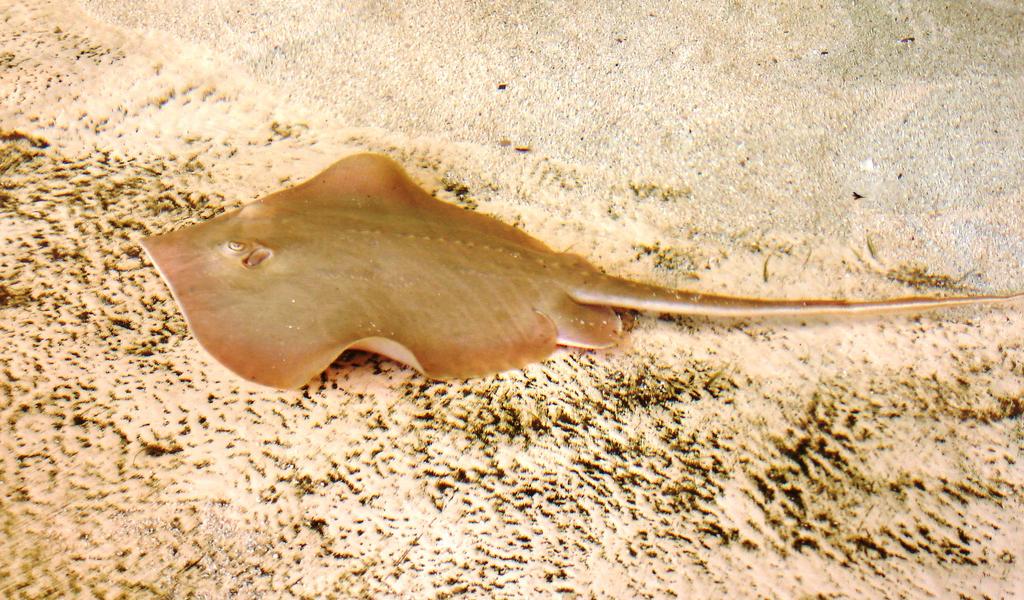
This small ray has a nearly circular disc that is slightly longer than it is wide. Its tail is short and stout, ending in a leaf-shaped fin. A serrated spine sits halfway along the tail. The skin pattern varies greatly, showing either dark nets on a light background or bright spots on a dark base. It can change these tones quickly to match the seabed. Adults develop small thorns on their backs and tail edges. The underside is pale with darker spots near the rim.
Where it lives
It lives in the tropical western Atlantic, from North Carolina down to Trinidad. Common sites include the Gulf of Mexico, Florida Keys, Bahamas, and Caribbean islands. It prefers shallow inshore waters like bays, lagoons, and estuaries. Depths range from the water edge to 25 metres. It favours hard bottoms covered in invertebrates but also settles on sand, mud, or seagrass beds near coral reefs.
How it lives
During the day, it rests buried in sediment or lies still in vegetation. It stays within a small home area and hunts for shrimps, worms, and small fish. To find food, it may wave its disc to uncover buried prey or lift the front to create a shaded cave that attracts other organisms. It has excellent vision and hearing to spot predators like sharks. The ray also shows biofluorescence, glowing green under blue light.
Breeding and life cycle
Females carry developing young using yolk first, then uterine milk. They produce two litters annually after a five to six month pregnancy. Births peak in late summer and again in winter. Seagrass beds are key nursery grounds. Newborns emerge tail-first and are similar in look to adults, though wider. Males mature at a smaller size than females. Courtship involves males biting the female disc to hold position during mating.
Fish and people
Aquarium keepers value this ray for its small size and calm nature, though it needs ample space and soft substrate. It is the most common member of its family in North American pet markets. While not targeted by commercial fisheries, it is often caught by accident. Stepping on one can cause a painful wound from its venomous spine, but injuries are rarely fatal. Habitat loss in seagrass areas poses a threat.
Status and threats
The International Union for Conservation of Nature lists it as Least Concern. Its wide range and high numbers in places like the Florida Keys suggest a stable population. Small body size allows for faster reproduction, helping it withstand fishing pressure. No specific protection laws exist for this species, but its abundance keeps it safe from immediate risk.


Questions people ask about Yellow stingray
Is the yellow stingray dangerous to humans?
It is generally docile and ignores divers. However, if stepped on, it will strike with its venomous tail spine. The wound is very painful but rarely life-threatening.
What does the yellow stingray eat?
It feeds on small invertebrates such as shrimps, worms, and clams, as well as small bony fishes. It uses its disc to uncover buried prey or attract shelter-seeking organisms.
How big does the yellow stingray get?
It is a small species, growing no more than 36 cm across the disc and 70 cm in total length. Females are typically larger than males.
Good reading and sources
- Yellow stingray on WikipediaEncyclopedia
- More photos on Wikimedia CommonsPhotos
- Wikidata recordOpen data
The facts on this page come from the Wikipedia article "Yellow stingray", written by its contributors and used under the CC BY-SA 4.0 licence, and from its Wikidata record (CC0). EveryFish rewrote the text in its own words, with AI assistance, and compares every page with the article to make sure no passage is copied. It may be reused under the same CC BY-SA 4.0 licence with a link back.
It may contain mistakes, and figures change over time. Nothing here is investment or buying advice. If something is wrong, tell us. Last refreshed 2026-11-15.
Like Yellow stingray
All rays and skates WorldBluespotted ribbontail ray
A small, colourful reef stingray with electric blue spots.Ray · Coasts and shelves · 1775
 WorldLionfish
Venomous marine fish of the genus Pterois known for striking stripes and invasive spread.Ray · Coral reefs · 1900
 🇺🇸 United States and 1 moreAtlantic stingray
Small stingray found in Atlantic coastal waters and fresh rivers.Ray · Rivers and lakes · 1824
 🇺🇸 United States and 2 moreRound stingray
A small coastal ray from the eastern Pacific known for its painful tail spine.Ray · Coasts and shelves