
Reticulate whipray
A large spotted stingray from the western Indian Ocean and eastern Mediterranean.
The reticulate whipray is a coastal stingray found in the western Indian Ocean and the eastern Mediterranean. It reaches two metres in width and is assessed as Endangered by the IUCN due to fishing pressure and habitat loss.
- Reaches a disc width of 2 m and a weight of 120 kg.
- Assessed as Endangered by the IUCN due to fishing pressure.
- Enters the Mediterranean Sea through the Suez Canal.
- Gestation period lasts one year before giving birth to live pups.
- Uses a Voronoi cell pattern for cryptic coloration on its back.
What it is
The reticulate whipray is a large stingray belonging to the family Dasyatidae. It features a diamond-shaped pectoral fin disc that is wider than it is long, along with an extremely thin tail lacking fin folds. Adults display a complex dorsal pattern of dark spots or reticulations on a lighter background, often described as a honeycomb design. The species can reach a disc width of two metres and a total length of six metres. Juveniles exhibit different spotting patterns that change as they mature. Its name reflects this ornate colouration, which serves as cryptic camouflage in its environment.
Where it lives
This ray inhabits coastal waters across the western Indian Ocean, including the Red Sea, the Arabian Sea, and areas off Natal in South Africa. It is also present in the Indo-Pacific region near Malaysia and Myanmar. Notably, it has entered the Mediterranean Sea via the Suez Canal over thirty years ago and is now common in the southeastern part of that sea. The species prefers soft substrates such as sandy flats, lagoons, and seagrass beds, ranging from the intertidal zone to depths exceeding fifty metres. It tolerates low salinity and may enter estuaries and mangrove swamps.
How it lives
During daylight hours, the reticulate whipray typically rests motionless on the sea floor, sometimes burying itself in sand. It preys on benthic organisms including crabs, shrimps, worms, jellyfish, and various bony fishes. In the western Indian Ocean, fish form the majority of its diet, while Australian populations consume more prawns. The ray possesses a lateral line extending down its tail, providing early warning of approaching predators like sharks and dolphins. It acts as a mesopredator, influencing nearshore ecosystems, though its populations are affected by the decline of larger apex predators due to overfishing.
Breeding and life cycle
Reproduction is aplacental viviparous, meaning embryos develop inside the mother and receive nourishment first from yolk and later from histotroph, or uterine milk. Gestation lasts one year, after which females give birth to litters of up to five pups in the summer. Newborns measure between twenty-one and thirty centimetres across depending on the region. Sexual maturity is reached at a disc width of roughly one metre, corresponding to an age of four to five years. Shark Bay in Western Australia likely serves as a nursery area for young rays.
Fish and people
The reticulate whipray is targeted by artisanal and commercial fisheries in parts of the western Indian Ocean using bottom trawls, gillnets, and longlines. It is also pursued by recreational anglers who often release the fish alive after catching it on hook-and-line gear. Commercial catches are processed into fishmeal for poultry, with some wings exported to Southeast Asia. Historically, peak fishing seasons occurred between May and August, with significant volumes caught as bycatch. The meat, skin, and cartilage are utilized locally, contributing to economic activity in coastal communities.
Status and threats
The International Union for Conservation of Nature lists the reticulate whipray as Endangered. This status results from its high susceptibility to population depletion caused by intensive fishing and extensive habitat degradation. The species faces threats due to its large size, inshore habits, and low reproductive rate. Overfishing of tertiary predators like sharks has altered ecosystem dynamics, potentially increasing ray densities but also exposing them to greater human interaction risks. Conservation efforts are complicated by taxonomic confusion with similar species and the lack of specific management plans for this group.


Questions people ask about Reticulate whipray
What does the reticulate whipray eat?
It feeds on bottom-dwelling invertebrates and bony fishes. Diet varies by region, with western Indian Ocean rays consuming ponyfish and anchovies, while Australian rays eat penaeid prawns. Crabs, shrimps, and worms are also common prey items.
Is the reticulate whipray dangerous to humans?
It possesses a serrated stinging spine on its tail capable of causing injury. Rare encounters have documented injuries to dolphins, but the severity is not correlated with the ray's size. Older individuals may lose their venom glands and protective sheaths.
Where can you find the reticulate whipray?
It lives in the western Indian Ocean, Red Sea, and Arabian Sea. It has also migrated into the eastern Mediterranean via the Suez Canal. Habitats include coral reefs, brackish estuaries, and sandy flats up to fifty metres deep.
How big do reticulate whiprays get?
Adults can reach a disc width of two metres and a total length of six metres. They may weigh up to one hundred and twenty kilograms. Juveniles start much smaller and grow significantly as they mature.
Good reading and sources
- Reticulate whipray on WikipediaEncyclopedia
- More photos on Wikimedia CommonsPhotos
- Wikidata recordOpen data
The facts on this page come from the Wikipedia article "Reticulate whipray", written by its contributors and used under the CC BY-SA 4.0 licence, and from its Wikidata record (CC0). EveryFish rewrote the text in its own words, with AI assistance, and compares every page with the article to make sure no passage is copied. It may be reused under the same CC BY-SA 4.0 licence with a link back.
It may contain mistakes, and figures change over time. Nothing here is investment or buying advice. If something is wrong, tell us. Last refreshed 2026-11-15.
Like Reticulate whipray
All rays and skates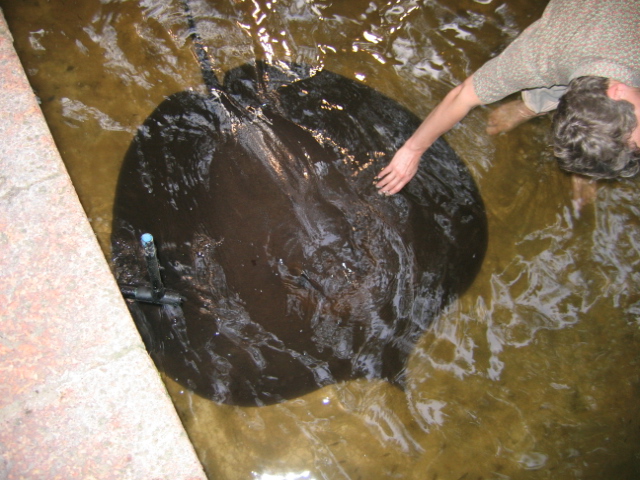 🇹🇭 Thailand and 3 moreGiant freshwater stingray
The widest freshwater fish in the world, found in Southeast Asian rivers.Ray · Rivers and lakes · 1852
 WorldMangrove whipray
A spotted stingray of Indo-Pacific mangroves and reefs.Ray · Estuaries and mangroves · 1883
 WorldSmooth butterfly ray
A diamond-shaped ray with a short tail and no sting.Ray · Coasts and shelves
 🇺🇸 United States and 4 moreSpiny butterfly ray
A large Atlantic ray with a tail spine, valued for food and now critically endangered in many areas.Ray · Estuaries and mangroves
More from Dasyatidae
All of them WorldBluespotted ribbontail ray
A small, colourful reef stingray with electric blue spots.Ray · Coasts and shelves · 1775
 EuropeCommon stingray
A venomous ray of Atlantic and Mediterranean coastal waters.Ray · Coasts and shelves · 1758
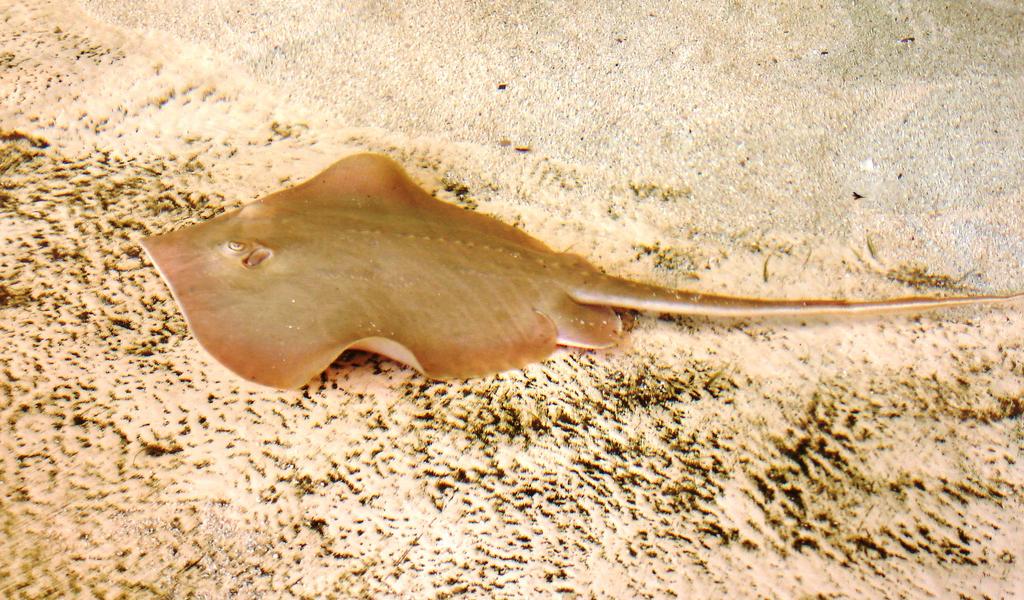 🇺🇸 United States and 1 moreAtlantic stingray
Small stingray found in Atlantic coastal waters and fresh rivers.Ray · Rivers and lakes · 1824
 WorldPelagic stingray
The only stingray that lives in the open ocean.Ray · Open ocean · 1832