
Mangrove whipray
A spotted stingray of Indo-Pacific mangroves and reefs.
The mangrove whipray is a solitary bottom-dweller found from the Red Sea to Australia. Juveniles live in mangroves while adults inhabit reefs. It faces heavy fishing pressure and habitat loss, leading to a Vulnerable global status.
- Tail turns white past the stinging spine.
- Juveniles live in mangrove forests.
- Embryos feed on uterine milk.
- Listed as Vulnerable globally by IUCN.
- Solitary hunter active at night.
What it is
This stingray has a thick, oval pectoral fin disc that is dark grey or brown above. The skin is covered in tiny granules and white flecks that become denser as the animal grows. Its tail is long and whip-like, turning stark white past the serrated stinging spine. The underside is white with small dark spots near the edges. Adults can reach 1.4 metres across the disc and exceed 3.5 metres in total length.
Where it lives
It lives in the Indo-Pacific region, ranging from the Red Sea and South Asia to northern Australia and Micronesia. Juveniles prefer brackish environments such as mangrove forests and estuaries. Adults move to sandy or rocky bottoms in lagoons and on coral reefs. They are typically found in shallow inshore waters, though some have been recorded at depths of 85 metres offshore.
How it lives
Unlike many relatives, this ray is solitary and inactive during the day. It often rests half-buried in sand or on coral heads. At night, it forages for food using sensitive electroreceptors to detect buried prey. Juveniles eat small crustaceans like prawns and crabs. Adults target small bottom-dwelling fish such as gobies and wrasses, along with invertebrates including octopuses and peanut worms.
Breeding and life cycle
Females give birth to live young through aplacental viviparity. The developing embryos do not have a placenta. Instead, they receive nutrients from histotroph, a substance often called uterine milk, produced by the mother. Newborns measure between 14 and 28 centimetres across the disc. Males reach sexual maturity when their disc width is between 55 and 65 centimetres.
Fish and people
Fishers catch this species for its meat, skin, and cartilage using tangle nets and bottom trawls. Its venomous spine can injure humans. In Southeast Asia, populations have dropped due to intensive fishing and the destruction of mangrove habitats. An Indonesian gillnet fishery targeting wedgefishes also captures these rays incidentally. In northern Australia, mandatory Turtle Exclusion Devices have reduced bycatch, keeping local numbers more stable.
Status and threats
The International Union for Conservation of Nature lists the species as Vulnerable globally. The Southeast Asian population is classified as Endangered due to a decline of over 50 per cent. This drop results from habitat degradation and heavy fishing pressure on juveniles. Conversely, the Australian population is considered Least Concern because protective measures in the Northern Prawn Fishery limit accidental capture.


Questions people ask about Mangrove whipray
Is the mangrove whipray dangerous to humans?
Yes, it possesses a venomous stinging spine on its tail that can cause injury. However, it is generally solitary and inactive during the day, resting buried in sand. Encounters usually occur when fishers handle caught specimens or when swimmers accidentally step on them.
What do mangrove whiprays eat?
Their diet changes with age. Juveniles feed mainly on small crustaceans such as prawns and crabs. Adults hunt small bottom-dwelling bony fishes like gobies and wrasses. They also consume invertebrates including octopuses, bivalves, and peanut worms, locating them via electroreception.
Why is this species considered Vulnerable?
Global populations are declining due to intensive artisanal and commercial fishing. In Southeast Asia, habitat loss from mangrove destruction heavily impacts juveniles. Incidental catch in gillnet fisheries targeting other species also contributes to significant population drops in certain regions.
How do mangrove whiprays reproduce?
They are aplacental viviparous, meaning they give birth to live young without a placenta. The mother nourishes the developing embryos with histotroph, also known as uterine milk. Newborns are relatively small, measuring 14 to 28 centimetres across the disc.
Good reading and sources
- Mangrove whipray on WikipediaEncyclopedia
- More photos on Wikimedia CommonsPhotos
- Wikidata recordOpen data
The facts on this page come from the Wikipedia article "Mangrove whipray", written by its contributors and used under the CC BY-SA 4.0 licence, and from its Wikidata record (CC0). EveryFish rewrote the text in its own words, with AI assistance, and compares every page with the article to make sure no passage is copied. It may be reused under the same CC BY-SA 4.0 licence with a link back.
It may contain mistakes, and figures change over time. Nothing here is investment or buying advice. If something is wrong, tell us. Last refreshed 2026-11-15.
Like Mangrove whipray
All rays and skates WorldPink whipray
Large Indo-Pacific stingray with a long tail and pinkish hue.Ray · Coasts and shelves · 1906
 EuropeCommon stingray
A venomous ray of Atlantic and Mediterranean coastal waters.Ray · Coasts and shelves · 1758
 🇺🇸 United States and 1 moreCownose ray
A migratory coastal ray with a distinctive head shape.Ray · Coasts and shelves
 WorldLionfish
Venomous marine fish of the genus Pterois known for striking stripes and invasive spread.Ray · Coral reefs · 1900
More from Dasyatidae
All of them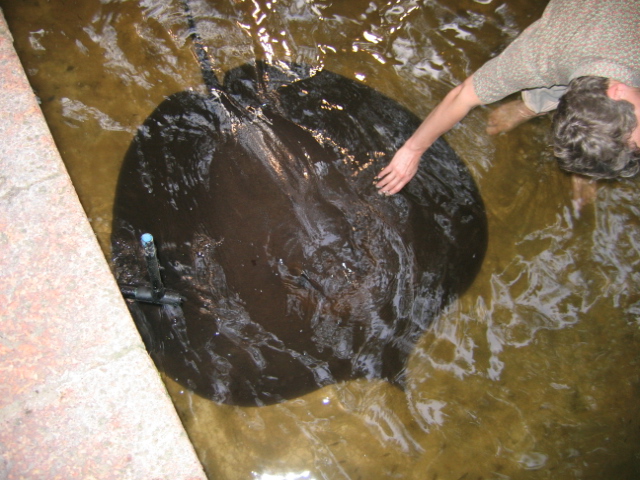 🇹🇭 Thailand and 3 moreGiant freshwater stingray
The widest freshwater fish in the world, found in Southeast Asian rivers.Ray · Rivers and lakes · 1852
 WorldPelagic stingray
The only stingray that lives in the open ocean.Ray · Open ocean · 1832
 🇺🇸 United States and 1 moreAtlantic stingray
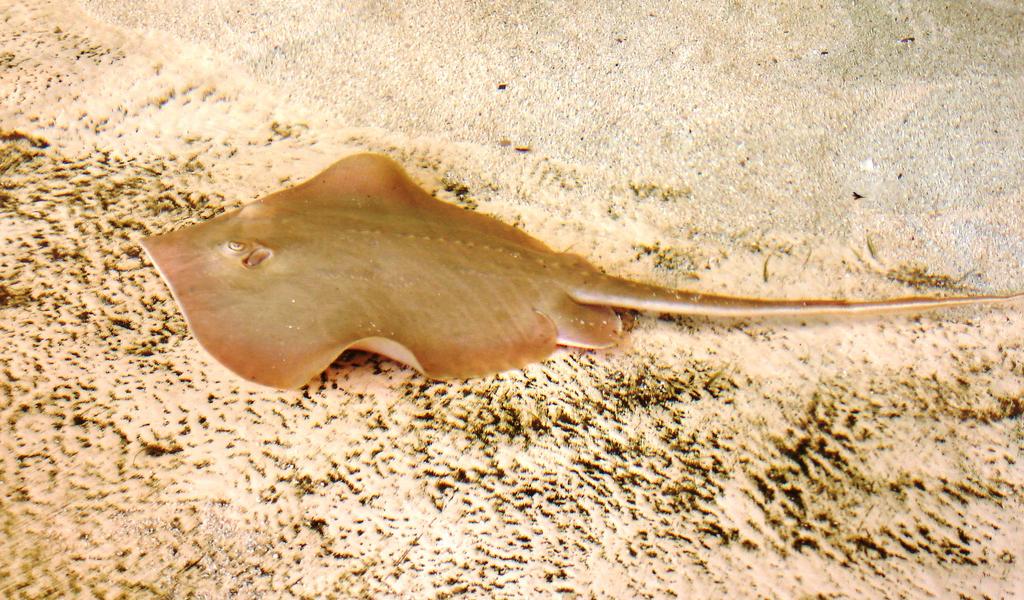
Small stingray found in Atlantic coastal waters and fresh rivers.Ray · Rivers and lakes · 1824
 🇿🇦 South Africa and 4 moreReticulate whipray
A large spotted stingray from the western Indian Ocean and eastern Mediterranean.Ray · Coasts and shelves · 1789