
Persian sturgeon
A large Caspian Sea fish prized for caviar.
The Persian sturgeon is a large fish native to the Caspian and Black Sea basins. It migrates up rivers like the Volga to spawn and is heavily fished for its meat and roe. Damming and overfishing have pushed it to critically endangered status.
- Listed as critically endangered by the IUCN.
- Migrates up rivers like the Volga to spawn.
- Valued highly for its roe used in caviar.
- Diet shifts from invertebrates to fish as it grows.
- River damming blocks access to spawning grounds.
What it is
This fish has a long, bulky body with a bluish colour. It belongs to the sturgeon family and lives mainly in the Caspian Sea. Some populations exist in the Black Sea basin. It is an ancient type of fish that spends much of its life near the sea floor. The species is known for its commercial value due to its meat and eggs.
Where it lives
The animal resides primarily in the eastern South Caspian shelf zone. Individuals also appear in the North Caspian and western Middle Caspian. It enters tributaries flowing into the Caspian Sea. During breeding seasons, it ascends major rivers including the Volga, Kura, Araks and Ural. Outside these migrations, it stays in marine waters.
How it lives
Young fish eat small invertebrates such as shrimp and fly larvae. As they grow to two or three years old, they start eating crabs and other fish. Adults feed mostly on fish. They use touch and taste sensors to find food, sucking it in from the mud or sand where they dwell.
Breeding and life cycle
Spawning takes place in rivers when water temperatures reach 20 to 25 degrees Celsius. In the Volga River, this happens from late July to early August. The Kura River sees activity from April to mid-September. The Ural River hosts spawning from June to July. These events are critical for the next generation.
Fish and people
Fishers target this species for its flesh and roe, which makes caviar. Heavy fishing has reduced numbers significantly. Removing immature fish before they breed disrupts the population cycle. Hatcheries are suggested as a way to help restore numbers through artificial reproduction. It remains a valuable resource despite its decline.
Status and threats
The International Union for Conservation of Nature lists it as critically endangered. Threats include excessive fishing, river damming, pollution and loss of spawning grounds. Dams block their path to breeding areas. Contamination in rivers flowing into the Caspian Sea harms their health. Conservation efforts focus on hatchery support and regulating harvests.
Questions people ask about Persian sturgeon
Where does the Persian sturgeon live?
It lives mainly in the Caspian Sea, with some presence in the Black Sea. It migrates into rivers such as the Volga, Kura, Araks and Ural for breeding purposes.
Why is this fish endangered?
Overfishing removes young fish before they can breed. River dams block migration routes to spawning areas. Pollution and habitat loss also contribute to its critically endangered status.
What does the Persian sturgeon eat?
Young fish eat small invertebrates like shrimp and larvae. Adults consume crabs and other fish. They feed by sucking in prey from the sea floor using sensory receptors.
Good reading and sources
- Persian sturgeon on WikipediaEncyclopedia
- More photos on Wikimedia CommonsPhotos
- Wikidata recordOpen data
The facts on this page come from the Wikipedia article "Persian sturgeon", written by its contributors and used under the CC BY-SA 4.0 licence, and from its Wikidata record (CC0). EveryFish rewrote the text in its own words, with AI assistance, and compares every page with the article to make sure no passage is copied. It may be reused under the same CC BY-SA 4.0 licence with a link back.
It may contain mistakes, and figures change over time. Nothing here is investment or buying advice. If something is wrong, tell us. Last refreshed 2026-11-15.
Like Persian sturgeon
All ancient fish 🇨🇦 Canada and 3 moreSturgeon
Ancient fish with bony plates and heterocercal tails, known for caviar.Ancient · Rivers and lakes
 WorldStarry sturgeon
Long-snouted sturgeon from the Caspian and Black Seas.Ancient · Rivers and lakes
 🇨🇳 ChinaChinese sturgeon
Critically endangered giant migratory fish of the YangtzeAncient · Rivers and lakes
 🇺🇸 United States and 4 moreSea lamprey
A jawless, parasitic fish native to the Northern Hemisphere that attacks other fish.Ancient · Rivers and lakes · 1758
More from Acipenseridae
All of them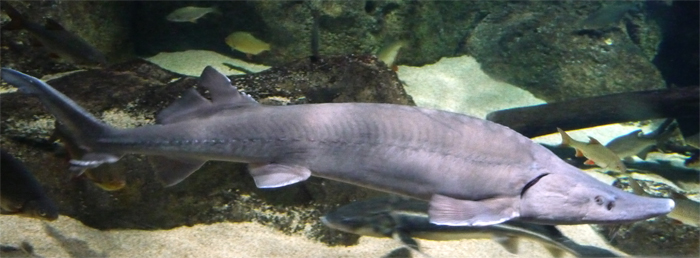 🇷🇺 Russia and 4 moreSiberian sturgeon
Large freshwater sturgeon native to Siberian riversAncient · Rivers and lakes
 🇺🇸 United States and 1 moreAtlantic sturgeon
A large anadromous fish native to the western Atlantic Ocean and its river systems.Ancient · Rivers and lakes
 🇺🇸 United States and 1 moreLake sturgeon
A large, long-lived freshwater fish native to North America.Ancient · Rivers and lakes
 🇺🇸 United States and 1 moreGreen sturgeon
A large anadromous fish native to the northern Pacific Ocean.Shark · Coasts and shelves