
Mangar
Large cyprinid fish of the Tigris and Euphrates rivers.
The mangar is a large freshwater fish native to the Middle East. It is highly valued for food but faces threats from overfishing and habitat loss.
- Reaches lengths of up to 2.3 metres and weights of 140 kg.
- Native to the Tigris and Euphrates river systems.
- Classified as Vulnerable by the IUCN due to overfishing.
- Ancient Assyrian art depicts figures wearing its skin.
- Successfully bred in captivity for aquaculture potential.
What it is
The mangar, also known as the pike barbel, is a substantial ray-finned fish belonging to the carp family. It features a silvery body covered in small scales, a large head, and a toothless mouth surrounded by four barbels. The fish has a single dorsal fin, with yellowish tones on its anal fin and tail. Adults typically measure between one and one point five metres, though they can reach up to two point three metres and weigh as much as one hundred and forty kilograms. It is among the largest living members of its family.
Where it lives
This species inhabits the drainage basins of the Tigris and Euphrates rivers across Iran, Iraq, Syria, and Turkey. Adults prefer larger bodies of water such as major rivers and reservoirs. They migrate to smaller inflows when it is time to reproduce. The fish thrives in these freshwater environments, moving between different water bodies depending on the season and life stage requirements.
How it lives
The mangar feeds on a diverse range of prey including zooplankton, invertebrates, birds, and other fish. Fish make up roughly half of its diet, while it also consumes phytoplankton. These fish are migratory, moving from large rivers to smaller streams for spawning. They can live for at least seventeen years.
Breeding and life cycle
Adults migrate from large rivers and reservoirs into smaller inflows to spawn. The exact timing and methods of reproduction are not detailed beyond this migration pattern. Young fish grow within these smaller water bodies before joining adults in larger habitats. The species has been successfully bred in captivity, indicating viable reproductive protocols for aquaculture purposes.
Fish and people
The mangar is highly prized as a food fish throughout its range. Historical illustrations from one thousand to fifteen hundred BC depict Assyrian priests or deities wearing the skin of this fish, showing its long-standing cultural significance. Due to high demand, it suffers from severe overfishing. Captive breeding programs exist, suggesting potential for sustainable aquaculture to meet food demands without further stressing wild populations.
Status and threats
The International Union for Conservation of Nature lists the mangar as vulnerable. Reliable population data are scarce, but reports indicate a severe decline in catches and numbers over recent decades. Most populations are believed to be heavily overfished due to widespread exploitation as a target for inland fisheries. Habitat loss compounds these pressures, though some locations still show abundant numbers.
Questions people ask about Mangar
What is the maximum size of a mangar?
The mangar can reach a maximum length of up to 2.3 metres and weigh up to 140 kilograms. Typical adults measure between one and one point five metres and weigh around sixty kilograms.
Where does the mangar live?
It is native to the Tigris and Euphrates river systems in Iran, Iraq, Syria, and Turkey. Adults inhabit large rivers and reservoirs, migrating to smaller inflows to spawn.
Is the mangar endangered?
Yes, it is classified as Vulnerable by the IUCN. Populations have declined severely due to overfishing and habitat loss, with most stocks considered heavily exploited.
What do mangar fish eat?
They feed on a wide variety of animals including zooplankton, invertebrates, birds, and other fish. Fish constitute about half their diet, and they also consume phytoplankton.
Why is the mangar historically significant?
Illustrations from one thousand to fifteen hundred BC show Assyrian priests or deities dressed in the skin of the mangar, highlighting its ancient cultural importance in the region.
Good reading and sources
- Mangar (fish) on WikipediaEncyclopedia
- More photos on Wikimedia CommonsPhotos
- Wikidata recordOpen data
The facts on this page come from the Wikipedia article "Mangar (fish)", written by its contributors and used under the CC BY-SA 4.0 licence, and from its Wikidata record (CC0). EveryFish rewrote the text in its own words, with AI assistance, and compares every page with the article to make sure no passage is copied. It may be reused under the same CC BY-SA 4.0 licence with a link back.
It may contain mistakes, and figures change over time. Nothing here is investment or buying advice. If something is wrong, tell us. Last refreshed 2026-11-15.
Like Mangar
All carps and minnows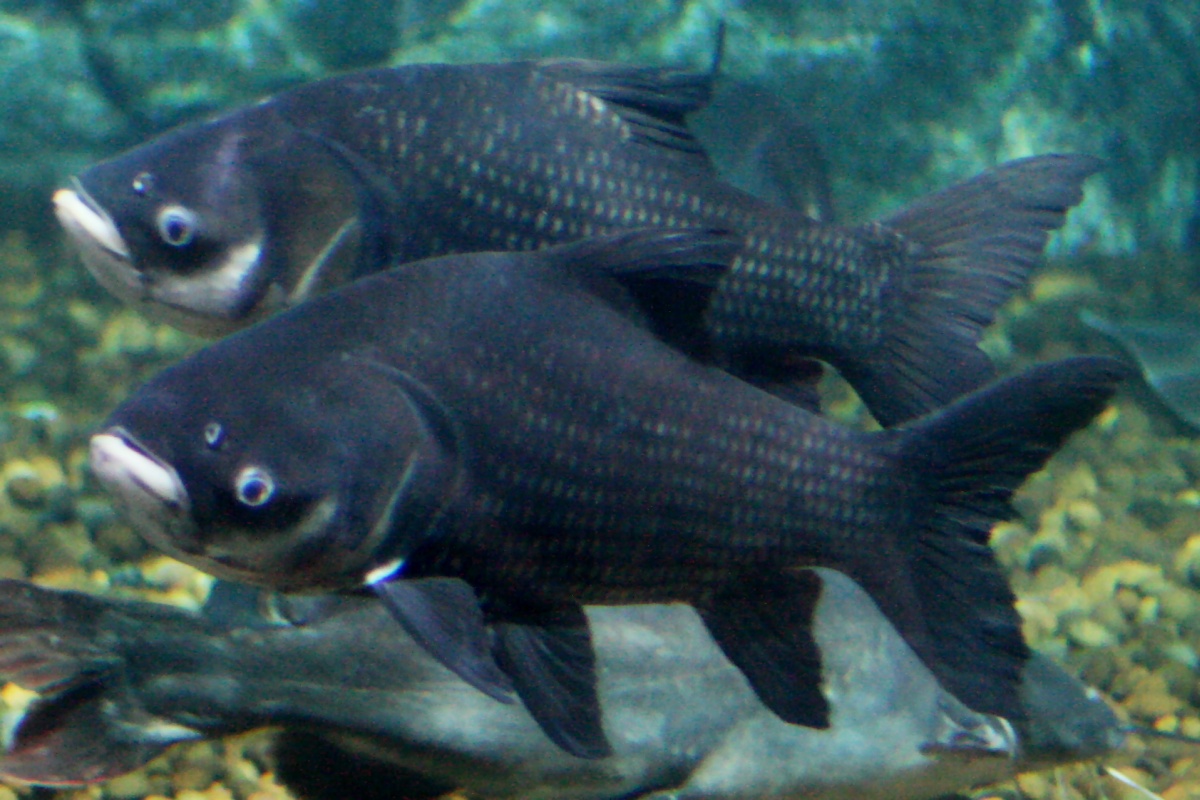 🇰🇭 Cambodia and 2 moreGiant barb
The largest cyprinid fish, native to major river basins in Southeast Asia.Carp · Rivers and lakes
 🇮🇳 India and 4 moreRohu
A large silver carp from South Asian rivers, farmed for food and prized as a game fish.Carp · Rivers and lakes
 🇹🇭 Thailand and 2 moreEmpurau
A large Southeast Asian river fish prized for its high market value.Carp · Rivers and lakes
More from Cyprinidae
All of them 🇹🇭 Thailand and 4 moreTinfoil barb
A large Southeast Asian freshwater fish known for its red fins and silvery body.Carp · Rivers and lakes · 1853
 🇰🇪 Kenya and 4 moreRipon barbel
A large freshwater cyprinid from East African lakes and rivers.Carp · Rivers and lakes · 1900
 EuropeCommon nase
A migratory European cyprinid with orange tail fins.Carp · Rivers and lakes · 1758
 🇹🇭 ThailandRed-tailed black shark
A critically endangered Thai carp kept widely in aquariums for its black body and red tail.Carp · Rivers and lakes · 1931