
Common nase
A migratory European cyprinid with orange tail fins.
The common nase is a potamodromous fish native to European river systems. It lives in fast currents and feeds on algae near the riverbed. This species serves as a key food source for larger predators like the Danube salmon.
- Native to Black Sea and Baltic Sea drainages
- Feeds on algae and invertebrates near river bottom
- Protected under European wildlife conservation laws
- Key food source for the Danube salmon
- Can live up to 15 years in the wild
What it is
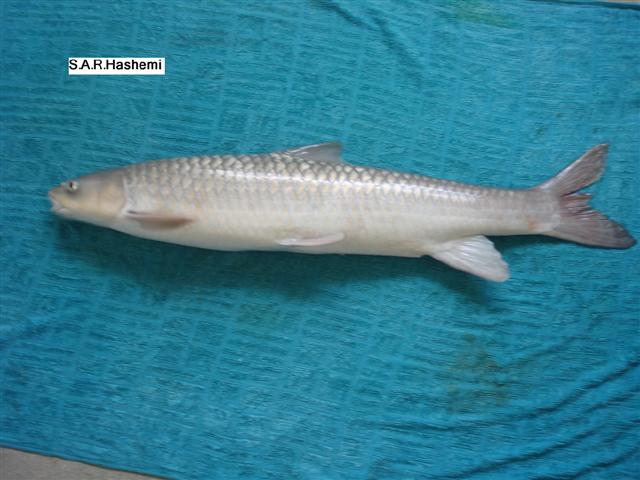
The common nase is a spindle-shaped fish with metallic blue-grey scales. Its most distinct feature is an orange tail fin. The lower lip is relatively sharp, adapted for scraping food from surfaces. Adults usually measure between 25 and 40 centimetres. Large specimens can reach nearly 60 centimetres and weigh over three kilograms. It belongs to the carp family and is known scientifically as Chondrostoma nasus.
Where it lives
This species is native to several major European drainage systems. It inhabits rivers flowing into the Black Sea, such as the Danube and Dniepr. Populations also exist in southern Baltic tributaries like the Vistula and Odra. In the west, it ranges through southern North Sea drainages up to the Meuse. Humans have introduced it to other regions, including the Rhône and Loire in France, as well as rivers in Italy and Slovenia.
How it lives
Nase are gregarious fish that form shoals in deep, fast-moving water. They prefer areas with strong currents, often dwelling near rocky outcrops or bridge foundations. As bottom dwellers, they graze on algae and aquatic plants. Their diet also includes small invertebrates found on the riverbed. This behaviour makes them an important prey item for larger predatory fish, particularly the Danube salmon.
Fish and people
The common nase has historically served as a food source in its native range. Its primary ecological role is supporting higher trophic levels, specifically as prey for the Huchen. The species holds legal protection under the Convention on the Conservation of European Wildlife and Natural Habitats. This status helps regulate activities that might harm its populations across Europe.
Status and threats
The common nase is protected by international conservation agreements. Specifically, it falls under the Convention on the Conservation of European Wildlife and Natural Habitats. This legal framework aims to preserve its habitats and ensure sustainable populations throughout its European range. No specific threat levels or decline rates are detailed in the available records.


Questions people ask about Common nase
What does the common nase eat?
It is a bottom feeder that grazes on algae and aquatic plants. It also consumes small invertebrates found in the riverbed sediment.
Where is the common nase found?
It is native to European rivers draining into the Black Sea, Baltic Sea, and North Sea. It has also been introduced to rivers in France, Italy, and Slovenia.
How big does the common nase get?
Most adults range from 25 to 40 centimetres in length. The largest recorded specimen measured 58.5 centimetres and weighed 3.4 kilograms.
Good reading and sources
The facts on this page come from the Wikipedia article "Common nase", written by its contributors and used under the CC BY-SA 4.0 licence, and from its Wikidata record (CC0). EveryFish rewrote the text in its own words, with AI assistance, and compares every page with the article to make sure no passage is copied. It may be reused under the same CC BY-SA 4.0 licence with a link back.
It may contain mistakes, and figures change over time. Nothing here is investment or buying advice. If something is wrong, tell us. Last refreshed 2026-11-15.
Like Common nase
All carps and minnows EuropeAsp
A predatory freshwater fish native to Europe and western Asia.Carp · Rivers and lakes · 1758
 🇮🇷 Iran and 3 moreMangar
Large cyprinid fish of the Tigris and Euphrates rivers.Carp · Rivers and lakes · 1843
 🇰🇪 Kenya and 4 moreRipon barbel
A large freshwater cyprinid from East African lakes and rivers.Carp · Rivers and lakes · 1900
🇮🇷 Iran and 2 moreCaspian kutum
A prized ray-finned fish from the Caspian Sea.Carp · Estuaries and mangroves · 1901
More from Cyprinidae
All of them 🇹🇭 Thailand and 4 moreTinfoil barb
A large Southeast Asian freshwater fish known for its red fins and silvery body.Carp · Rivers and lakes · 1853
 🇹🇭 ThailandRed-tailed black shark
A critically endangered Thai carp kept widely in aquariums for its black body and red tail.Carp · Rivers and lakes · 1931
 🇲🇲 MyanmarOdessa barb
Small colourful cyprinid from Myanmar popular in home aquariumsCarp · Rivers and lakes · 2008
 🇮🇷 Iran and 1 moreShabout
A large freshwater carp native to the Tigris-Euphrates basin in Western Asia.Carp · Rivers and lakes