
Tinfoil barb
A large Southeast Asian freshwater fish known for its red fins and silvery body.
The tinfoil barb is a tropical cyprinid native to river systems in Southeast Asia. It grows up to 36 cm and lives for over a decade, thriving in clear flowing water.
- Maximum length reaches 36 centimetres.
- Dorsal fin features a black blotch at the red tip.
- Lifespan spans ten to fifteen years.
- Native to Mekong and Chao Phraya river basins.
- Herbivorous diet includes algae and aquatic plants.
What it is
This species belongs to the carp family and displays a distinct appearance among its relatives. Adults exhibit a silvery or golden yellow body that shines when alive. The dorsal fin is bright red with a black tip, while the tail fin shows orange or blood-red hues edged in white. A black stripe runs along each lobe of the tail. The fish possesses red pectoral, pelvic, and anal fins. Eight scale rows sit between the dorsal fin origin and the lateral line. Individuals reach a maximum length of 36 centimetres and typically live for ten to fifteen years.
Where it lives
Native populations inhabit river networks across Southeast Asia. The Mekong and Chao Phraya basins in Thailand, Cambodia, Laos, and Vietnam host these fish. They also occur on the islands of Sumatra and Borneo, as well as the Malayan peninsula. In captivity within Indonesia, they tolerate temperatures between 20.4 and 33.7 degrees Celsius. Wild specimens prefer clearer waters with a pH between 6.5 and 7.0. They occupy rivers, streams, canals, and ditches, often entering flooded agricultural fields during high water.
How it lives
These fish are active swimmers that spend time near the bottom and middle of the water column. They form schools and prefer companions of similar size or larger. Their diet includes aquatic macrophytes, submerged land plants, and filamentous algae. They also consume insects, small fishes, worms, and crustaceans. In aquarium settings, they act as greedy eaters, stuffing their mouths with available food. Parasite studies note monogenean species on gills of imported individuals from Sri Lanka and Thailand.
Breeding and life cycle
Reproduction involves scattering thousands of eggs into the water. No obvious physical traits distinguish males from females. Captive breeding for the aquarium trade remains rare due to the substantial size required for maturity. Young specimens are frequently sold, leading owners to underestimate their eventual growth potential. The species represents a distinct lineage within its genus, differing significantly from core Barbus species.
Fish and people
Commercial importance exists in the aquarium hobby and aquaculture sectors. Fish are marketed fresh for subsistence farming and occasionally used as bait. Aquarists keep them in large tanks alongside big cichlids like oscars. Strong currents mimic their natural stream habitat. Hobbyists recommend housing them with other large fish to prevent aggression. Their peaceful nature suits community tanks if space allows for their full adult size.
Status and threats
No specific conservation threats are detailed in the provided text. The species appears stable in its native range. Commercial collection for the aquarium trade occurs but does not indicate population decline. Parasite loads in imported fish suggest health monitoring needs for trade. The species remains common in local fisheries and the global pet market.


Questions people ask about Tinfoil barb
What does the tinfoil barb look like?
Adults have a silvery or golden yellow body. The dorsal fin is red with a black tip. The tail fin is orange or blood-red with a white margin and black submarginal stripe. Pectoral, pelvic, and anal fins are also red.
Where is the tinfoil barb native?
It originates in Southeast Asia. Native ranges include the Mekong and Chao Phraya basins in Thailand, Cambodia, Laos, and Vietnam. Populations also exist on Sumatra, Borneo, and the Malayan peninsula.
What do tinfoil barbs eat?
They are largely herbivorous, consuming aquatic macrophytes, submerged land plants, and filamentous algae. They also eat insects, small fishes, worms, and crustaceans. In captivity, they accept almost any food provided.
How large do tinfoil barbs grow?
They grow up to 14 inches, which equals 36 centimetres in length. This size requires large aquariums or ponds. Owners often underestimate growth, buying young specimens that become too large for small tanks.
Good reading and sources
The facts on this page come from the Wikipedia article "Tinfoil barb", written by its contributors and used under the CC BY-SA 4.0 licence, and from its Wikidata record (CC0). EveryFish rewrote the text in its own words, with AI assistance, and compares every page with the article to make sure no passage is copied. It may be reused under the same CC BY-SA 4.0 licence with a link back.
It may contain mistakes, and figures change over time. Nothing here is investment or buying advice. If something is wrong, tell us. Last refreshed 2026-11-15.
Like Tinfoil barb
All carps and minnows 🇲🇲 Myanmar and 1 moreCelestial pearl danio
A tiny, brightly coloured freshwater fish from Myanmar and Thailand, popular in the aquarium trade.Carp · Rivers and lakes · 2006
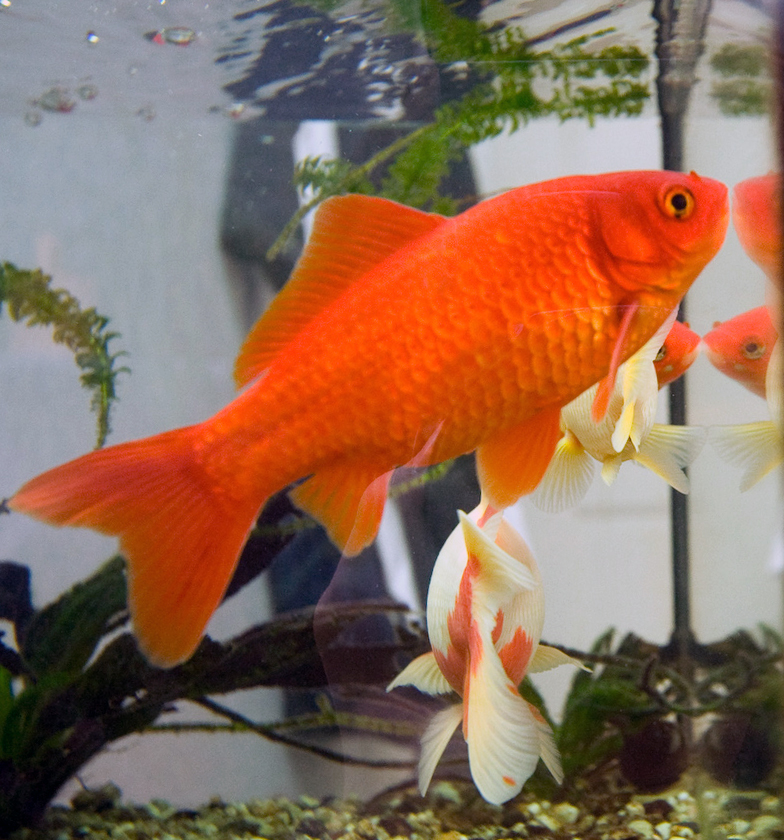 🇨🇳 ChinaGoldfish
A domesticated freshwater carp from China, kept worldwide as a pet and aquarium fish.Carp · Rivers and lakes
 🇰🇪 Kenya and 4 moreRipon barbel
A large freshwater cyprinid from East African lakes and rivers.Carp · Rivers and lakes · 1900
 WorldTench
Slippery freshwater fish with olive-green skin and red eyes.Carp · Rivers and lakes · 1758
More from Cyprinidae
All of them 🇮🇷 Iran and 3 moreMangar
Large cyprinid fish of the Tigris and Euphrates rivers.Carp · Rivers and lakes · 1843
 🇹🇭 ThailandRed-tailed black shark
A critically endangered Thai carp kept widely in aquariums for its black body and red tail.Carp · Rivers and lakes · 1931
 EuropeCommon nase
A migratory European cyprinid with orange tail fins.Carp · Rivers and lakes · 1758
 🇲🇲 MyanmarOdessa barb
Small colourful cyprinid from Myanmar popular in home aquariumsCarp · Rivers and lakes · 2008