
Odessa barb
Small colourful cyprinid from Myanmar popular in home aquariums
The Odessa barb is a small freshwater fish native to central Myanmar. Scientists formally described it in 2008, though hobbyists have kept it since the 1970s. Males display a vivid red stripe, while females are plainer. It is a peaceful schooling species valued in the aquarium trade for its active nature and striking male colouration.
- Males display a vivid red lateral stripe
- Formally described by science in 2008
- Native to central Myanmar rivers
- Requires groups of five or more
- Fry mature in five to eight months
What it is
The Odessa barb is a small cyprinid with a laterally compressed body. Males reach about 4.6 centimetres in scientific samples, though hobbyists report sizes up to 7 centimetres. The species shows clear differences between sexes. Males have a beige background with a bright red lateral stripe and red irises marked by a black streak. Their fins are yellowish green with black spots. Females are plainer, with a silvery sheen and fainter spots on the dorsal fin only. Both sexes possess a prominent black spot on the back and a smaller one near the tail.
Where it lives
This fish is native to central Myanmar. Known populations exist in the lower Chindwin River and an artificial pond above Anisakan Falls. It inhabits freshwater environments. The species was present in the aquarium trade for decades before scientists formally described it in 2008. Its natural range appears limited to these specific locations in Myanmar.
How it lives
Odessa barbs are active, fast-moving schooling fish. They are generally peaceful but may become semi-aggressive if kept in small numbers. Groups of five or more individuals help maintain calm behaviour. They are voracious eaters that accept flakes and frozen foods like bloodworms. In the wild or captivity, they tend to be skittish in bare tanks, preferring setups with driftwood or plants for hiding. They are known to jump, requiring secure tank lids.
Breeding and life cycle
This species scatters eggs among plant matter such as moss. Parents provide no care and will consume any eggs they discover. Fry hatch within 24 hours and require microscopic food initially. Growth rates depend on water quality, temperature, and diet. Young fish typically mature within five to eight months under suitable conditions.
Fish and people
Aquarists have kept this fish since the early 1970s, when it reportedly appeared in Odesa, Ukraine. This origin led to its common name. It is often confused with the less colourful ticto barb. The species thrives in community tanks with tetras, corydoras, danios, and ram cichlids. A selectively bred strain from North America features males with darker bodies and more vivid red stripes. The Burmese species name padamya means ruby, referencing the male's colour.


Questions people ask about Odessa barb
How large do Odessa barbs grow?
Scientific measurements show adults reaching 4.6 centimetres, while aquarium profiles note lengths up to 7 centimetres. Males are slightly smaller than the maximum hobbyist reports but display more vibrant colours.
Are Odessa barbs aggressive?
They are generally peaceful but can become semi-aggressive if kept in small numbers. Keeping them in schools of five or more individuals helps maintain their calm and natural schooling behaviour.
What do Odessa barbs eat?
They are voracious eaters that accept most aquarium foods. Their diet includes standard flakes and frozen options such as bloodworms. They feed actively and do not require specialized nutrition.
Why is it called the Odessa barb?
The name comes from Odesa, Ukraine, where the fish first appeared in pet enthusiast circles in the early 1970s. This was decades before scientists formally identified and described the species in 2008.
Good reading and sources
The facts on this page come from the Wikipedia article "Odessa barb", written by its contributors and used under the CC BY-SA 4.0 licence, and from its Wikidata record (CC0). EveryFish rewrote the text in its own words, with AI assistance, and compares every page with the article to make sure no passage is copied. It may be reused under the same CC BY-SA 4.0 licence with a link back.
It may contain mistakes, and figures change over time. Nothing here is investment or buying advice. If something is wrong, tell us. Last refreshed 2026-11-15.
Like Odessa barb
All carps and minnows 🇲🇲 Myanmar and 1 moreCelestial pearl danio
A tiny, brightly coloured freshwater fish from Myanmar and Thailand, popular in the aquarium trade.Carp · Rivers and lakes · 2006
 🇹🇭 ThailandRed-tailed black shark
A critically endangered Thai carp kept widely in aquariums for its black body and red tail.Carp · Rivers and lakes · 1931
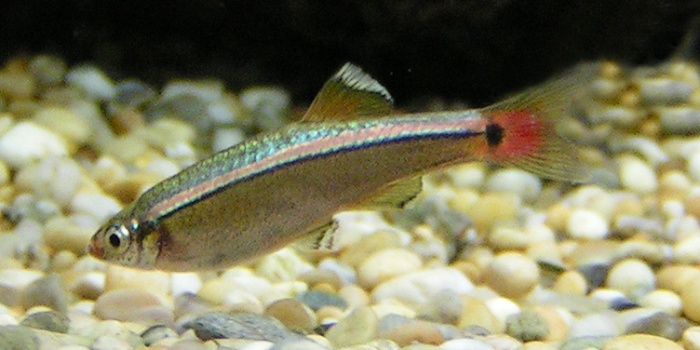 🇨🇳 ChinaWhite Cloud Mountain minnow
A small, hardy freshwater fish native to China, popular in aquariums for its cold tolerance and peaceful nature.Carp · Rivers and lakes · 1930
 🇹🇭 Thailand and 4 moreTinfoil barb
A large Southeast Asian freshwater fish known for its red fins and silvery body.Carp · Rivers and lakes · 1853
More from Cyprinidae
All of them 🇰🇪 Kenya and 4 moreRipon barbel
A large freshwater cyprinid from East African lakes and rivers.Carp · Rivers and lakes · 1900
 🇮🇷 Iran and 3 moreMangar
Large cyprinid fish of the Tigris and Euphrates rivers.Carp · Rivers and lakes · 1843
 EuropeCommon nase
A migratory European cyprinid with orange tail fins.Carp · Rivers and lakes · 1758
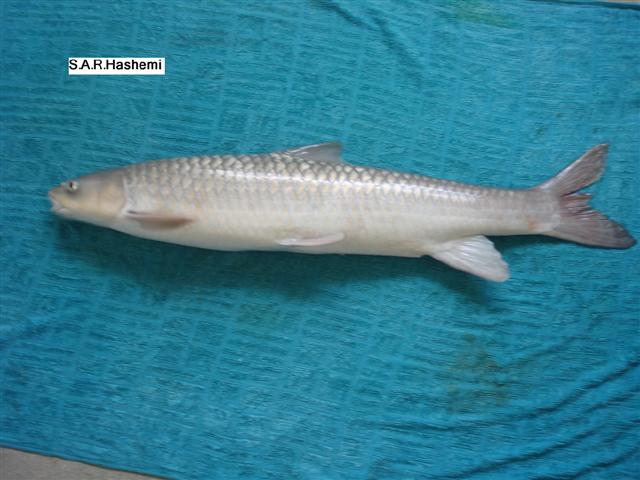 🇮🇷 Iran and 1 moreShabout
A large freshwater carp native to the Tigris-Euphrates basin in Western Asia.Carp · Rivers and lakes