
Atlantic herring
Abundant schooling fish of the North Atlantic
The Atlantic herring is a highly abundant pelagic fish found across the northern Atlantic Ocean. It forms massive schools that support major fisheries in Europe and North America while serving as a crucial food source for marine predators.
- Schools can contain up to four billion fish
- Reaches sexual maturity at 3 to 5 years old
- National fish of Estonia since 2007
- Fragile scales strip easily upon contact
- Can occupy 4 cubic kilometres of water
What it is
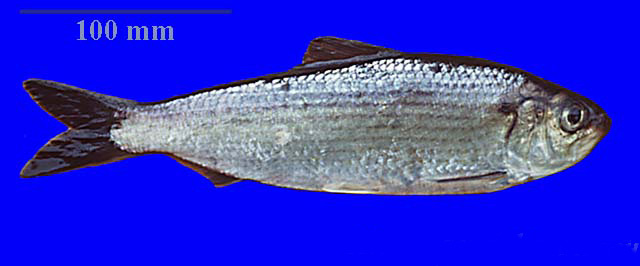
This fish has a streamlined, fusiform body designed for efficient swimming. It possesses large, delicate gill surfaces that filter water to trap plankton. The scales are large but fragile, often stripping away upon contact with foreign matter. Adults reach lengths of up to 45 centimetres and weigh around 1.1 kilograms. Their presence in estuaries often signals clean, oxygenated water, as they retreat from polluted areas.
Where it lives
These fish inhabit both sides of the northern Atlantic Ocean. Their range extends from South Carolina to Greenland in the west, and from the Baltic Sea to Novaya Zemlya in the east. They frequent the Gulf of Maine, Gulf of St. Lawrence, North Sea, and Norwegian Sea. Although found in Arctic-adjacent waters, they are not classified as an Arctic species. They spawn in coastal zones, estuaries, and offshore banks.
How it lives
They act as a dominant converter of zooplankton into fish biomass. Their diet includes copepods, krill, arrow worms, and small fish larvae. Predators include cod, whales, seals, sharks, and seabirds. They form immense, precise schools that can contain billions of individuals. These groups travel at steady speeds and react quickly to threats, often forming doughnut-shaped voids around divers or predators.
Breeding and life cycle
Sexual maturity occurs between three and five years of age. Spawning seasons vary by population, with some groups breeding in autumn and others in spring. Females release up to 40,000 sticky eggs that adhere to gravel or weed on the sea bed. Males release milt simultaneously for external fertilization. Eggs mature in one to three weeks, depending on water temperature, which must remain below 19 degrees Celsius.
Fish and people
This species supports significant economies in New England and Atlantic Canada. In the Baltic region, a smaller subspecies known as Baltic herring is culturally distinct. It is the national fish of Estonia and features in dishes like Swedish surströmming. Helsinki has hosted an annual herring market since 1743. The fish is also used as bait for recreational angling, though it rarely survives in aquariums due to its fragility.
Status and threats
As of 2010, the species was not considered threatened by overfishing. However, historical Baltic populations suffered dramatic declines due to excessive catch and climate cooling during the Little Ice Age. Autumn-spawning groups were nearly extinct and replaced by spring-spawning stocks. Pollution remains a threat, causing retreat from many estuaries, though returns are observed in cleaned waterways.


Questions people ask about Atlantic herring
How big do Atlantic herring get?
They grow up to 45 centimetres in length and weigh approximately 1.1 kilograms. Their bodies are fusiform, allowing for fast and efficient swimming in large schools.
What do Atlantic herring eat?
They feed primarily on zooplankton such as copepods and krill. They also consume small fish, arrow worms, and fish eggs, filtering these from the water using their gill rakers.
Why are they rare in aquariums?
Despite their abundance in the ocean, they are fragile and require specific cruising space. Contact with tank walls or other objects damages their delicate scales and gills, leading to poor survival rates.
Where do they spawn?
Spawning occurs in estuaries, coastal waters, and offshore banks. Different populations spawn at different times, with some groups breeding in autumn and others in spring, depending on their location.
Good reading and sources
- Atlantic herring on WikipediaEncyclopedia
- More photos on Wikimedia CommonsPhotos
- Wikidata recordOpen data
The facts on this page come from the Wikipedia article "Atlantic herring", written by its contributors and used under the CC BY-SA 4.0 licence, and from its Wikidata record (CC0). EveryFish rewrote the text in its own words, with AI assistance, and compares every page with the article to make sure no passage is copied. It may be reused under the same CC BY-SA 4.0 licence with a link back.
It may contain mistakes, and figures change over time. Nothing here is investment or buying advice. If something is wrong, tell us. Last refreshed 2026-11-15.
Like Atlantic herring
All herrings and sardines 🇺🇸 United StatesAtlantic menhaden
A silvery herring species found along the North American Atlantic coast.Herring · Coasts and shelves
 🇺🇸 United States and 1 moreAlewife
A small North American herring that migrates between sea and rivers.Herring · Coasts and shelves
 WorldIndian anchovy
Small schooling fish used for food and bait in the Indo-Pacific.Herring · Coasts and shelves
 🇲🇦 Morocco and 2 moreEuropean pilchard
Small schooling fish of the Atlantic and Mediterranean.Herring · Coasts and shelves
More from Clupeidae
All of them 🇺🇸 United States and 2 moreAmerican gizzard shad
A silvery freshwater forage fish with a muscular gizzard.Herring · Rivers and lakes
 WorldSpotted sardinella
A small herring with golden spots found in the Indo-Pacific.Herring · Coasts and shelves
 🇺🇸 United States and 3 moreMenhaden
Small silver forage fish that filter plankton and support marine food webs.Herring · Coasts and shelves
 🇮🇳 India and 3 moreIndian river shad
A shad found in rivers and flooded fields across South Asia.Herring · Rivers and lakes