
Rainbow shark
A Southeast Asian freshwater cyprinid kept as a popular but aggressive aquarium fish.
The rainbow shark is a ray-finned fish native to Indochina. It is widely traded globally for home aquaria due to its striking black and red colouring, though it requires large tanks and careful housing.
- Grows up to 15 cm long with black body and red fins.
- Native to major river basins in Indochina.
- Aggressive towards similar species in confined spaces.
- Requires minimum 55-gallon tank to thrive.
- Available as albino and fluorescent GloFish variants.
What it is
This species belongs to the carp family and is a ray-finned fish, distinct from cartilaginous sharks. Adults reach approximately fifteen centimetres in length. The body is elongated with a pointed snout and flat belly. Colouration features a dark blue or black main body contrasted by red to orange fins. A thin stripe runs from the gill cover through the eye. Males display brighter hues and thinner bodies with black lines on the tail compared to females.
Where it lives
Native waters include the Mekong, Chao Phraya, Xe Bangfai, and Maeklong basins in Indochina. They inhabit areas with sandy bottoms near the river floor. Populations migrate seasonally into flooded zones when waters rise, returning to main channels as floods recede. This movement allows them to access different feeding grounds throughout the year.
How it lives
These fish act as cleaners for tank bottoms and surfaces, consuming algae and leftover food. In the wild they are generally peaceful with their own kind. However, captivity often triggers aggression. Males may chase rivals until death occurs. They also attack similar-looking species like red-tailed sharks. Quick swimming and territorial chasing are common behaviours that stress other tank inhabitants.
Breeding and life cycle
Reproduction is rarely observed in home aquaria despite being egg-layers. Successful breeding usually occurs in commercial farms across Southeast Asia. Captive conditions make natural spawning sequences difficult to replicate. Hiding places such as caves or plants can reduce fighting during attempted breeding periods.
Fish and people
Widely sold as an ornamental fish for home tanks. Variants include albino types and fluorescent GloFish strains. Aquarists must provide at least fifty-five gallons of space to prevent bullying. Compatible tank mates include barbs, rainbowfish, danios, and loaches. Smaller timid fish are often harassed or eaten. The fish is not recommended for beginners due to its hostile nature.


Questions people ask about Rainbow shark
Is the rainbow shark a real shark?
No, it is a ray-finned fish in the carp family. True sharks belong to a different lineage called cartilaginous fishes. The name comes only from its similar body shape and fin placement.
Can I keep rainbow sharks with small fish?
Generally no. They are semi-aggressive and will chase smaller or timid fish out of their territory. Keep them with larger, active mid-water species like barbs or rainbowfish instead.
What do rainbow sharks eat?
They are omnivores eating algae, flakes, insect larvae, worms, crustaceans, and vegetables like lettuce. They also consume frozen foods such as bloodworms and brine shrimp.
How big does a rainbow shark get?
Adults typically reach about six inches or fifteen centimetres in length. Males tend to be thinner with brighter colours than females.
Good reading and sources
- Rainbow shark on WikipediaEncyclopedia
- More photos on Wikimedia CommonsPhotos
- Wikidata recordOpen data
The facts on this page come from the Wikipedia article "Rainbow shark", written by its contributors and used under the CC BY-SA 4.0 licence, and from its Wikidata record (CC0). EveryFish rewrote the text in its own words, with AI assistance, and compares every page with the article to make sure no passage is copied. It may be reused under the same CC BY-SA 4.0 licence with a link back.
It may contain mistakes, and figures change over time. Nothing here is investment or buying advice. If something is wrong, tell us. Last refreshed 2026-11-15.
Like Rainbow shark
All carps and minnows 🇹🇭 Thailand and 2 moreSiamese mud carp
Freshwater cyprinid native to Mekong and Chao Phraya riversCarp · Rivers and lakes
 🇲🇾 Malaysia and 1 moreHarlequin rasbora
A small, colourful freshwater fish popular in home aquariums for its distinctive black body marking.Carp · Rivers and lakes
 EuropeCommon rudd
A red-finned freshwater fish native to Europe and Asia.Carp · Rivers and lakes
 🇮🇳 India and 4 moreRohu
A large silver carp from South Asian rivers, farmed for food and prized as a game fish.Carp · Rivers and lakes
More from Cyprinidae
All of them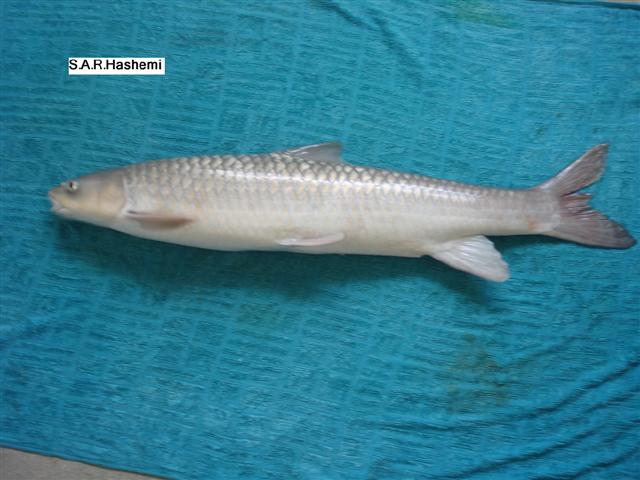 🇮🇷 Iran and 1 moreShabout
A large freshwater carp native to the Tigris-Euphrates basin in Western Asia.Carp · Rivers and lakes
 🇯🇵 JapanNigorobuna
Wild carp from Lake Biwa used for fermented sushi.Carp · Rivers and lakes
 WorldLabeobarbus
A genus of mid-sized ray-finned fish widely distributed in eastern and southern Africa.Carp · Rivers and lakes
 🇨🇳 ChinaTelescope goldfish
Fancy goldfish breed with large protruding eyesCarp · Rivers and lakes