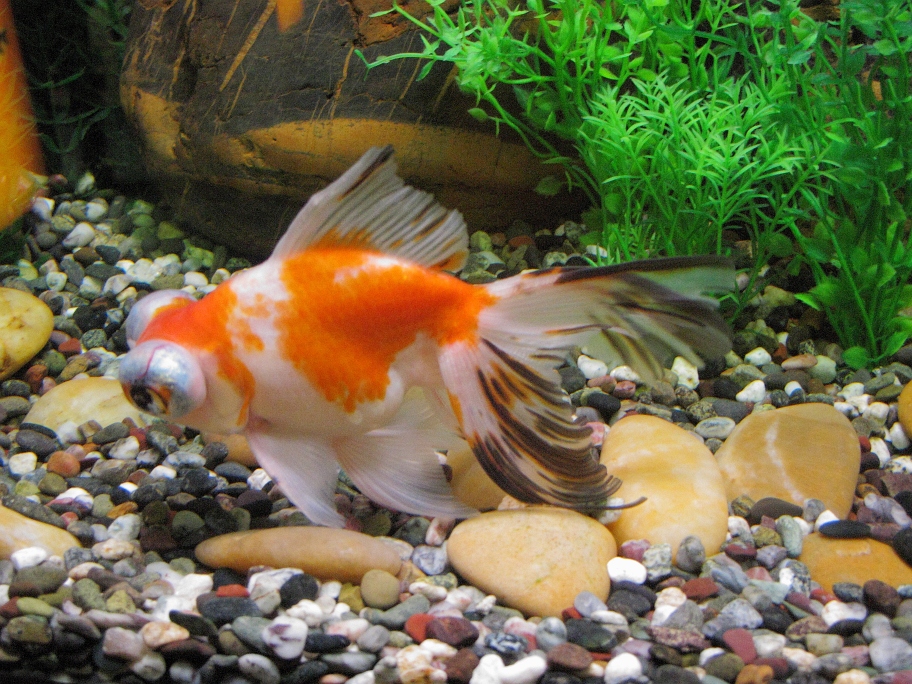
Telescope goldfish
Fancy goldfish breed with large protruding eyes
The telescope goldfish is a fancy variety developed in China during the early 1700s. It is defined by its distinctively protruding eyes and deep body shape. This ornamental fish comes in many colours, including the popular Black Moor variant.
- Developed in China in the early 1700s
- Characterised by large protruding eyes
- Black Moors retain black colour permanently
- Lifespan ranges from 6 to 25 years
- Poor vision due to eye structure
What it is
The telescope goldfish is a fancy variety distinguished by its large, protruding eyes. Aside from this unique feature, it shares a deep body and flowing fins with the ryukin and fantail types. These fish display a wide range of colours, including red, calico, black, and white. Their scales may be metallic, matted, or nacreous. The eye size can grow significantly large, giving the fish its common name.
Where it lives
This breed was first developed in China in the early eighteenth century. The trait was originally known as dragon eyes. From China, the fish spread to Japan in the sixteenth century and later reached the United States in the nineteenth century. Today, they are kept in aquariums worldwide. They thrive in freshwater environments and can withstand a broad range of temperatures.
How it lives
Telescope goldfish are generally hardy and easy to care for. They coexist well with other fancy varieties, particularly those with similar vision limitations like bubble eye fish. Due to their large eyes, their vision is often poor. Young black variants resemble bronze fantails before developing their dark colour and eye protrusion as they mature. They are peaceful community fish suitable for indoor tanks.
Breeding and life cycle
These fish are the result of selective breeding practices that began in China. Breeders select for the protruding eye trait and specific colour patterns. Black telescopes may produce normal-eyed offspring, which are often culled to maintain the breed standard. Colouration can change with age; for instance, panda variants may lose their black and white pattern over time, turning orange or white.
Fish and people
Aquarists value telescope goldfish for their unique appearance and hardiness. The Black Moor variant is especially popular due to its solid black colour, which contrasts with common orange goldfish. In 1941, a Russian breeder developed a variant with orange-red eyes. The fish has cultural significance, appearing on a 2018 postage stamp from Mozambique. They are strictly ornamental and not used for food.


Questions people ask about Telescope goldfish
Why do telescope goldfish have bulging eyes?
The protruding eyes are a genetic trait selected through centuries of selective breeding in China. Originally called dragon eyes, this feature was cultivated for aesthetic purposes in ornamental fish keeping.
Do Black Moor goldfish stay black forever?
Yes, genuine Black Moors retain their solid black colour throughout their lives. This distinguishes them from juvenile telescope fish that may have temporary black pigmentation before changing colour.
Can telescope goldfish see well?
No, their vision is typically poor because of the large size and protrusion of their eyes. They do best when housed with other slow-moving fancy goldfish that do not compete aggressively for food.
Good reading and sources
- Telescope (goldfish) on WikipediaEncyclopedia
- More photos on Wikimedia CommonsPhotos
- Wikidata recordOpen data
The facts on this page come from the Wikipedia article "Telescope (goldfish)", written by its contributors and used under the CC BY-SA 4.0 licence, and from its Wikidata record (CC0). EveryFish rewrote the text in its own words, with AI assistance, and compares every page with the article to make sure no passage is copied. It may be reused under the same CC BY-SA 4.0 licence with a link back.
It may contain mistakes, and figures change over time. Nothing here is investment or buying advice. If something is wrong, tell us. Last refreshed 2026-11-15.
Like Telescope goldfish
All carps and minnows 🇹🇭 Thailand and 2 moreSiamese mud carp
Freshwater cyprinid native to Mekong and Chao Phraya riversCarp · Rivers and lakes
 🇮🇳 India and 4 moreZebrafish
Small striped fish from South Asia kept in aquariums and labsCarp · Rivers and lakes
 WorldRasbora
A diverse genus of small freshwater fish native to South and Southeast Asia.Carp · Rivers and lakes · 1822
 🇨🇳 China and 4 moreChinese hooksnout carp
A small freshwater minnow native to East and Southeast Asia.Carp · Rivers and lakes
More from Cyprinidae
All of them 🇮🇳 India and 4 moreRohu
A large silver carp from South Asian rivers, farmed for food and prized as a game fish.Carp · Rivers and lakes
 WorldLabeobarbus
A genus of mid-sized ray-finned fish widely distributed in eastern and southern Africa.Carp · Rivers and lakes
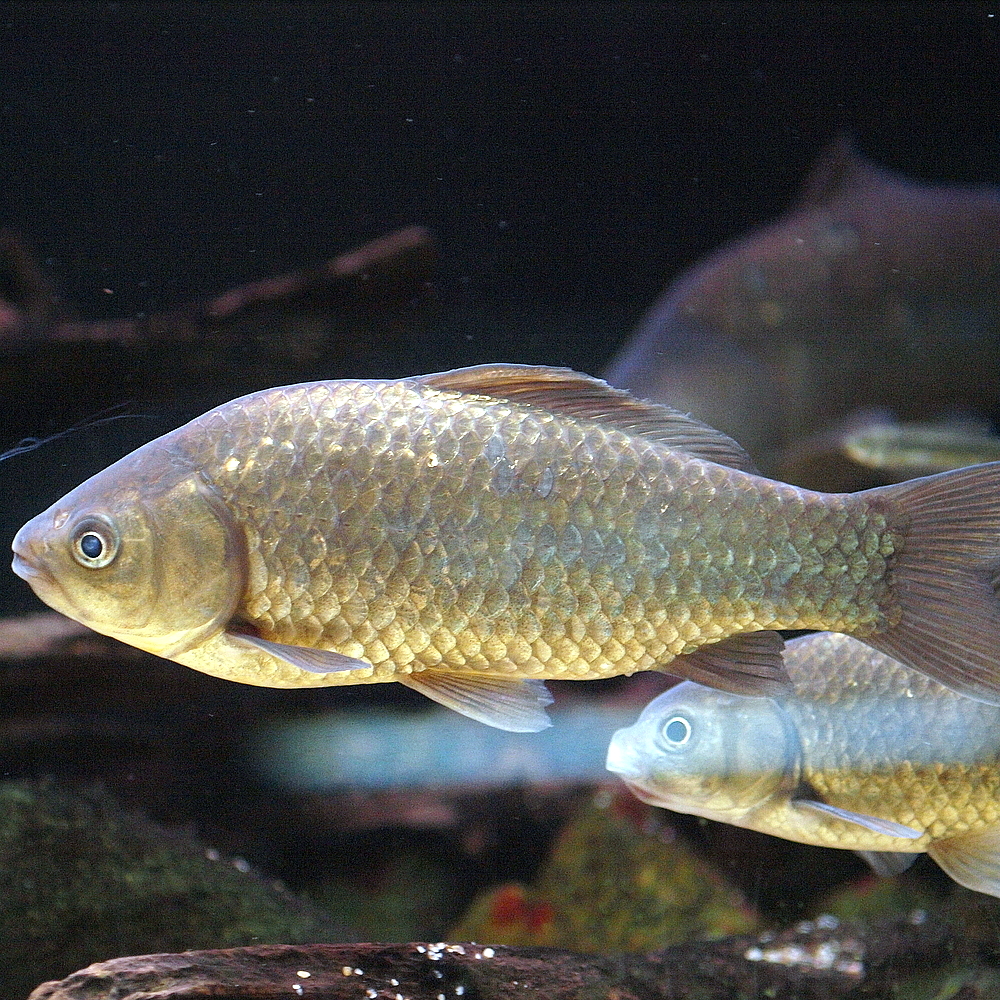 🇯🇵 JapanNigorobuna
Wild carp from Lake Biwa used for fermented sushi.Carp · Rivers and lakes
 🇯🇵 JapanRanchu
A hooded goldfish breed from Japan with no dorsal fin and a rounded body.Other · Rivers and lakes