
Ranchu
A hooded goldfish breed from Japan with no dorsal fin and a rounded body.
The ranchu is a domesticated goldfish developed in Japan from Chinese lionhead specimens. Known as the king of goldfish, it is prized for its egg-shaped body, head growth, and lack of a dorsal fin.
- Lacks a dorsal fin entirely.
- Body length reaches 15-20 cm.
- Develops prominent head growths called wen.
- Swims with a distinctive rolling motion.
- Considered the king of goldfish in Japan.
What it is
The ranchu is a distinct variety of goldfish native to Japan. It features an egg-shaped body with a deep belly that makes up most of its length. The fish has no dorsal fin on its back, which must remain smooth and rounded without any vestiges. Its tail attaches at a sharp downward angle, creating a unique swimming posture. The most striking feature is the head growth, or wen, which develops over time. Colors range from red and orange to white and grey, with scales that can be metallic or matte.
Where it lives
This breed originated in Japan through crossbreeding experiments with Chinese lionhead goldfish. While derived from Chinese carp, the ranchu was refined and standardized by Japanese breeders. Today, it is kept primarily in freshwater environments within Japan and internationally among hobbyists. Traditional keeping involves shallow bowls or ponds rather than deep tanks.
How it lives
Without a dorsal fin, the ranchu lacks directional stability and rolls slightly while moving. Swimming speed and acceleration are slower compared to normal fish. They are adapted to water quality fluctuations but are prone to health issues like dropsy and bladder problems due to selective breeding. Large head growths can sometimes obstruct gills or eyes. They are often compared to sumo wrestlers due to their solid, rounded appearance.
Breeding and life cycle
Ranchu are bred from Chinese lionhead specimens. Head growths may take at least a year to fully develop in young fish. Breeders select fry with broad foreheads and square noses to produce better wens. Selection criteria focus on body shape, tail attachment, and head development. Two main viewing styles exist: top-view and side-view, each with specific aesthetic standards.
Fish and people
Known as the king of goldfish in Japan, the ranchu holds significant cultural value. Judges evaluate them in aquariums or shallow bowls, focusing on top-view aesthetics. Western societies often use glass tanks, while traditionalists prefer shallow vats. The breed is popular in the aquarium trade and competitive shows. Enthusiasts appreciate its resemblance to sumo wrestlers, symbolizing balance and dignity.
Status and threats
As a domesticated breed, the ranchu is not assessed by conservation groups. However, intensive breeding practices have led to susceptibility to genetic disorders. Health issues such as dropsy, bladder dysfunction, and excessive wen growth covering vital organs are common concerns. Responsible breeding aims to maintain structural integrity and vitality.


Questions people ask about Ranchu
What makes the ranchu different from other goldfish?
The ranchu lacks a dorsal fin and has a short, rounded body with a large head growth. These features give it a unique egg-like shape and a slower, rolling swimming style compared to streamlined goldfish varieties.
How long does a ranchu grow?
Mature ranchu typically reach between 15 and 20 centimeters in length. Their head growths, known as wen, continue to develop over time and may take at least a year to become fully prominent in young fish.
Why is it called the Dutch worm?
The name translates from Chinese characters meaning 'egg-shape worm.' This refers to the fish's rounded body and worm-like swimming motion when viewed from above, a trait highly valued in traditional Japanese and Chinese aesthetics.
Are ranchu difficult to keep?
They adapt well to water quality changes but require careful monitoring. Selective breeding can lead to health issues like dropsy, bladder problems, or head growths blocking gills. Proper husbandry helps mitigate these risks.
Good reading and sources
The facts on this page come from the Wikipedia article "Ranchu", written by its contributors and used under the CC BY-SA 4.0 licence, and from its Wikidata record (CC0). EveryFish rewrote the text in its own words, with AI assistance, and compares every page with the article to make sure no passage is copied. It may be reused under the same CC BY-SA 4.0 licence with a link back.
It may contain mistakes, and figures change over time. Nothing here is investment or buying advice. If something is wrong, tell us. Last refreshed 2026-11-15.
Like Ranchu
All other fish 🇧🇷 BrazilBanded leporinus
A striped freshwater fish from the Amazon kept in home tanks and occasionally caught by anglers.Other · Rivers and lakes
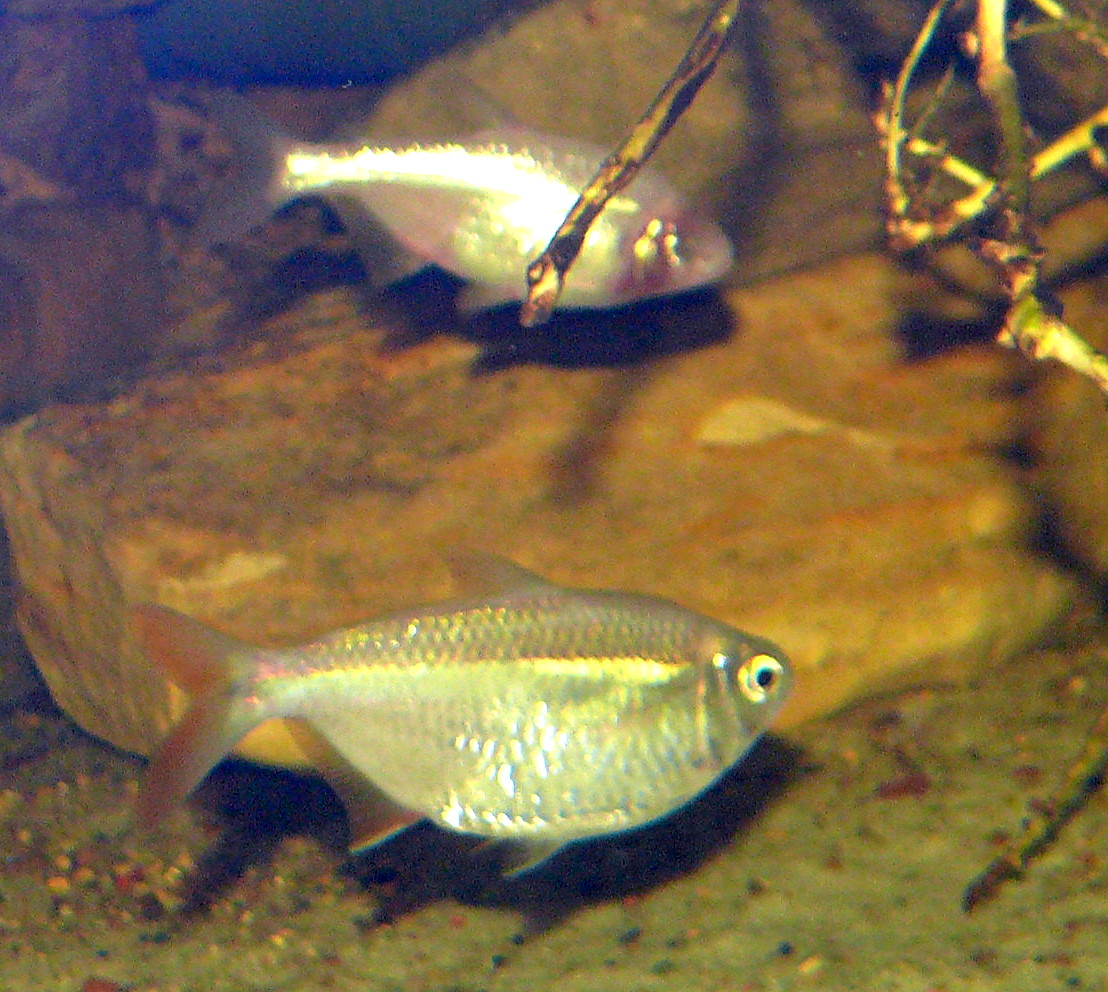 🇺🇸 United States and 1 moreMexican tetra
A freshwater characin with surface and blind cave forms, studied for evolutionary biology.Other · Rivers and lakes
 🇧🇷 Brazil and 4 moreWolf fish
A predatory freshwater ray-finned fish found across Central and South America.Other · Rivers and lakes
 Southeast AsiaGiant snakehead
A large freshwater predator from Southeast Asia known for air breathing and invasive potential.Other · Rivers and lakes
More from Cyprinidae
All of them 🇮🇳 India and 4 moreRohu
A large silver carp from South Asian rivers, farmed for food and prized as a game fish.Carp · Rivers and lakes
 🇹🇭 Thailand and 2 moreSiamese mud carp
Freshwater cyprinid native to Mekong and Chao Phraya riversCarp · Rivers and lakes
 WorldLabeobarbus
A genus of mid-sized ray-finned fish widely distributed in eastern and southern Africa.Carp · Rivers and lakes
 🇯🇵 JapanNigorobuna
Wild carp from Lake Biwa used for fermented sushi.Carp · Rivers and lakes