
Ocellaris clownfish
Small orange reef fish with white bands and anemone partners.
The ocellaris clownfish is a small marine species found in the Indo-Pacific. It lives in symbiosis with sea anemones and forms strict social hierarchies. This protandrous hermaphrodite changes sex from male to female when needed. Its popularity surged after appearing in animated films, driving aquarium trade demand.
- Grows up to 11 cm with three white stripes.
- Changes sex from male to female if needed.
- Lives in symbiosis with sea anemones for protection.
- Featured as main characters in Finding Nemo.
- Can survive in brackish water in captivity.
What it is
This small ray-finned fish has a stocky, oval body compressed laterally. Adults reach about 11 centimetres in length, with females growing larger than males. The body colour ranges from orange to reddish-brown, though black variants exist in some regions. Three vertical white stripes mark the head, mid-body, and tail base, each outlined in fine black. The fins also feature these dark borders. It closely resembles the orange clownfish but can be distinguished by having eleven dorsal spines instead of ten.
Where it lives
The species inhabits the eastern Indian Ocean and western Pacific Ocean. Specific populations occur near northern Hawaii, Japan, Southeast Asia, and northern Australia. They prefer outer reef slopes or sheltered lagoons. These fish stay relatively shallow, living at depths no greater than fifteen metres. They rely entirely on specific sea anemone species for shelter, including Heteractis magnifica and two types of Stichodactyla.
How it lives
Active during the day, this fish lives in small groups with a strict dominance hierarchy. It is an omnivore that feeds on algae, copepods, and zooplankton. Social rank affects feeding habits, as subordinate individuals face aggression and have less energy to forage far from their host. The fish maintains a symbiotic relationship with its anemone, gaining protection from predators while defending the anemone from tentacle-eating reef fish and removing parasites.
Breeding and life cycle
All members are born male and may change sex to female if the dominant female dies. This protandrous hermaphroditism supports a monogamous mating system within the group. The dominant pair reproduces while subordinates remain non-reproductive. Males prepare nests near the anemone tentacles for protection. After the female lays eggs over one to two hours, the male fertilises them externally. He then guards the clutch, fanning the eggs and removing infertile ones until they hatch in six to eight days.
Fish and people
This species is popular in the tropical aquarium trade due to its bright colours and hardiness in captivity. It can adapt to brackish water with lower salinity than found in the wild. Demand increased significantly after the release of the film Finding Nemo, which featured ocellaris clownfish as main characters. Scientists also use them in research because they breed easily in controlled environments. Overexploitation from the pet trade poses a risk to wild populations.


Questions people ask about Ocellaris clownfish
How can you tell it apart from the orange clownfish?
The ocellaris clownfish has eleven dorsal spines, whereas the orange clownfish has ten. Additionally, the black outlines on the fins and body of the ocellaris are finer and thinner compared to the thicker borders seen on the orange clownfish.
Why do they live inside sea anemones?
Sea anemones provide protection from predators using their stinging tentacles. The clownfish has a mucus layer that prevents stings. In return, the fish defends the anemone from other fish and removes parasites, creating a mutually beneficial symbiotic relationship.
Do all clownfish start as males?
Yes, they are protandrous hermaphrodites. All individuals develop as males first. If the dominant female in a group dies, the largest male changes sex to become the new female, maintaining the reproductive hierarchy within the anemone.
Good reading and sources
- Ocellaris clownfish on WikipediaEncyclopedia
- More photos on Wikimedia CommonsPhotos
- Wikidata recordOpen data
The facts on this page come from the Wikipedia article "Ocellaris clownfish", written by its contributors and used under the CC BY-SA 4.0 licence, and from its Wikidata record (CC0). EveryFish rewrote the text in its own words, with AI assistance, and compares every page with the article to make sure no passage is copied. It may be reused under the same CC BY-SA 4.0 licence with a link back.
It may contain mistakes, and figures change over time. Nothing here is investment or buying advice. If something is wrong, tell us. Last refreshed 2026-11-15.
Like Ocellaris clownfish
All reef fish WorldYellow boxfish
A bright yellow, cube-shaped reef fish with toxic mucus.Reef fish · Coasts and shelves · 1758
 WorldWrasse
A large family of colourful marine fish known for sex change and cleaning symbiosis.Reef fish · Coasts and shelves
 🇺🇸 United States and 2 moreYellow tang
Bright yellow Pacific reef fish kept in marine aquariums.Reef fish · Coasts and shelves · 1828
 WorldPowder blue tang
A bright blue reef fish from the Indian Ocean.Reef fish · Coasts and shelves · 1833
More from Pomacentridae
All of them OceaniaPink skunk clownfish
Small reef fish with a white dorsal stripe and algae diet.Reef fish · Coral reefs · 1855
 WorldClownfish
Small reef fish living in sea anemones.Reef fish · Coasts and shelves · 1801
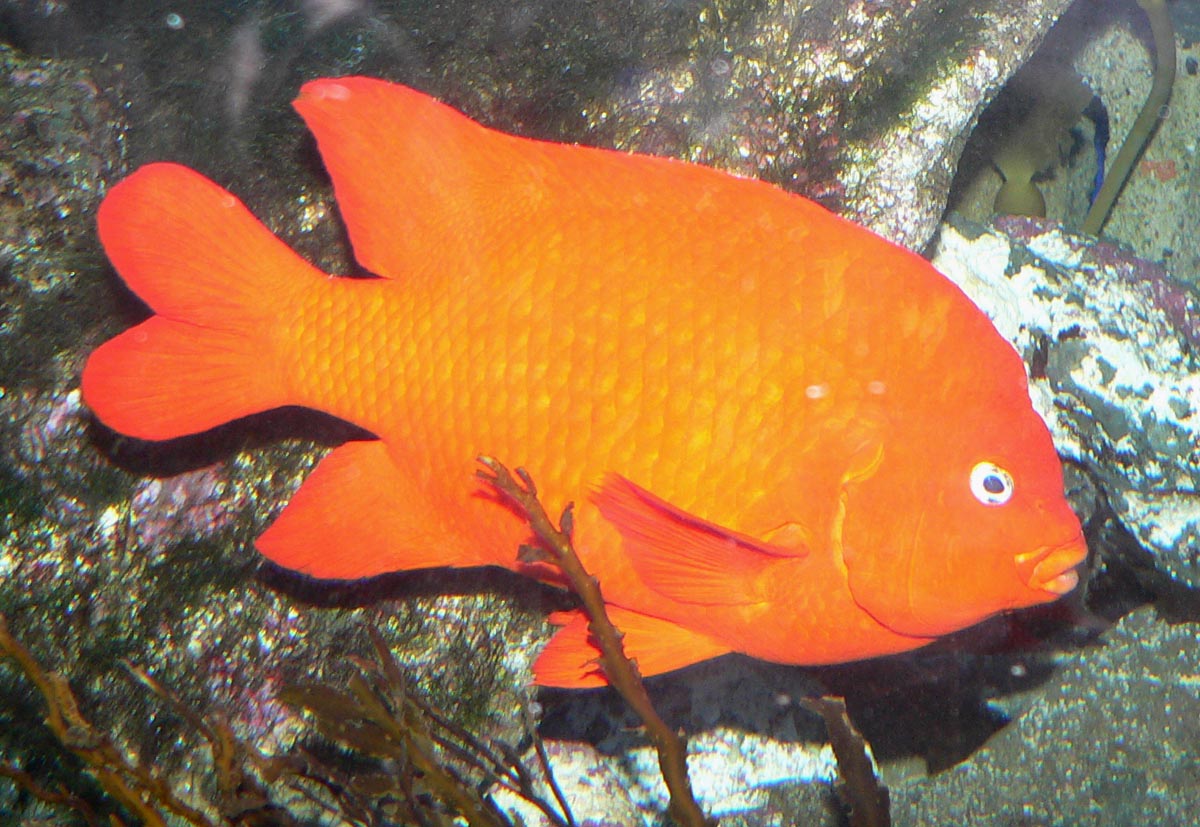 🇺🇸 United StatesGaribaldi
Bright orange damselfish and official marine state fish of California.Reef fish · Coasts and shelves · 1860
 WorldClark's anemonefish
A widely distributed marine clownfish with variable colour patterns.Reef fish · Coasts and shelves