
Clownfish
Small reef fish living in sea anemones.
Clownfish are small saltwater fish in the genus Amphiprion. They live in tropical Indo-Pacific reefs and form symbiotic bonds with sea anemones for protection. Their bright colours and social hierarchies make them popular in aquariums.
- Live in symbiotic relationship with sea anemones
- Breeding male changes sex if female dies
- Found in tropical Indo-Pacific coral reefs
- Popular in aquarium trade since 2003 film
- Females are larger than males in groups
What it is
Clownfish are small marine fish belonging to the genus Amphiprion within the damselfish family. They display vivid colour patterns, typically featuring white vertical bars on red, orange, yellow, brown or black backgrounds. Their bodies range from oval to streamlined shapes with rounded heads. A distinctive trait is the saw-shaped edge along their gill covers and under the eyes. These fish vary in size, with the maroon clownfish reaching up to 16 cm while the orange clownfish stays around 8 cm. Females are generally larger than males. They possess teeth on their jaw and throat but not on the palate.
Where it lives
These fish inhabit warm tropical waters across the Indian Ocean and western Pacific. Their distribution spans from the Red Sea and Japan down to Australia and French Polynesia. Species diversity is highest in Southeast Asian and northern Australian waters, where up to twelve species may coexist. In contrast, peripheral areas like the Red Sea host only one species. Clownfish rely on sea anemones for survival, limiting their habitat to shallow sunlight zones where photosynthetic microorganisms thrive. They are commonly found on coral reefs and surrounding areas, occupying specific zones to avoid competition.
How it lives
Clownfish are omnivores that primarily consume plankton, including algae, copepods and larval tunicates. They also eat waste discharged by their host anemones. Feeding occupies most of their day, with dominant pairs foraging further from the anemone than subordinates. They maintain a mutualistic relationship with ten species of sea anemones. The fish gain protection from predators via the anemone’s stinging tentacles, while providing cleaning services and nutrients through their waste. Clownfish live in groups with a strict size-based hierarchy. The largest individual is the breeding female, followed by the breeding male and non-breeding subordinates.
Breeding and life cycle
Reproduction involves the female depositing eggs on a rock surface near the host anemone. The male then fertilises these eggs. After hatching, the young disperse into the open ocean as larvae. They eventually settle on the seabed and search for an anemone host during their juvenile stage. Clownfish exhibit sequential hermaphroditism. If the breeding female disappears, the breeding male changes sex to take her place. The remaining non-breeding individuals then move up the dominance hierarchy based on their size.
Fish and people
The striking appearance and social behaviour of clownfish have made them highly popular in the aquarium trade. The ocellaris clownfish is among the most commonly traded marine fish. Their fame increased significantly after appearing in the 2003 film Finding Nemo. However, high demand has led to the collection of many wild specimens, causing population declines in some areas. Captive breeding helps reduce pressure on wild stocks. Marine protected areas where collecting is forbidden show higher clownfish numbers. They are valued for their unique symbiotic relationship with sea anemones, which fascinates hobbyists and researchers alike.
Status and threats
Wild populations face threats from overcollection for the aquarium industry. Global warming poses additional risks through ocean warming and acidification, which can damage coral reef habitats and affect anemone health. Clownfish are more numerous in marine protected areas where fishing and collecting are prohibited. Conservation efforts focus on protecting these reef ecosystems and promoting captive breeding to sustain the aquarium trade without depleting wild stocks. Habitat loss remains a significant concern for their long-term survival.


Questions people ask about Clownfish
Why do clownfish live in sea anemones?
Clownfish live in sea anemones for protection from predators using the anemone's stinging tentacles. In return, they clean the anemone, remove parasites, and provide nutrients through their waste. This mutualistic relationship benefits both species.
Do all clownfish change sex?
Yes, clownfish are sequential hermaphrodites. They live in groups with a dominant breeding female. If she dies, the breeding male changes sex to become the new female, and the largest non-breeder becomes the male.
What do clownfish eat in the wild?
Clownfish are omnivores. They mainly feed on plankton such as algae, copepods and larval tunicates. They also consume waste discharged by their host anemones and may share larger food items with the anemone.
Good reading and sources
The facts on this page come from the Wikipedia article "Clownfish", written by its contributors and used under the CC BY-SA 4.0 licence, and from its Wikidata record (CC0). EveryFish rewrote the text in its own words, with AI assistance, and compares every page with the article to make sure no passage is copied. It may be reused under the same CC BY-SA 4.0 licence with a link back.
It may contain mistakes, and figures change over time. Nothing here is investment or buying advice. If something is wrong, tell us. Last refreshed 2026-11-15.
Like Clownfish
All reef fish WorldTriggerfish
Armoured reef fish with a locking dorsal spineReef fish · Coasts and shelves · 1810
 WorldButterflyfish
A global family of colourful tropical reef fish known for their bright patterns and coral diets.Reef fish · Coasts and shelves · 1815
 WorldTrumpetfish
Marine fish with a long tubular snout found in tropical reefs worldwide.Reef fish · Coasts and shelves · 1766
 WorldLonghorn cowfish
Box-shaped reef fish with long head hornsReef fish · Coasts and shelves · 1758
More from Pomacentridae
All of them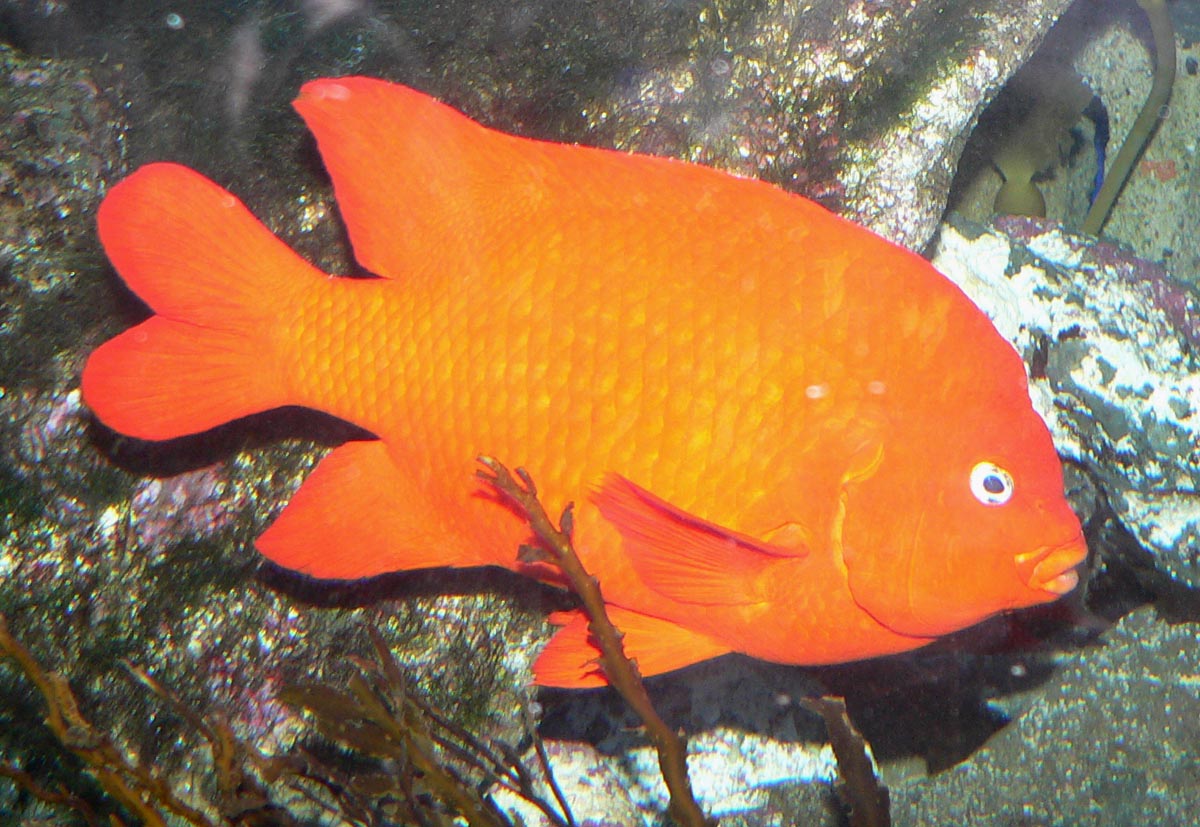 🇺🇸 United StatesGaribaldi
Bright orange damselfish and official marine state fish of California.Reef fish · Coasts and shelves · 1860
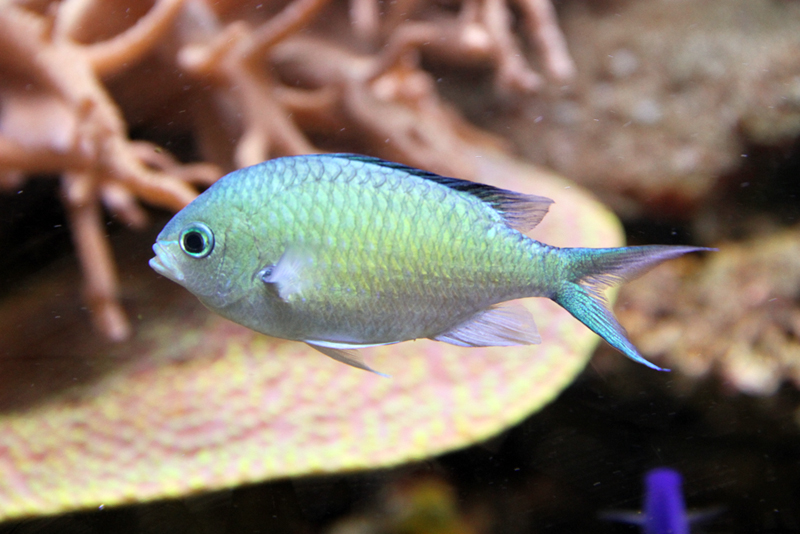 WorldGreen chromis
Small iridescent reef damselfish found across the Indo-Pacific.Reef fish · Coral reefs
 WorldDamselfish
Small marine fish known for aggressive territorial behaviour and reef farming.Reef fish · Coasts and shelves
 WorldWhitetail dascyllus
A small Indo-Pacific reef fish with bold black and white stripes.Reef fish · Coasts and shelves