
Whitetail dascyllus
A small Indo-Pacific reef fish with bold black and white stripes.
The whitetail dascyclus is a marine species in the damselfamily Pomacentridae. It lives in shallow coral reefs across the Indo-Pacific region. Its bright pattern helps it interact with predators and its own kind.
- Maximum length reaches ten centimetres.
- Three black vertical bars mark the white body.
- Mates daily without a specific season.
- Females use mate copying to choose partners.
- Adapts to dead coral colonies when needed.
What it is
This small marine fish belongs to the family Pomacentridae. Adults reach a maximum length of ten centimetres, though six centimetres is more typical. The body displays three vertical black bars on a white background. A large white spot sits between the eyes. The mouth is small and a flat spine is present. The colouring remains constant throughout life. This high contrast likely signals toxicity to predators while helping individuals recognise their own species.
Where it lives
The species inhabits the Indo-Pacific waters. Its range extends east and north of the Sunda Shelf. Populations in French Polynesia are now classified as a separate cryptic species named Dascyllus emamo. They prefer shallow coral reefs at depths of one to ten metres. Individuals rarely travel far from their birthplace. They form groups of around thirty fish above Acropora coral heads.
How it lives
These fish maintain a symbiotic bond with their host coral. They exchange nutrients for shelter within the reef branches. As planktivores, they graze on algae and excrete phosphate and ammonium. This waste fertilises the coral, increasing its resistance to heat stress. The fish are highly territorial and guard resources aggressively. Juveniles stay in schools and rely on hierarchy. Larger fish lead foraging efforts while smaller ones follow.
Breeding and life cycle
Mating occurs daily without a distinct spawning season. Females produce batches of up to two thousand eggs every two days. Males court females constantly and build nesting sites. Female choice drives reproduction through mate copying behaviour. Females often select males that have already mated successfully. Males use signal jumps to attract partners. They remain aggressive towards rivals and guard the nests after spawning.
Fish and people
Aquarists keep this species as starter fish due to its tolerance. It helps condition tanks for more delicate varieties. Captive breeding has been achieved for these fish. They can be aggressive toward other tank mates. Their hardiness makes them suitable for beginners. They do not serve as food or sport fish in major markets. Their primary human interaction is through the aquarium trade.
Status and threats
The International Union for Conservation of Nature lists this species as Least Concern. Climate change poses risks through rising ocean temperatures. Warmer waters may reduce aggression and increase mobility. Coral bleaching threatens their primary habitat. However, the fish show plasticity by adapting to dead coral colonies. They also broaden their diet to include debris and small fish. These adaptations offer some resilience against environmental shifts.


Questions people ask about Whitetail dascyllus
What does the whitetail dascyclus eat?
They are primarily planktivores that graze on unwanted algae. They also consume small prey and waste nearby their coral home. In captivity or changing conditions, they may eat debris and other small fish. Their diet broadens to ensure survival in varied environments.
How big do whitetail dascyclus get?
Adults typically grow to six centimetres in length. The maximum recorded size is ten centimetres. They reach full growth by the end of their second year. Size determines social hierarchy within their school groups.
Is the whitetail dascyclus aggressive?
Yes, they are highly territorial and aggressive. They guard their coral shelters and resources fiercely. Unfamiliar species are treated as threats. Some individuals attack immediately rather than observing first. This behaviour protects their limited territory.
Why are they good for aquariums?
They tolerate variable water conditions well. Aquarists use them to condition tanks for harder fish. They help establish a stable environment. Their hardiness makes them suitable starter fish for beginners.
Good reading and sources
- Whitetail dascyllus on WikipediaEncyclopedia
- More photos on Wikimedia CommonsPhotos
- Wikidata recordOpen data
The facts on this page come from the Wikipedia article "Whitetail dascyllus", written by its contributors and used under the CC BY-SA 4.0 licence, and from its Wikidata record (CC0). EveryFish rewrote the text in its own words, with AI assistance, and compares every page with the article to make sure no passage is copied. It may be reused under the same CC BY-SA 4.0 licence with a link back.
It may contain mistakes, and figures change over time. Nothing here is investment or buying advice. If something is wrong, tell us. Last refreshed 2026-11-15.
Like Whitetail dascyllus
All reef fish WorldYellow boxfish
A bright yellow, cube-shaped reef fish with toxic mucus.Reef fish · Coasts and shelves · 1758
 🇮🇩 Indonesia and 2 moreRed lionfish
Venomous coral reef fish native to the Indo-Pacific and invasive in the Atlantic.Reef fish · Coral reefs · 1758
 WorldTrumpetfish
Marine fish with a long tubular snout found in tropical reefs worldwide.Reef fish · Coasts and shelves · 1766
 WorldButterflyfish
A global family of colourful tropical reef fish known for their bright patterns and coral diets.Reef fish · Coasts and shelves · 1815
More from Pomacentridae
All of them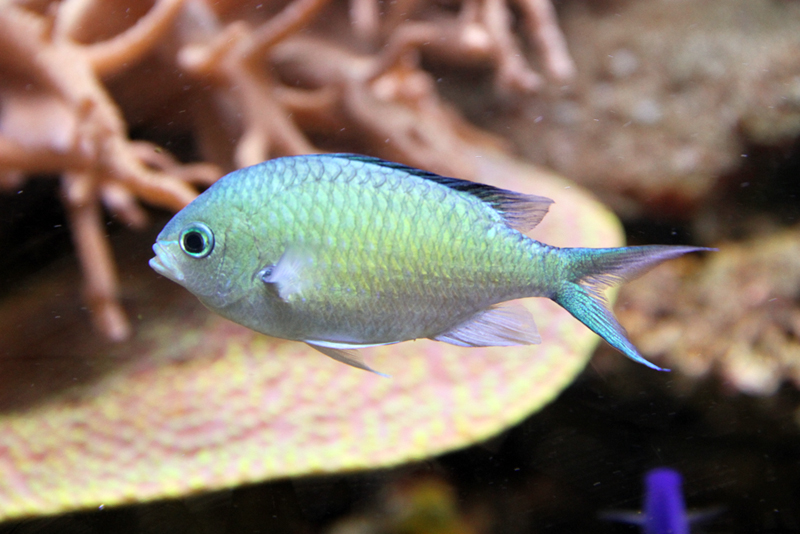 WorldGreen chromis
Small iridescent reef damselfish found across the Indo-Pacific.Reef fish · Coral reefs
 WorldDamselfish
Small marine fish known for aggressive territorial behaviour and reef farming.Reef fish · Coasts and shelves
 WorldThreespot dascyllus
A small black and white reef fish with three distinct spots.Reef fish · Coral reefs
 WorldClownfish
Small reef fish living in sea anemones.Reef fish · Coasts and shelves · 1801