
Damselfish
Small marine fish known for aggressive territorial behaviour and reef farming.
Damselfish belong to the family Pomacentridae and inhabit tropical seas worldwide. They are notable for their defensive nature and unique habit of cultivating algae gardens on coral reefs.
- Largest species reach 30 cm length
- Males guard nests and perform signal jumps
- Longfin damselfish farm mysid shrimp
- Found in tropical and temperate waters
- Commonly kept in marine aquariums
What it is
These fish belong to the family Pomacentridae and include several subfamilies such as Chrominae and Pomacentrinae. Most species are quite small, though a few large types like Hypsypops rubicundus can grow to thirty centimetres. They typically display vibrant colours and live in marine environments, with some adapting to brackish or freshwater habitats. Their bodies are streamlined for navigating complex reef structures where they establish and defend personal spaces against rivals.
Where it lives
Damselfish occur globally across tropical, subtropical, and temperate zones. They are most common in rocky or coral reef ecosystems. While the majority remain strictly marine, certain species have adapted to live in estuaries or rivers. The large orange Garibaldi inhabits the Pacific coast from southern California to Mexico. Other species thrive in warm subtropical climates or specific coastal areas where suitable reef habitat exists.
How it lives
These fish are highly territorial and often defend resources aggressively. Many spend most of their lives within a defined area. They feed on small crustaceans, copepods, and algae. Foraging depth varies by size and current speed; larger individuals swim higher in the water column when currents are slow. Smaller fish stay closer to the substrate to avoid predators. Some species, like the longfin damselfish, actively protect mysid shrimp populations that fertilize their algae gardens, creating a mutualistic relationship.
Breeding and life cycle
Males guard nests and eggs while females select mates based on courtship intensity rather than male size. Males perform signal jumps, rising and diving rapidly to create pulsed sounds that attract females. Females prefer males with vigorous displays. In some species, females adjust visit frequency based on territory distance to balance predation risks against resource defense. Filial cannibalism occurs in certain species, where males consume smaller or early-stage clutches to conserve energy.
Fish and people
Many damselfish species are kept as marine aquarium pets due to their striking appearance and manageable size. They are also studied extensively for their complex social behaviours and ecological roles. While not a primary food source globally, they are consumed locally in some regions. Their role in reef ecosystems is significant, particularly through algae cultivation which influences reef health. Conservation efforts focus on protecting reef habitats from degradation and overfishing.
Status and threats
Most damselfish species are classified as least concern due to their wide distribution and adaptability. However, local populations face threats from habitat destruction, pollution, and climate change affecting coral reefs. Overfishing for the aquarium trade can impact specific species in certain areas. Conservation programmes aim to preserve reef integrity and manage fishing pressures to ensure sustainable populations.
Questions people ask about Damselfish
What do damselfish eat?
They primarily consume small crustaceans, copepods, and algae. Some species cultivate algae gardens fertilized by protected mysid shrimp, creating a sustainable food source within their territories.
Are damselfish aggressive?
Yes, they are highly territorial. Many species defend their space aggressively against intruders, including much larger fish. This behaviour is crucial for protecting their algae gardens and nesting sites.
How do they choose mates?
Females select males based on courtship vigor rather than size. Males perform rapid swimming displays called signal jumps, creating pulsed sounds. Females prefer males with more intense and frequent displays.
Do all damselfish live in saltwater?
Most species inhabit marine environments, but some have adapted to brackish or freshwater habitats. These exceptions demonstrate the group's ecological flexibility across different water types.
Good reading and sources
The facts on this page come from the Wikipedia article "Damselfish", written by its contributors and used under the CC BY-SA 4.0 licence, and from its Wikidata record (CC0). EveryFish rewrote the text in its own words, with AI assistance, and compares every page with the article to make sure no passage is copied. It may be reused under the same CC BY-SA 4.0 licence with a link back.
It may contain mistakes, and figures change over time. Nothing here is investment or buying advice. If something is wrong, tell us. Last refreshed 2026-11-15.
Like Damselfish
All reef fish WorldParrotfish
Reef-dwelling wrasses with beak-like teeth that grind coral into sand.Reef fish · Coasts and shelves
 WorldWrasse
A large family of colourful marine fish known for sex change and cleaning symbiosis.Reef fish · Coasts and shelves
 WorldYellow boxfish
A bright yellow, cube-shaped reef fish with toxic mucus.Reef fish · Coasts and shelves · 1758
 🇮🇩 Indonesia and 2 moreRed lionfish
Venomous coral reef fish native to the Indo-Pacific and invasive in the Atlantic.Reef fish · Coral reefs · 1758
More from Pomacentridae
All of them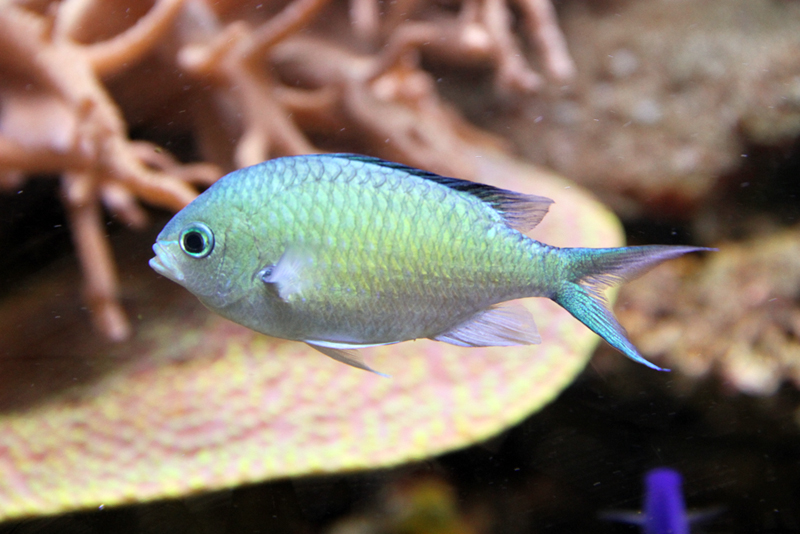 WorldGreen chromis
Small iridescent reef damselfish found across the Indo-Pacific.Reef fish · Coral reefs
 WorldWhitetail dascyllus
A small Indo-Pacific reef fish with bold black and white stripes.Reef fish · Coasts and shelves
 WorldThreespot dascyllus
A small black and white reef fish with three distinct spots.Reef fish · Coral reefs
 WorldClownfish
Small reef fish living in sea anemones.Reef fish · Coasts and shelves · 1801