
Yellow boxfish
A bright yellow, cube-shaped reef fish with toxic mucus.
The yellow boxfish is a marine species known for its rigid, cuboid body and bright colouring. It lives in Indo-Pacific reefs and secretes a potent toxin when stressed. Engineers have studied its shape to improve vehicle design.
- Reaches a maximum length of 45 centimetres
- Secretes toxic mucus called ostracitoxin when stressed
- Inspired the design of the Mercedes-Benz Bionic car
- Found in reefs from the Red Sea to Hawaii
- Juveniles are bright yellow with black spots
What it is
This marine ray-finned fish belongs to the boxfish family. It has a distinct cuboid shape due to a rigid carapace that covers its head and body. Openings in this armour allow movement of fins and gills. Adults reach up to 45 centimetres in length. Juveniles are bright yellow with black spots, while older individuals fade to blue-grey or black. The scientific name refers to its little box appearance.
Where it lives
Its distribution spans the Indian and Pacific Oceans, from the Red Sea and eastern Africa to Hawaii and Japan. It reaches as far south as northern New Zealand. Since 2011, it has appeared in the Mediterranean Sea, likely entering through the Suez Canal. The fish inhabits sheltered coastal reefs and flat seabeds at depths between one and 75 metres.
How it lives
These solitary swimmers feed on benthic invertebrates, algae, worms, sponges, and small fish. They navigate complex reef structures using pectoral fins for thrust and dorsal fins for speed. Despite their stiff bodies, they are agile. When threatened, they secrete ostracitoxin, a neurotoxin that destroys red blood cells in nearby fish. Their bright colours serve as a warning to predators.
Breeding and life cycle
Spawning takes place in spring. Small groups form, typically consisting of one male and two to four females. The fish produce humming and clicking sounds using swim bladder muscles, with males calling for longer durations. These noises may help communicate with mates or deter threats during the breeding season.
Fish and people
The species is popular in the aquarium trade due to its unique shape and colour. It has inspired engineering projects, including the Mercedes-Benz Bionic concept car and bridge box girders, because of its low-flow resistance. In the Gulf of Aqaba, wild populations gather near fish farms, which poses disease risks but also attracts ecotourism.
Status and threats
The International Union for Conservation of Nature lists this species as Least Concern. However, local threats exist. Aggregations near aquaculture sites face potential disease transmission from escaped farmed fish. Increased human activity and tourism around these farm areas may also disturb wild populations.


Questions people ask about Yellow boxfish
Is the yellow boxfish dangerous to other fish?
Yes, it secretes a neurotoxin called ostracitoxin when stressed. This mucus causes red blood cells in surrounding fish to break down and clump together, which can be fatal to nearby marine life.
How does the yellow boxfish swim with such a rigid body?
It uses a combination of fin movements. Pectoral fins provide thrust in a figure-eight motion, while dorsal and anal fins aid stability and speed. The body shape creates vortices that help with steering and maneuverability.
Where can I find yellow boxfish in the wild?
They live in the Indo-Pacific region, including the Red Sea, eastern Africa, Japan, and Hawaii. They inhabit coral reefs and flat seabeds at depths ranging from one to 75 metres.
Why was the yellow boxfish used for car design?
Engineers studied its shape for low-flow resistance and stability. Although initially thought to be aerodynamic, its agility comes from fin use. The design influenced the Mercedes-Benz Bionic concept car and bridge structures.
Good reading and sources
- Yellow boxfish on WikipediaEncyclopedia
- More photos on Wikimedia CommonsPhotos
- Wikidata recordOpen data
The facts on this page come from the Wikipedia article "Yellow boxfish", written by its contributors and used under the CC BY-SA 4.0 licence, and from its Wikidata record (CC0). EveryFish rewrote the text in its own words, with AI assistance, and compares every page with the article to make sure no passage is copied. It may be reused under the same CC BY-SA 4.0 licence with a link back.
It may contain mistakes, and figures change over time. Nothing here is investment or buying advice. If something is wrong, tell us. Last refreshed 2026-11-15.
Like Yellow boxfish
All reef fish 🇮🇩 Indonesia and 2 moreRed lionfish
Venomous coral reef fish native to the Indo-Pacific and invasive in the Atlantic.Reef fish · Coral reefs · 1758
 WorldTrumpetfish
Marine fish with a long tubular snout found in tropical reefs worldwide.Reef fish · Coasts and shelves · 1766
 WorldButterflyfish
A global family of colourful tropical reef fish known for their bright patterns and coral diets.Reef fish · Coasts and shelves · 1815
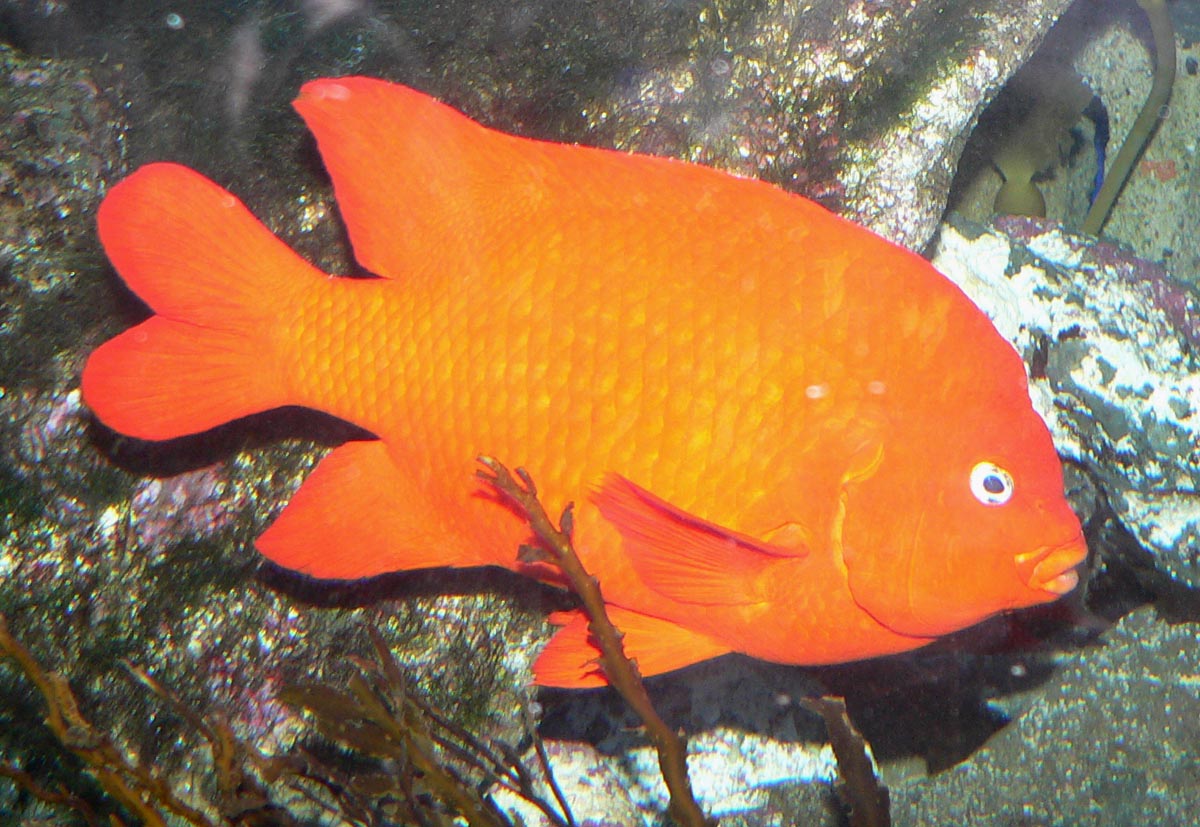 🇺🇸 United StatesGaribaldi
Bright orange damselfish and official marine state fish of California.Reef fish · Coasts and shelves · 1860

