
Pink skunk clownfish
Small reef fish with a white dorsal stripe and algae diet.
The pink skunk clownfish is a small anemonefish found across the Indo-Pacific. It lives in symbiosis with sea anemones and feeds mainly on algae. This species changes sex based on social hierarchy and is popular in home aquariums.
- One of the few anemonefish that primarily eats algae.
- Changes sex from male to female if the dominant female dies.
- Found at depths up to 65 metres on mesophotic reefs.
- Distinguished by a white dorsal stripe and head bar.
What it is
This fish has a pink to peach body colour. A distinct white stripe runs along its back, and a vertical white bar sits behind the eye. It belongs to the skunk complex of anemonefish. Females grow up to 10 cm, making it one of the smallest species in its group. The combination of the dorsal stripe and head bar helps identify it against similar relatives.
Where it lives
Its range covers the Malay Archipelago, Melanesia, and the western Pacific. You can find it from the Great Barrier Reef and Tonga north to the Ryukyu Islands. In the Indian Ocean, it lives from Western Australia to Sumatra. It inhabits reef lagoons and outer slopes. While often seen at shallow depths, surveys have recorded it as deep as 65 metres on mesophotic reefs.
How it lives
It forms a mutualistic bond with sea anemones, gaining protection from their stinging tentacles. Unlike most anemonefish, this species primarily eats algae. It also consumes zooplankton, copepods, and benthic worms. It is a generalist host user, often sharing anemones with other clownfish species. Genetic studies show a break between populations in the Java Sea and other areas.
Breeding and life cycle
These fish are sequential hermaphrodites with a strict social order. The largest individual is the breeding female. The second largest is the breeding male. If the female dies, the male changes sex to become female. The largest non-breeder then steps up to become the new breeding male. This protandry ensures the group maintains its reproductive capacity.
Fish and people
Hobbyists keep this species in home aquariums. It breeds successfully in captivity. Keepers feed it brine shrimp, mysis shrimp, and dried algae. The global ornamental fish trade exploits wild populations. This pressure threatens local genetic diversity. Host anemones also face risks from bleaching due to warming waters and acidification.
Status and threats
The International Union for Conservation of Nature did not evaluate this species in its 2012 Red List release. However, anemonefish face environmental threats similar to corals. Bleaching events affect their host anemones. Overfishing for the aquarium trade remains a concern for wild stocks and their genetic variety.


Questions people ask about Pink skunk clownfish
What does the pink skunk clownfish eat?
It is the only anemonefish species that primarily feeds on algae. Its natural diet also includes zooplankton, diatoms, copepods, benthic worms, tunicates, and some algae.
How does this fish change sex?
It is a sequential hermaphrodite with a size-based hierarchy. If the breeding female dies, the breeding male changes into a female. The largest non-breeder then becomes the new breeding male.
Where can you find this fish in the wild?
It lives in reef lagoons and outer slopes across the Indo-Pacific. Its range extends from Western Australia and Sumatra to the Ryukyu Islands of Japan and Tonga.
Good reading and sources
- Pink skunk clownfish on WikipediaEncyclopedia
- More photos on Wikimedia CommonsPhotos
- Wikidata recordOpen data
The facts on this page come from the Wikipedia article "Pink skunk clownfish", written by its contributors and used under the CC BY-SA 4.0 licence, and from its Wikidata record (CC0). EveryFish rewrote the text in its own words, with AI assistance, and compares every page with the article to make sure no passage is copied. It may be reused under the same CC BY-SA 4.0 licence with a link back.
It may contain mistakes, and figures change over time. Nothing here is investment or buying advice. If something is wrong, tell us. Last refreshed 2026-11-15.
Like Pink skunk clownfish
All reef fish WorldSix-line wrasse
Small violet reef fish with six orange stripesReef fish · Coasts and shelves · 1857
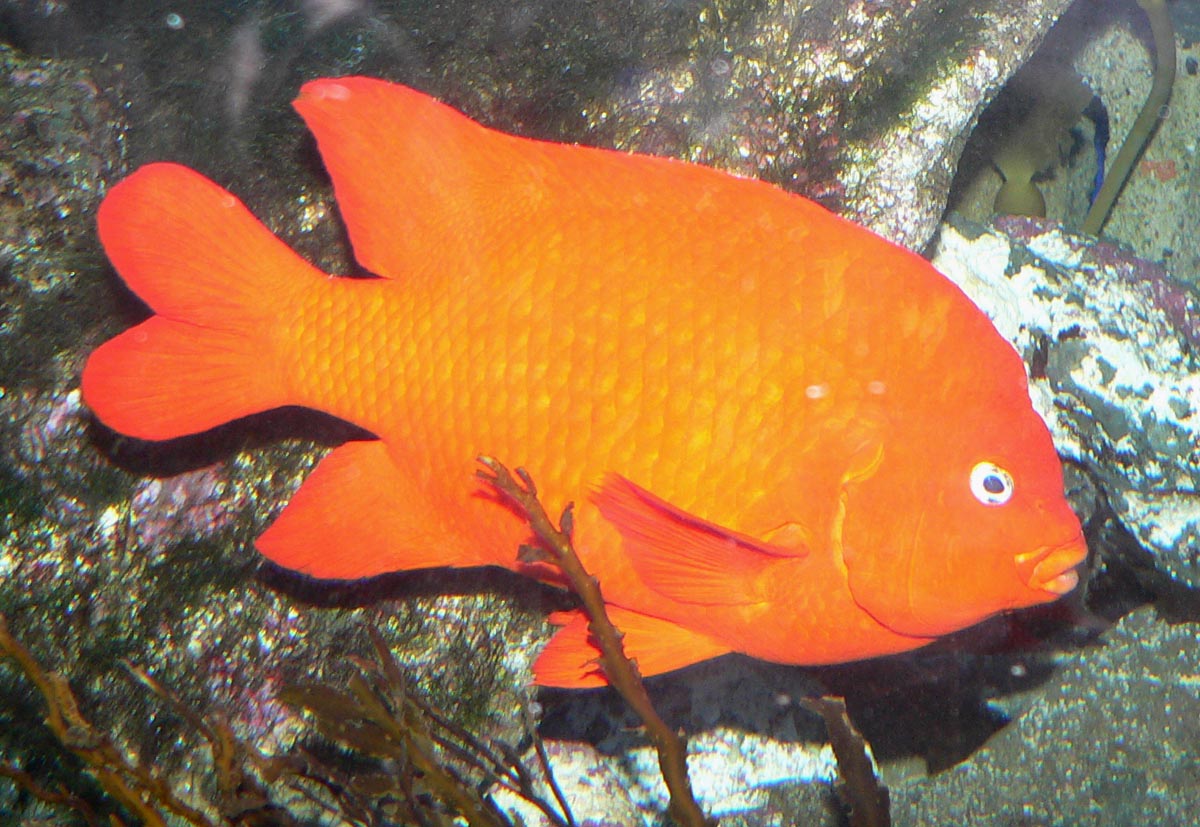 🇺🇸 United StatesGaribaldi
Bright orange damselfish and official marine state fish of California.Reef fish · Coasts and shelves · 1860
 WorldPowder blue tang
A bright blue reef fish from the Indian Ocean.Reef fish · Coasts and shelves · 1833
 🇺🇸 United States and 2 moreYellow tang
Bright yellow Pacific reef fish kept in marine aquariums.Reef fish · Coasts and shelves · 1828
More from Pomacentridae
All of them WorldClownfish
Small reef fish living in sea anemones.Reef fish · Coasts and shelves · 1801
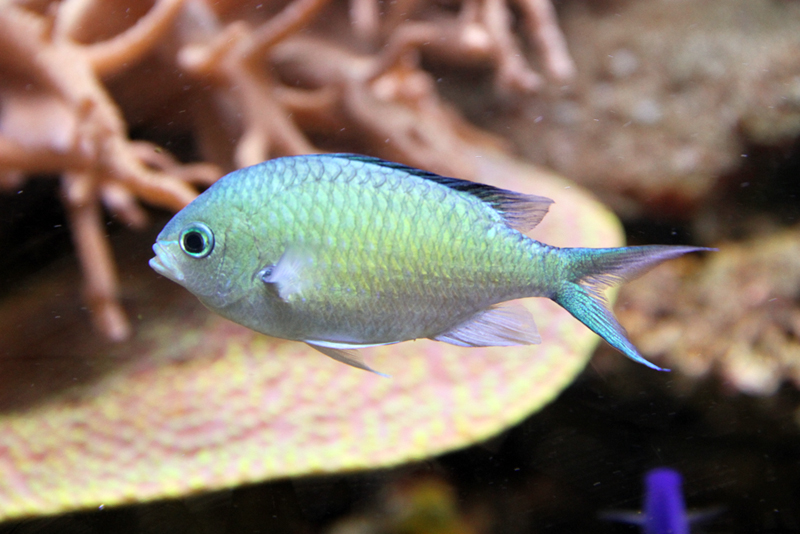 WorldGreen chromis
Small iridescent reef damselfish found across the Indo-Pacific.Reef fish · Coral reefs
 WorldClark's anemonefish
A widely distributed marine clownfish with variable colour patterns.Reef fish · Coasts and shelves
 OceaniaMaroon clownfish
Large, aggressive anemonefish with a distinctive cheek spine.Other · Coral reefs