
Lemon shark
A social, yellow-skinned requiem shark of shallow tropical waters.
The lemon shark is a large requiem shark known for its yellowish hue and social behaviour. It inhabits shallow coastal nurseries in the Atlantic and Pacific. Classified as vulnerable, it faces significant pressure from commercial fishing for its meat and fins.
- Second dorsal fin is almost as large as the first
- Forms social groups of up to twenty juveniles
- Females have a biennial reproductive cycle
- Uses electroreceptors to hunt at night
- Only ten non-fatal bites on humans recorded
What it is
This requiem shark gets its name from the yellow tint of its skin, which helps it blend into sandy seabeds. It has a broad, flattened head and a short snout. A key identifying feature is its second dorsal fin, which is nearly the same size as the first. Adults usually measure between 2.4 and 3.1 metres, though they can reach over 3.4 metres. They possess electroreceptors called ampullae of Lorenzini on their heads, allowing them to detect electrical signals from prey in dark or murky water.
Where it lives
These sharks live in warm, shallow subtropical waters across the western Atlantic, from New Jersey to southern Brazil. They are also found off west Africa and in the eastern Pacific, ranging from Baja California to Ecuador. While they prefer coastal habitats like coral reefs, mangroves, and river mouths, they can venture into open ocean depths of up to 92 metres. They occasionally swim up rivers but do not travel far into fresh water, staying mostly on continental shelves.
How it lives
Lemon sharks are nocturnal feeders that hunt fish, crustaceans, and stingrays. They use a stalking technique, braking suddenly with their pectoral fins before biting. They are highly social, forming groups based on size for protection and communication. Juveniles often stay together in nursery areas. Their brain size relative to body mass suggests complex social learning. They exhibit ontogenetic niche shifts, moving to deeper waters as they grow larger and face less predation risk.
Breeding and life cycle
Females give birth to live young via a yolk-sac placenta. They return to specific shallow nursery sites to pup, a behaviour known as philopatry. The reproductive cycle is biennial, with one year for gestation and another for egg development. Females are polyandrous, mating with multiple males likely to avoid harassment rather than for genetic benefits. Litters can contain up to 18 pups. Sexual maturity occurs between 12 and 16 years of age.
Fish and people
Commercial and recreational fishers target this species for its meat, fins, and skin, which is used for leather. The meat is considered a delicacy in some cultures. Overfishing has caused population declines of up to 79 per cent in some regions. Despite their size, they pose little threat to humans, with only ten non-fatal bites recorded. They are extensively studied in research, particularly at the Bimini Biological Field Station.
Status and threats
The International Union for the Conservation of Nature lists the lemon shark as vulnerable. The primary threat is overfishing, which has significantly reduced populations in the western north Atlantic and eastern Pacific over the last fifty years. Habitat loss in coastal nursery areas, such as mangroves, also poses a risk to juvenile survival. Conservation efforts focus on managing fisheries and protecting these critical shallow-water habitats.


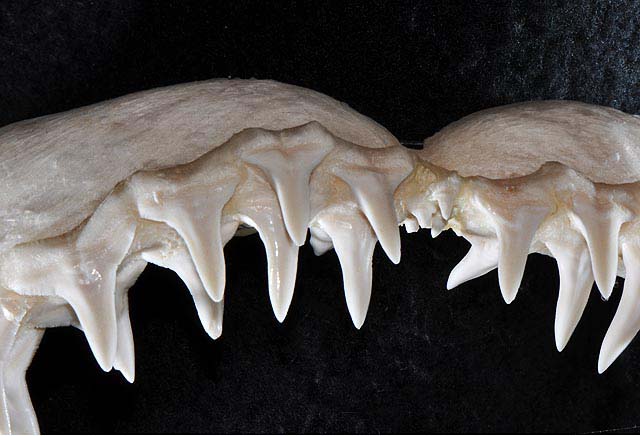

Questions people ask about Lemon shark
Are lemon sharks dangerous to humans?
They are not considered a major threat. Records show only ten unprovoked bites, none of which were fatal. They typically avoid confrontation and are more interested in fish prey than people.
Why are they called lemon sharks?
The name comes from their yellowish skin colour. This hue provides effective camouflage when they swim over sandy bottoms in their shallow coastal habitats.
Do lemon sharks live in groups?
Yes, they are social animals. Juveniles often form groups of up to twenty individuals for protection and learning. Adults also aggregate, often sorting themselves by size.
What do lemon sharks eat?
They are mainly piscivorous, feeding on bony fish like mullet and jacks. They also eat crustaceans, stingrays, molluscs, and occasionally birds, hunting primarily at night.
Good reading and sources
The facts on this page come from the Wikipedia article "Lemon shark", written by its contributors and used under the CC BY-SA 4.0 licence, and from its Wikidata record (CC0). EveryFish rewrote the text in its own words, with AI assistance, and compares every page with the article to make sure no passage is copied. It may be reused under the same CC BY-SA 4.0 licence with a link back.
It may contain mistakes, and figures change over time. Nothing here is investment or buying advice. If something is wrong, tell us. Last refreshed 2026-11-15.
Like Lemon shark
All sharks WorldBlacktip reef shark
Small coral reef shark with distinct black fin tipsShark · Coasts and shelves · 1824
 WorldBlacktip shark
A coastal requiem shark known for spinning leaps and black-tipped fins.Shark · Coasts and shelves · 1839
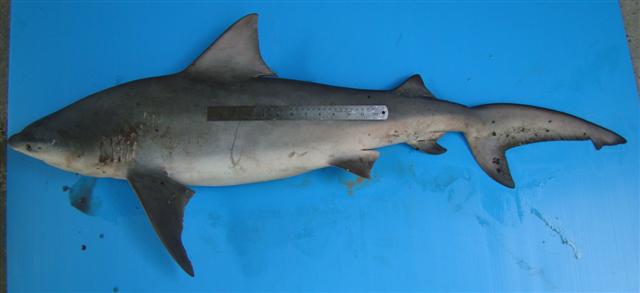 WorldPigeye shark
A robust coastal requiem shark often confused with the bull shark.Shark · Coasts and shelves · 1839
 WorldMilk shark
A small coastal requiem shark found in tropical waters worldwide.Shark · Coasts and shelves · 1837
More from Carcharhinidae
All of them 🇺🇸 United States and 4 moreCaribbean reef shark
Large requiem shark of western Atlantic coral reefsShark · Coasts and shelves · 1876
 WorldGrey reef shark
Common Indo-Pacific reef predator known for threat displaysShark · Coasts and shelves · 1856
 WorldRequiem shark
A family of migratory, live-bearing sharks found in warm seas worldwide.Shark · Coasts and shelves · 1896
 WorldSpinner shark
A fast requiem shark known for spinning leaps out of water.Shark · Coasts and shelves · 1839