
Grey reef shark
Common Indo-Pacific reef predator known for threat displays
The grey reef shark is a requiem shark found across the Indian and Pacific Oceans. It inhabits coral reef drop-offs and is noted for its social behaviour and aggressive threat displays when cornered.
- First shark known to perform a threat display
- Forms large hunting groups of up to 700 individuals
- Can detect one part tuna extract in 10 billion parts water
- Listed as endangered by the IUCN
- Lives at least 25 years
What it is
This requiem shark has a streamlined body with a broad, blunt snout and large round eyes. Its colour is grey above, often with a bronze sheen, and white below. Distinctive markings include dark tips on most fins and a broad black band on the rear tail margin. The first dorsal fin lacks a ridge connecting it to the second. Most adults measure less than 1.9 metres, though they can reach 2.6 metres.
Where it lives
Native to the Indian and Pacific Oceans, this species ranges from South Africa to India and east to Easter Island. It prefers clear water along the leeward sides of coral reefs, often near drop-offs and channels with strong currents. While typically found in shallow waters under 60 metres, it can dive to 1,000 metres and occasionally ventures into the open ocean.
How it lives
An agile predator, it feeds on bony fish, squid, octopus, and crustaceans. Hunting occurs individually or in large groups, sometimes pinning prey against reef walls. It dominates other reef sharks through aggression. Social rather than territorial, it forms loose aggregations during the day and disperses at night. Larger sharks, such as silvertips and hammerheads, prey on it.
Breeding and life cycle
Females are viviparous, nourishing embryos via a placental connection after yolk supplies deplete. They produce one to six pups every other year, with litter size increasing with maternal size. Gestation lasts nine to fourteen months. Newborns are 45 to 60 centimetres long. Sexual maturity occurs around seven years of age, though Great Barrier Reef females mature later at eleven years.
Fish and people
This shark is known for the first recorded shark threat display, involving a hunched posture and dropped fins when divers approach. It has caused human attacks and requires caution. Fisheries catch it regularly, but its slow reproduction makes populations vulnerable to depletion. It plays a significant role in reef ecology by controlling fish communities.
Status and threats
The International Union for Conservation of Nature lists this species as endangered. Local populations face depletion due to overfishing and limited dispersal capabilities. Its low reproductive rate hinders recovery from heavy fishing pressure. Habitat degradation and removal from reef systems further threaten its stability across its range.


Questions people ask about Grey reef shark
Is the grey reef shark dangerous to humans?
Yes, it has been responsible for several attacks. It performs a distinct threat display when cornered or followed by divers, indicating it may attack. Caution is advised, especially if the shark exhibits hunching behaviour or drops its pectoral fins.
What does the grey reef shark eat?
It primarily consumes free-swimming bony fishes and cephalopods like squid and octopus. Crustaceans such as crabs and lobsters make up the remainder of its diet. Larger individuals tend to eat a higher proportion of cephalopods.
How big do grey reef sharks get?
Most individuals are less than 1.9 metres long. The maximum reported length is 2.6 metres, with a maximum weight of 33.7 kilograms. They have a streamlined, moderately stout body typical of reef sharks.
Where do grey reef sharks live?
They are found in the Indian and Pacific Oceans, from South Africa to Easter Island. They prefer shallow coastal waters near coral reef drop-offs, usually at depths less than 60 metres, but can dive much deeper.
Good reading and sources
- Grey reef shark on WikipediaEncyclopedia
- More photos on Wikimedia CommonsPhotos
- Wikidata recordOpen data
The facts on this page come from the Wikipedia article "Grey reef shark", written by its contributors and used under the CC BY-SA 4.0 licence, and from its Wikidata record (CC0). EveryFish rewrote the text in its own words, with AI assistance, and compares every page with the article to make sure no passage is copied. It may be reused under the same CC BY-SA 4.0 licence with a link back.
It may contain mistakes, and figures change over time. Nothing here is investment or buying advice. If something is wrong, tell us. Last refreshed 2026-11-15.
Like Grey reef shark
All sharks WorldSicklefin lemon shark
Large Indo-Pacific requiem shark with sickle-shaped fins.Shark · Coasts and shelves · 1837
 WorldTiger shark
A large predatory shark known for its striped pattern and diverse diet.Shark · Coasts and shelves · 1822
 WorldGalapagos shark
Large requiem shark of tropical oceanic islandsShark · Coasts and shelves · 1905
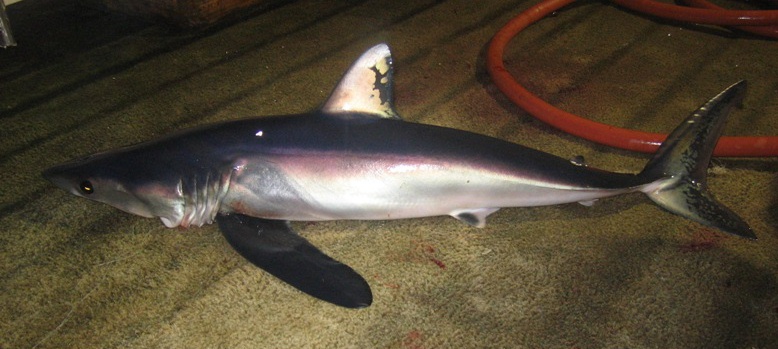 WorldLongfin mako shark
A rare, deep-water mackerel shark with long pectoral finsShark · Open ocean · 1966
More from Carcharhinidae
All of them WorldLemon shark
A social, yellow-skinned requiem shark of shallow tropical waters.Shark · Coasts and shelves · 1868
 WorldSilky shark
A fast, migratory requiem shark found in tropical oceans worldwide.Shark · Open ocean · 1839
 WorldSpinner shark
A fast requiem shark known for spinning leaps out of water.Shark · Coasts and shelves · 1839
 🇦🇺 Australia and 1 moreSpeartooth shark
Rare river shark of northern Australia and New GuineaShark · Rivers and lakes · 1839