
Silky shark
A fast, migratory requiem shark found in tropical oceans worldwide.
The silky shark is a large, streamlined predator inhabiting warm pelagic waters across the globe. It faces growing pressure from commercial fisheries and bycatch, leading to a vulnerable conservation status despite its wide distribution.
- Named for its smooth skin texture caused by tiny dermal denticles.
- Can travel over 1,300 kilometers during migration.
- One of the most abundant pelagic sharks globally.
- Listed as Vulnerable by the IUCN since 2017.
- Often found associated with tuna schools and floating objects.
What it is
This requiem shark features a slender, streamlined body with a metallic bronze-gray back and white belly. Its skin feels smooth due to tiny, densely packed scales called dermal denticles. Distinctive traits include long, sickle-shaped pectoral fins and a small first dorsal fin with a curved rear edge. The second dorsal fin is tiny with a long free tip. Adults typically reach 2.5 meters, though they can grow up to 3.5 meters and weigh over 300 kilograms. Females are generally larger than males.
Where it lives
Silky sharks inhabit marine waters warmer than 23 degrees Celsius across the globe. They are found in the Atlantic from Massachusetts to Spain and Brazil to Angola, including the Gulf of Mexico. In the Pacific, their range extends from Japan to Chile and Australia to New Zealand. They also populate the Indian Ocean and Mediterranean Sea. These sharks prefer the edges of continental shelves and often stay within 50 meters of the surface, though they can dive deeper than 500 meters.
How it lives
As opportunistic hunters, they feed mainly on bony fish like tuna and mackerel, as well as cephalopods. They use acute hearing to locate prey and may drive fish into tight schools before attacking. Silky sharks are highly mobile, traveling up to 60 kilometers daily. They often associate with floating objects, tuna schools, and marine mammals. Younger individuals form large aggregations for protection. Larger sharks may dominate them in competitive feeding situations, and killer whales are known predators.
Breeding and life cycle
Reproduction is viviparous, meaning embryos develop inside the mother with a placental connection. Breeding happens throughout the year in most regions, but follows a seasonal pattern in the Gulf of Mexico. Females produce litters of up to 16 pups either annually or every two years. Newborns stay in sheltered reef nurseries on the outer continental shelf for their first few months. They grow significantly in these safer waters before moving into the open ocean.
Fish and people
Fisheries value this species for its fins, meat, hide, and liver oil. It is a major component of commercial and artisanal shark catches in many nations. Many silky sharks are caught accidentally as bycatch in tuna fisheries due to their shared habitat. While potentially dangerous due to their size and teeth, attacks on humans are rare because few people enter their deep ocean habitat. They have shown aggression toward divers on occasion.
Status and threats
The International Union for Conservation of Nature listed the silky shark as Vulnerable in 2017. Although once thought to be resilient due to large populations, data now show declining numbers globally. Overfishing and high bycatch rates in tuna fisheries are primary threats. Their slow reproductive rate makes recovery difficult. Conservation efforts are increasingly focused on managing catch limits and reducing accidental capture in industrial fishing operations.


Questions people ask about Silky shark
Why is it called the silky shark?
The name comes from the smooth texture of its skin. This feel is produced by tiny, densely packed dermal denticles that cover the body, distinguishing it from other sharks with rougher skin.
Is the silky shark dangerous to humans?
It has large size and cutting teeth, making it potentially dangerous. It has behaved aggressively toward divers. However, attacks are rare because humans seldom enter its open ocean habitat.
What do silky sharks eat?
They are opportunistic predators feeding mainly on bony fishes such as tuna, mackerel, and sardines. They also consume cephalopods. They often trail tuna schools and use hearing to locate prey.
Where do silky sharks live?
They inhabit tropical waters worldwide in the Atlantic, Indian, and Pacific Oceans. They prefer the pelagic zone near continental shelf edges, usually staying within 50 meters of the surface in warm water.
Good reading and sources
The facts on this page come from the Wikipedia article "Silky shark", written by its contributors and used under the CC BY-SA 4.0 licence, and from its Wikidata record (CC0). EveryFish rewrote the text in its own words, with AI assistance, and compares every page with the article to make sure no passage is copied. It may be reused under the same CC BY-SA 4.0 licence with a link back.
It may contain mistakes, and figures change over time. Nothing here is investment or buying advice. If something is wrong, tell us. Last refreshed 2026-11-15.
Like Silky shark
All sharks WorldSpinner shark
A fast requiem shark known for spinning leaps out of water.Shark · Coasts and shelves · 1839
 WorldBigeye thresher
Deep-diving shark with huge eyes and a long tail.Shark · Open ocean · 1840
 WorldPorbeagle
A fast, cold-water mackerel shark found in the Atlantic and Southern Hemisphere.Shark · Coasts and shelves · 1788
 WorldSmooth hammerhead
Temperate hammerhead shark with a curved head marginShark · Coasts and shelves · 1758
More from Carcharhinidae
All of them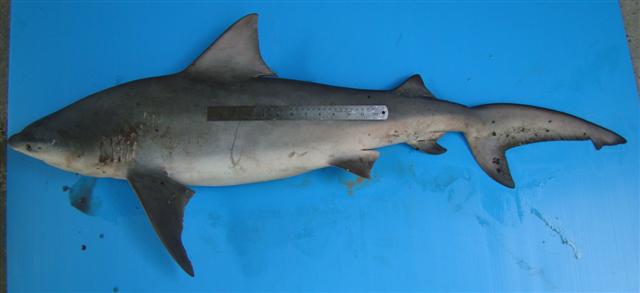 WorldPigeye shark
A robust coastal requiem shark often confused with the bull shark.Shark · Coasts and shelves · 1839
 WorldBlacktip shark
A coastal requiem shark known for spinning leaps and black-tipped fins.Shark · Coasts and shelves · 1839
 🇦🇺 Australia and 1 moreSpeartooth shark
Rare river shark of northern Australia and New GuineaShark · Rivers and lakes · 1839
 WorldWhitetip reef shark
Small Indo-Pacific reef shark with white-tipped finsShark · Coasts and shelves · 1837