
Smooth hammerhead
Temperate hammerhead shark with a curved head margin
The smooth hammerhead is a large shark found in temperate seas worldwide. It migrates seasonally to follow cool water and feeds on fish and rays. Fishers target it for its valuable fins, leading to vulnerable conservation status.
- Second largest hammerhead species, reaching 5 metres
- Prefers temperate waters and migrates seasonally
- Fins are highly valued for shark fin soup
- Gives birth to litters of 20 to 50 live pups
- Often has stingray barbs lodged in its mouth
What it is
This shark belongs to the hammerhead family and is the second largest of its kind. Its head forms a wide, curved shape called a cephalofoil without a central notch. The body is streamlined with no ridge between the dorsal fins. Adults typically reach 2.5 to 3.5 metres in length. The skin colour ranges from dark brownish-grey to olive on the back, fading to white on the belly. Dermal denticles are dense and feature horizontal ridges.
Where it lives
It inhabits temperate and warm subtropical zones across all major oceans. In the Atlantic, it ranges from Nova Scotia to Argentina and from Ireland to West Africa. Populations exist in the Mediterranean, Indian, and Pacific Oceans. Unlike tropical relatives, it prefers cooler waters and migrates poleward in summer. It stays near the surface in bays and estuaries but can dive to 200 metres. Rare sightings occur in tropical areas, often confused with other species.
How it lives
Adults are solitary or form small groups, though juveniles gather in large schools during migration. It is an active predator that consumes bony fish, cephalopods, and crustaceans. Stingrays are a preferred prey item, and spines are often found lodged in the shark's mouth. Larger individuals hunt other sharks and rays. Killer whales and dusky sharks prey on them. They scavenge from fishing lines and may attempt to catch dolphins.
Breeding and life cycle
Females give birth to live young after a gestation period of ten to eleven months. The embryos develop a placental connection for nourishment after using their yolk supply. Litters contain 20 to 50 pups, each measuring about 50 to 61 centimetres at birth. Nurseries are located in shallow coastal areas such as Bulls Bay in North Carolina. Males mature at roughly 2.1 to 2.5 metres, while females mature at 2.7 metres.
Fish and people
Commercial fisheries capture this shark for its meat, liver oil, and skin. The fins are highly prized for shark fin soup, leading to frequent finning at sea. Meat is sold fresh, dried, or smoked, though some reports mention poisoning. It is used in traditional Chinese medicine. Recreational anglers also catch them. The species is potentially dangerous to humans, with a few unprovoked attacks recorded, though encounters are rare due to its temperate habitat.
Status and threats
The International Union for Conservation of Nature lists the species as Vulnerable. Overfishing and bycatch in gillnets and longlines threaten populations globally. Trade in parts is regulated under CITES Appendix 2. In New Zealand, it is classified as Not Threatened with Secure Overseas status. Management plans in the United States regulate catches. Despite pressure, it remains relatively common in many regions.


Questions people ask about Smooth hammerhead
How big does a smooth hammerhead get?
This shark typically measures between 2.5 and 3.5 metres in length. The maximum recorded size is 5 metres, with a weight of up to 400 kilograms. It is the second largest species in the hammerhead family.
Is the smooth hammerhead dangerous to humans?
It is considered potentially dangerous, but attacks are rare. Most recorded incidents involve large hammerheads generally, and few are attributed specifically to this species. Its preference for temperate waters reduces encounters with swimmers.
What does the smooth hammerhead eat?
It feeds on bony fishes, squid, crustaceans, and other sharks. Stingrays are a favoured prey item, and many specimens have ray spines embedded in their jaws. It also scavenges from fishing lines and gear.
Where do smooth hammerheads live?
They are found in temperate and subtropical waters worldwide. They inhabit inshore bays, estuaries, and continental shelves. Unlike other hammerheads, they tolerate cooler temperatures and migrate towards the poles in summer.
Good reading and sources
- Smooth hammerhead on WikipediaEncyclopedia
- More photos on Wikimedia CommonsPhotos
- Wikidata recordOpen data
The facts on this page come from the Wikipedia article "Smooth hammerhead", written by its contributors and used under the CC BY-SA 4.0 licence, and from its Wikidata record (CC0). EveryFish rewrote the text in its own words, with AI assistance, and compares every page with the article to make sure no passage is copied. It may be reused under the same CC BY-SA 4.0 licence with a link back.
It may contain mistakes, and figures change over time. Nothing here is investment or buying advice. If something is wrong, tell us. Last refreshed 2026-11-15.
Like Smooth hammerhead
All sharks WorldPorbeagle
A fast, cold-water mackerel shark found in the Atlantic and Southern Hemisphere.Shark · Coasts and shelves · 1788
 WorldSpinner shark
A fast requiem shark known for spinning leaps out of water.Shark · Coasts and shelves · 1839
 WorldSilky shark
A fast, migratory requiem shark found in tropical oceans worldwide.Shark · Open ocean · 1839
 WorldBigeye thresher
Deep-diving shark with huge eyes and a long tail.Shark · Open ocean · 1840
More from Sphyrnidae
All of them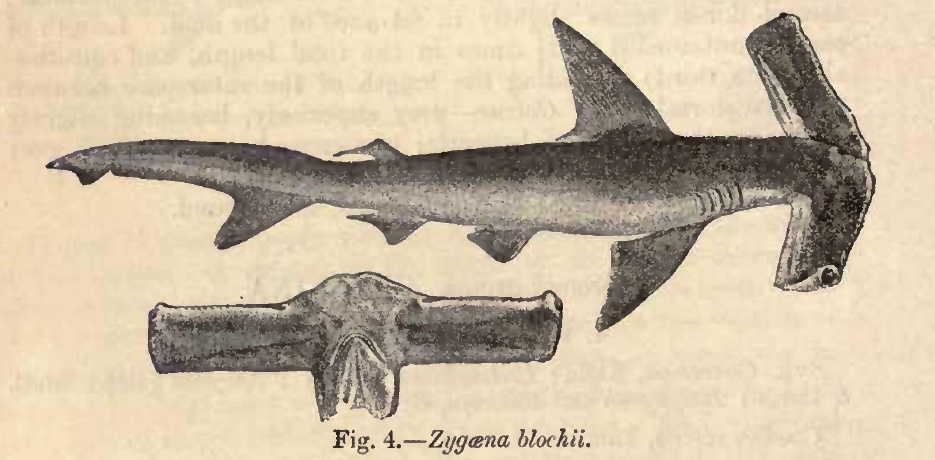 South AsiaWinghead shark
A small hammerhead with an exceptionally wide cephalofoil.Shark · Coasts and shelves · 1822
 WorldGreat hammerhead
The largest hammerhead shark, known for its wide cephalofoil and critically endangered status.Shark · Coasts and shelves · 1837
 WorldHammerhead shark
Sharks with T-shaped heads for better vision and sensing prey.Shark · Coasts and shelves
 🇺🇸 United States and 4 moreBonnethead
A small hammerhead shark with a spade-shaped head and omnivorous diet.Shark · Coasts and shelves