
Milk shark
A small coastal requiem shark found in tropical waters worldwide.
The milk shark is a slender requiem shark common in tropical coastal waters of the Atlantic and Indo-Pacific. It feeds on small fish and crustaceans near shore. Fisheries target it for meat and fins, leading to a vulnerable conservation status.
- Named for a belief it aids lactation
- Found in tropical coasts of Atlantic and Indo-Pacific
- Feeds on small fish, squid and crustaceans
- Listed as Vulnerable by the IUCN
- Juveniles inhabit seagrass beds and tidal pools
What it is
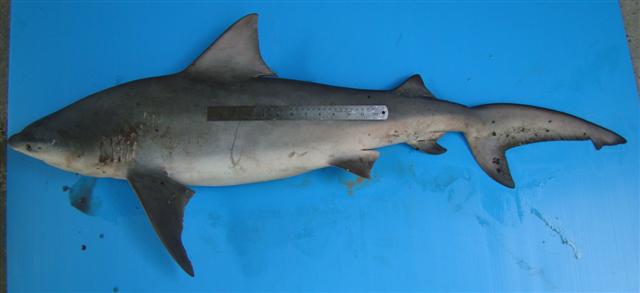
The milk shark is a member of the requiem shark family. It has a slender body with a long, pointed snout and large eyes. Its colour is plain grey or brown-grey on top and white underneath. Distinctive features include long furrows at the mouth corners and several enlarged pores nearby. It lacks spiracles behind the eyes. The first dorsal fin starts over the rear tips of the pectoral fins. This species is the largest in its genus, though most individuals remain under 1.1 metres in length.
Where it lives
This shark inhabits tropical coastal waters across the eastern Atlantic and Indo-Pacific. In the Atlantic, it ranges from Mauritania to Angola. In the Indian Ocean, it occurs from South Africa to the Arabian Peninsula and Southeast Asia. Pacific populations extend from China and Japan to northern Australia. It lives from the surface down to 200 metres depth. It favours turbid water near sandy beaches and often enters estuaries. Records exist of it swimming up rivers in Cambodia. Juveniles use seagrass meadows and tidal pools as nursery grounds.
How it lives
The milk shark is one of the most abundant near-shore sharks in its range. It feeds primarily on small benthic and bony fishes. Younger sharks eat more cephalopods and crustaceans, switching to fish as they grow. Predators include larger sharks like the blacktip shark and possibly marine mammals. Parasites such as the copepod Pseudopandarus australis affect this species. Evidence suggests males and females may segregate. Population numbers can fluctuate seasonally, with peaks in summer off South Africa.
Breeding and life cycle
Females are viviparous, sustaining embryos via a placental connection after initial yolk reliance. The reproductive cycle varies by region, occurring annually or less frequently. Litter sizes range from one to eight pups. Births happen in spring or summer in Africa, but year-round in Oman and Australia. Newborns measure between 32 and 50 centimetres. Females use warm inshore nursery areas for parturition. Males mature at smaller sizes than females, with variations across different geographic populations. The maximum lifespan is at least eight years.
Fish and people
Fisheries catch this shark using gillnets, trawls, and longlines. It is marketed fresh, dried, or salted for human consumption. The fins are used for soup, and the rest for fishmeal. It is a significant catch in countries like India, Senegal, and Oman. Some sport fishers target it. The common name stems from an Indian belief that its meat promotes lactation. Despite its abundance, heavy fishing pressure threatens populations. Earlier assessments of sustainable catches are now considered unreliable due to methodological flaws.
Status and threats
The International Union for Conservation of Nature lists the milk shark as vulnerable. While its reproductive rate allows some resilience, it cannot withstand high exploitation levels like some relatives. Fishing pressure has increased substantially in key regions since earlier studies. Stock assessments from the 1980s and 1990s suggested sustainable levels, but these methods were flawed. The decimation of larger shark predators by beach protection nets has led to local increases in milk shark numbers.


Questions people ask about Milk shark
Why is it called the milk shark?
The name comes from an old Indian belief that eating the meat of this shark promotes lactation in nursing mothers. This traditional view led to the common name despite no scientific basis for the claim.
Is the milk shark dangerous to humans?
No, it is considered harmless to humans. Its small size and teeth structure make it incapable of inflicting serious injury. It is not known to attack people unprovoked.
Where does the milk shark live?
It lives in tropical coastal waters of the eastern Atlantic and Indo-Pacific. It prefers shallow, turbid waters near sandy beaches and estuaries, sometimes entering freshwater rivers.
What does the milk shark eat?
It primarily eats small bony fishes. Younger sharks also consume cephalopods like squid and octopus, as well as crustaceans such as crabs and shrimp. Diet shifts to fish as they mature.
Good reading and sources
The facts on this page come from the Wikipedia article "Milk shark", written by its contributors and used under the CC BY-SA 4.0 licence, and from its Wikidata record (CC0). EveryFish rewrote the text in its own words, with AI assistance, and compares every page with the article to make sure no passage is copied. It may be reused under the same CC BY-SA 4.0 licence with a link back.
It may contain mistakes, and figures change over time. Nothing here is investment or buying advice. If something is wrong, tell us. Last refreshed 2026-11-15.
Like Milk shark
All sharks 🇦🇺 Australia and 1 moreSpeartooth shark
Rare river shark of northern Australia and New GuineaShark · Rivers and lakes · 1839
 WorldPigeye shark
A robust coastal requiem shark often confused with the bull shark.Shark · Coasts and shelves · 1839
 WorldSpinner shark
A fast requiem shark known for spinning leaps out of water.Shark · Coasts and shelves · 1839
 WorldBlacktip shark
A coastal requiem shark known for spinning leaps and black-tipped fins.Shark · Coasts and shelves · 1839
More from Carcharhinidae
All of them WorldWhitetip reef shark
Small Indo-Pacific reef shark with white-tipped finsShark · Coasts and shelves · 1837
 WorldSilky shark
A fast, migratory requiem shark found in tropical oceans worldwide.Shark · Open ocean · 1839
 WorldBlacktip reef shark
Small coral reef shark with distinct black fin tipsShark · Coasts and shelves · 1824
 WorldGrey reef shark
Common Indo-Pacific reef predator known for threat displaysShark · Coasts and shelves · 1856