
Humpback chub
Endangered fish of the Colorado River with a distinctive dorsal hump.
The humpback chub is a rare fish native to the Colorado River basin in the United States. It features a unique hump behind its head and lives in fast currents. Dam construction reduced its numbers, leading to federal protection and active recovery programmes.
- Named for the hump behind its head that aids stability in currents.
- Population in Grand Canyon estimated at 6,000 to 10,000 in 2008.
- Spawns in spring when water temperatures reach 19–21 °C.
- Protected by federal law and managed via dam operation changes.
What it is
This fish belongs to the carp family and displays a streamlined body shape. A prominent hump rises between its head and dorsal fin, which helps it stay stable in swift water. The skin is nearly bare, holding only about eighty scales along the side line. Its back appears olive gray, while the sides shine silver and the belly remains white. The tail forks deeply, and the fins curve gracefully. Adults can grow up to thirty-eight centimetres long.
Where it lives
Historically, this species inhabited the Colorado River from below Hoover Dam upstream into several states. Today, it survives in six main areas within the Colorado and Little Colorado Rivers. Populations exist in the Grand Canyon, Cataract Canyon, and parts of the Green and Yampa Rivers. The fish thrives in turbulent, steep sections of large rivers. Youngsters stay in quiet, shallow edges before moving to faster, deeper zones as they mature.
How it lives
The diet consists mainly of invertebrates, with occasional small fish taken from various water levels. Activity peaks during night hours. In the Grand Canyon, adults gather near large eddy complexes. Parasites such as copepods and tapeworms have infected some groups. Bacteria, protozoans, and fungi also affect their health. The fish navigates strong currents using its specialized body shape.
Breeding and life cycle
Reproduction occurs between April and June when water warms to nineteen or twenty-one degrees Celsius. Males develop small bumps on their heads and fins during this period. They release eggs in slower backwaters, usually over rocky bottoms. Juveniles remain close to shore in turbid, calm areas. This strategy protects them from strong flows and predators while they grow.
Fish and people
Federal law protects this fish due to severe population declines. Managers adjust dam operations to mimic natural floods and remove non-native predators like rainbow trout. Experimental water releases aim to rebuild sandbars and backwaters. A minor league baseball team in Grand Junction adopted the name Humpback Chubs for certain games to raise conservation awareness. Research continues to monitor genetic isolation and population health.
Status and threats
Dam construction and cold water releases caused significant habitat loss. The species is listed as endangered. Recent counts in the Grand Canyon show an increase, possibly due to warmer drought conditions and predator removal. However, invasive smallmouth bass now threaten populations below Glen Canyon Dam. Conservation efforts include artificial flooding and strict habitat protection across hundreds of miles of river.


Questions people ask about Humpback chub
Why does the humpback chub have a hump?
The hump between the head and dorsal fin helps direct water flow over the body. This feature allows the fish to maintain its position in the swift currents of the Colorado River.
Where can you find humpback chub today?
They live in six population centers in the Colorado and Little Colorado Rivers. Key locations include the Grand Canyon, Cataract Canyon, and parts of the Green and Yampa Rivers in the western United States.
What threatens the humpback chub?
Major threats include habitat loss from dams, cold water releases, and non-native predators like rainbow trout and smallmouth bass. Parasites and competition with introduced fish also harm their populations.
Good reading and sources
- Humpback chub on WikipediaEncyclopedia
- More photos on Wikimedia CommonsPhotos
- Wikidata recordOpen data
The facts on this page come from the Wikipedia article "Humpback chub", written by its contributors and used under the CC BY-SA 4.0 licence, and from its Wikidata record (CC0). EveryFish rewrote the text in its own words, with AI assistance, and compares every page with the article to make sure no passage is copied. It may be reused under the same CC BY-SA 4.0 licence with a link back.
It may contain mistakes, and figures change over time. Nothing here is investment or buying advice. If something is wrong, tell us. Last refreshed 2026-11-15.
Like Humpback chub
All carps and minnows 🇹🇭 Thailand and 4 moreJullien's golden carp
Endangered Southeast Asian river fish with five stripesCarp · Rivers and lakes
 🇨🇳 ChinaPrzewalskii's naked carp
Endemic cyprinid of China's Qinghai Lake basinCarp · Rivers and lakes
 🇮🇳 India and 4 moreZebrafish
Small striped fish from South Asia kept in aquariums and labsCarp · Rivers and lakes
 🇮🇳 India and 4 moreRohu
A large silver carp from South Asian rivers, farmed for food and prized as a game fish.Carp · Rivers and lakes
More from Cyprinidae
All of them 🇹🇭 Thailand and 2 moreSiamese mud carp
Freshwater cyprinid native to Mekong and Chao Phraya riversCarp · Rivers and lakes
 🇲🇾 Malaysia and 1 moreHarlequin rasbora
A small, colourful freshwater fish popular in home aquariums for its distinctive black body marking.Carp · Rivers and lakes
 🇮🇷 Iran and 1 moreShabout
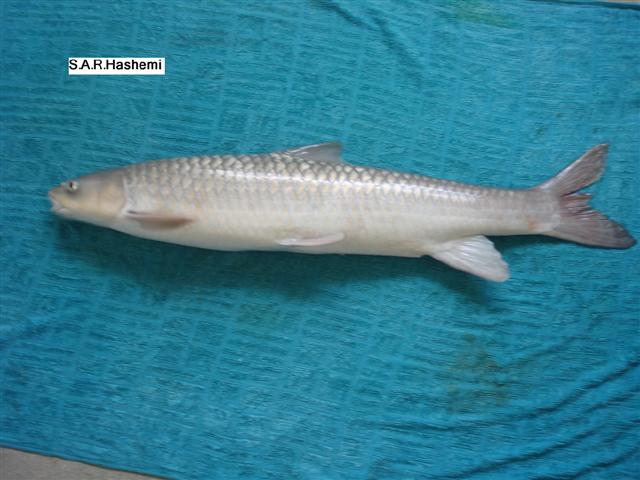
A large freshwater carp native to the Tigris-Euphrates basin in Western Asia.Carp · Rivers and lakes
 WorldLabeobarbus
A genus of mid-sized ray-finned fish widely distributed in eastern and southern Africa.Carp · Rivers and lakes